
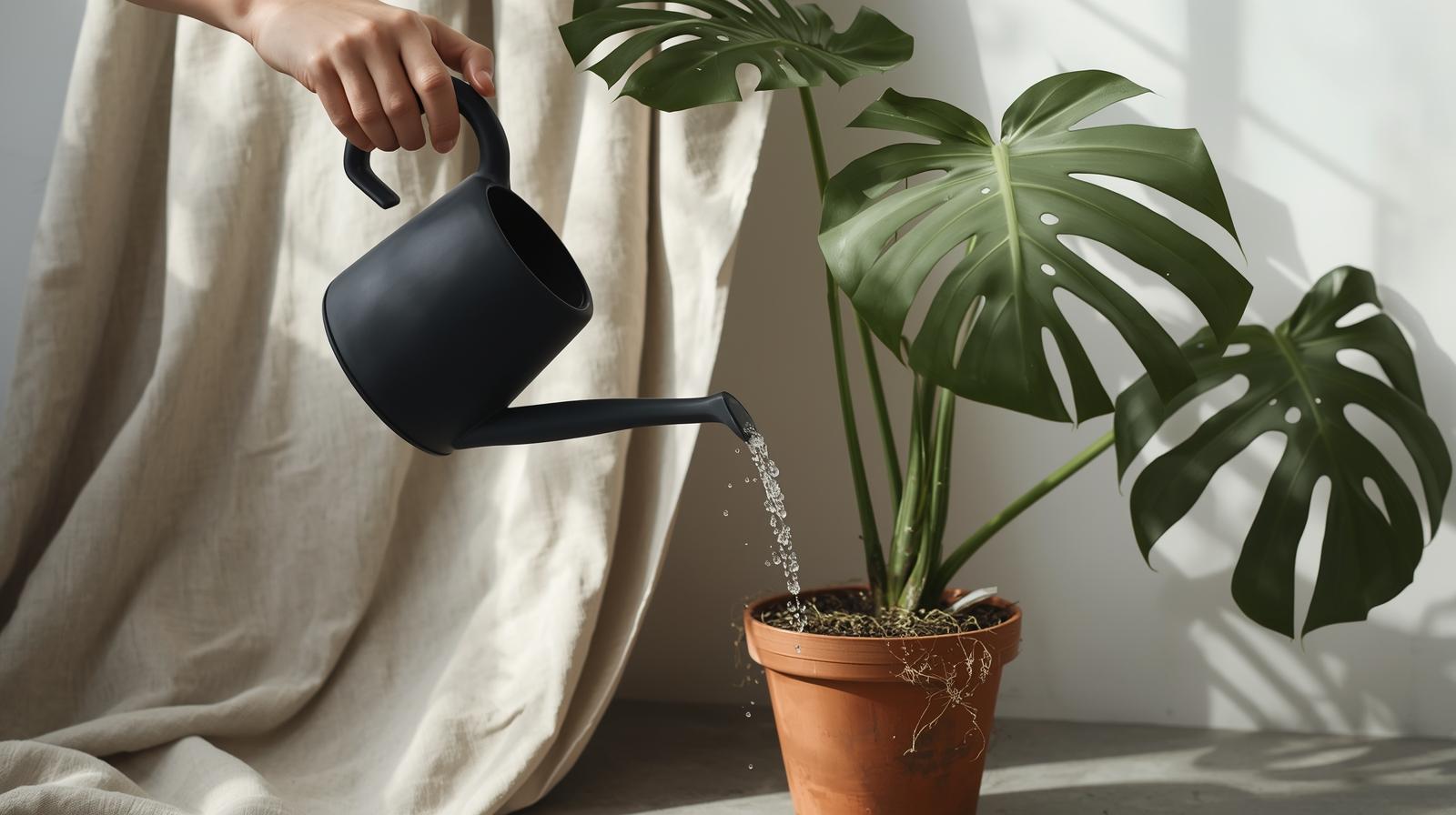
Dawn light slips through the kitchen window, catching the droplet balanced on the edge of a Pothos leaf—suspended, trembling, then gone. In that moment, the kettle’s quiet whistle, the hush of water pouring into a ceramic can, the faint scent of damp moss rising from the soil—all coalesce into something deeper than routine. This is where Slow Living reveals itself not as an aesthetic, but as an act: Plant Care transformed through intention into Rituals that steady the breath and quiet the mind.
The Quiet Alchemy of Presence
Watering is often relegated to the margins of domestic duty—something to check off between emails or before bed. Yet when approached with attention, it becomes a threshold. The simple act of lifting a can, watching water seep into dry earth, listening to the soft sigh of soil drinking—these are invitations to return to the body.
There is a difference between watering and tending. One is transactional; the other is relational. In tending, we meet the plant not as an object to maintain, but as a silent companion in the practice of patience.
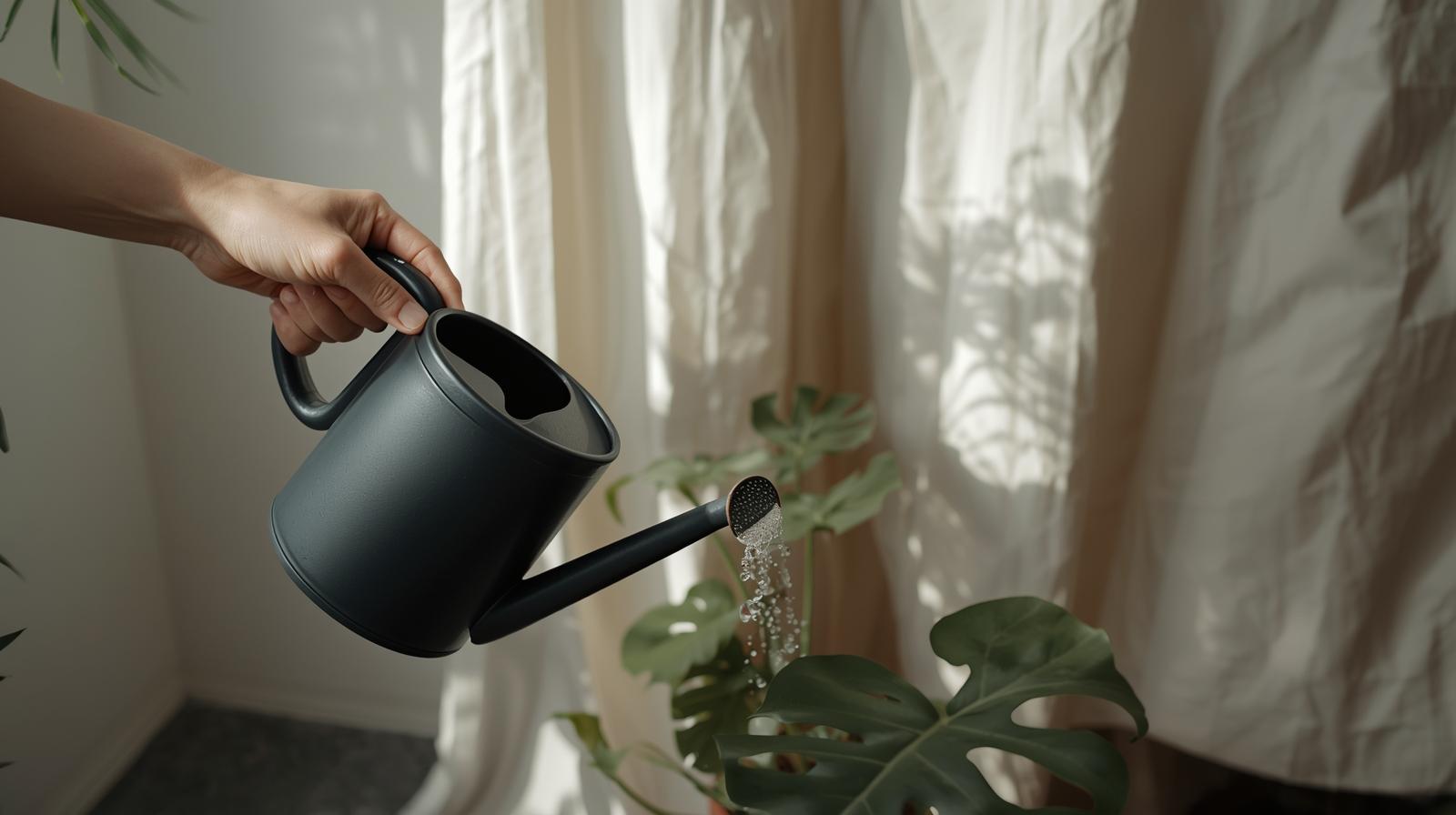
“Water does not hurry, yet it reaches the sea.” — Lao Tzu
This slowness is not inefficiency. It is alignment. To water mindfully is to echo the rhythms of nature itself—steady, cyclical, unhurried.
Reading the Language of Thirst
Plants speak in whispers. A curled Calathea leaf, the slight pull of soil away from the pot’s edge, the unexpected lightness when you lift a planter—these are not emergencies, but quiet signals. Learn to read them not as problems, but as dialogue.
Wilting is often a late sign. Earlier cues include dullness in foliage, a papery texture along leaf margins, or the reluctance of new growth to unfurl. Trust your senses more than the calendar.
For a deeper understanding of these subtle indicators, explore our guide to the signs of thirst, where observation becomes intimacy.
Crafting Your Watering Ritual
A ritual is not defined by duration, but by intention. Begin by choosing a consistent time—perhaps just after sunrise, when the air is still cool and the house is quiet. Select a vessel that feels grounding in your hands: unglazed terracotta, matte black stoneware, or a slender copper can that sings softly as it pours.
Stand or kneel with a straight spine. Breathe in as you lift the can; exhale as water flows. Let the stream be slow, deliberate, tracing the inner rim of the pot to encourage even saturation.
This practice complements a broader morning plant routine, where care becomes a form of meditation before the day’s demands take hold.
The Vessel as Anchor
The weight of your watering can shapes your pace. A heavy ceramic pot demands presence; a lightweight metal one may encourage haste. Choose one that slows you down.
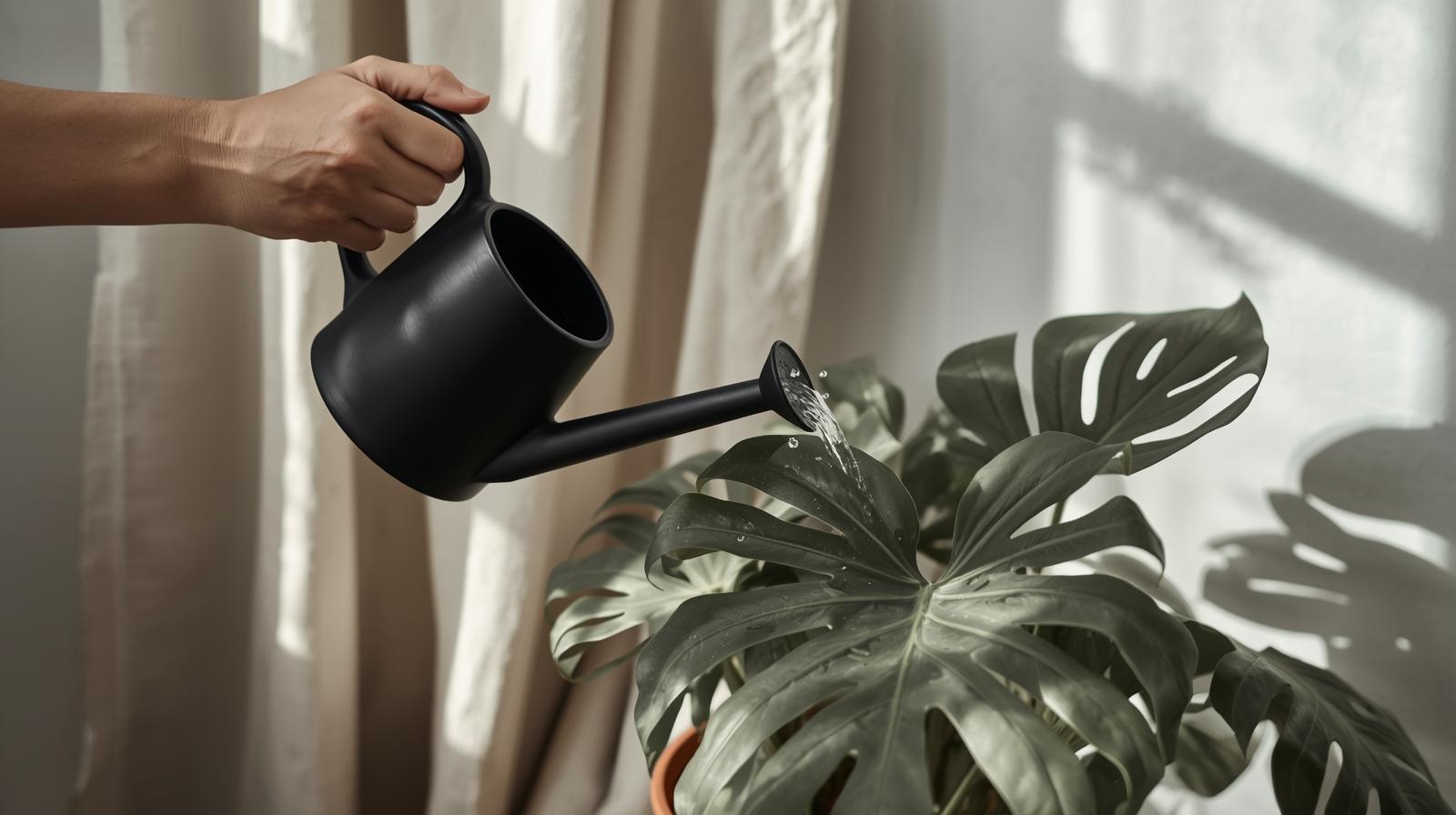
Notice the temperature of the water, too. Cold water can shock tropical roots. Let it rest overnight in a glass jar—room temperature, oxygenated, softened by time. This small act of preparation is itself a gesture of respect.
Water as a Mirror for Inner Weather
On days when your mind races, you may find yourself flooding the soil in a single rush. On days of fatigue, you might forget entirely. Neither is failure. Both are reflections.
Watering reveals our inner state as clearly as a still pond. If your hand trembles, if your pour is uneven, pause. Set the can down. Breathe. Return.
This is where the practice deepens—into self-awareness. Kneeling to water a low-growing Fern or Snake Plant becomes a physical act of humility, a quiet return to earth that echoes the principles of grounding with soil.
Seasonal Rhythms, Inner Tides
In winter, watering slows to a near-halt. The soil holds moisture longer; growth retreats inward. Honor this dormancy with fewer visits, longer pauses, deeper observation.
In summer, the air hums with thirst. Water in the early morning, mimicking dew. Mist broad leaves in the evening, not as a chore, but as shared relief from the heat.
Let your ritual expand and contract with the light, just as the plants do.
When Ritual Meets Root
Mindful watering nourishes more than leaves—it feeds resilience. Consistent, attentive hydration encourages roots to stretch deep, forming symbiotic relationships with beneficial fungi in the soil. The result? Glossier foliage, sturdier stems, and a quiet vitality that no fertilizer can replicate.
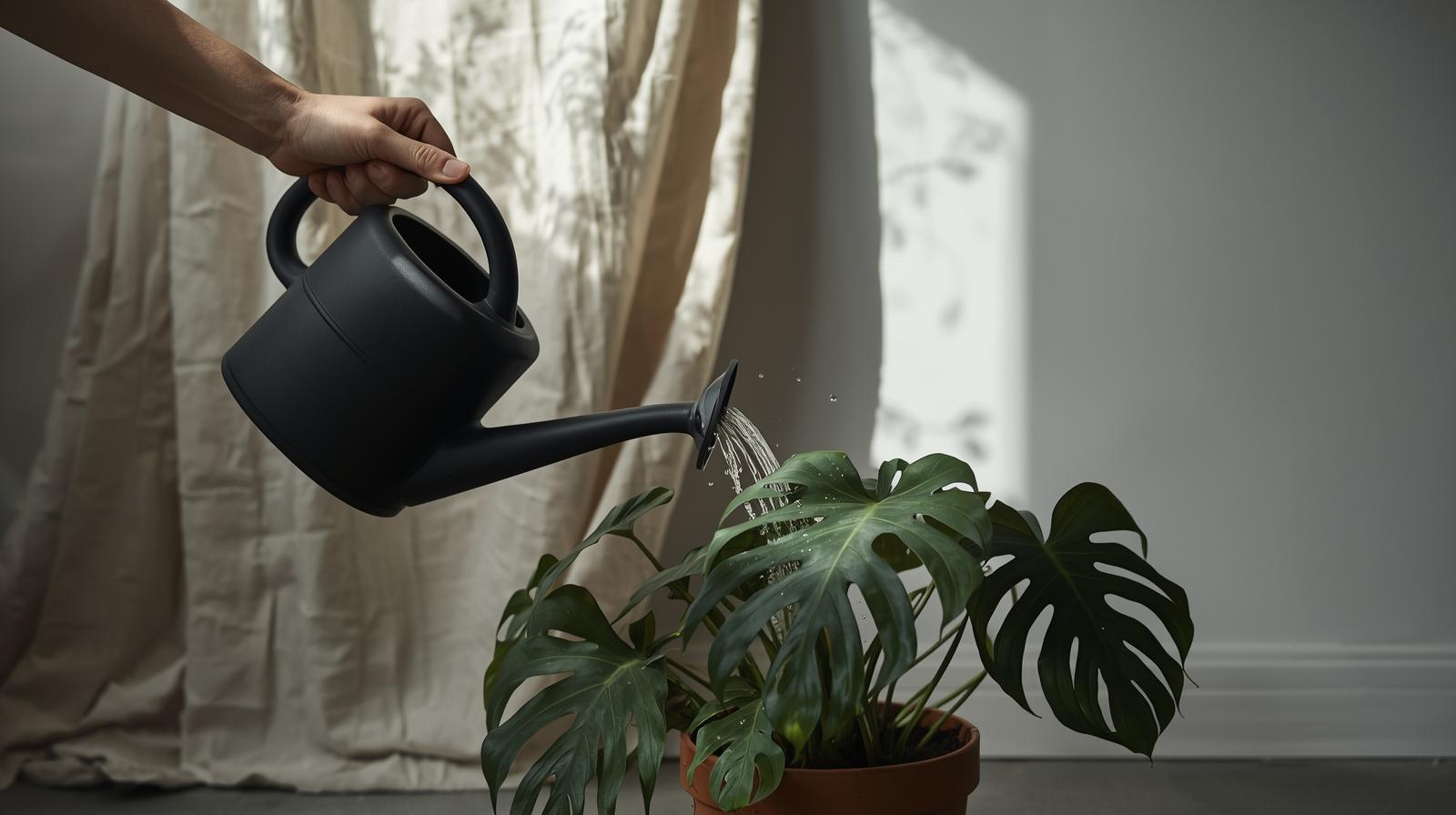
This is stewardship, not management. You are not keeping a plant alive; you are participating in its unfolding.
Over time, this daily exchange becomes the cornerstone of a larger rhythm—one that might begin with watering and blossom into a full morning plant routine, where silence and soil shape the day’s tone.
The Art of Imperfect Care
There will be overwatered Peace Lilies, parched succulents, yellowing tips. These are not marks of failure, but moments of reconnection. Gently tip the pot to drain excess. Wait three days before watering again. Observe.
Forgiveness is part of the ritual. For the plant, and for yourself. In this mutual recovery, care deepens into compassion—a lesson that extends far beyond the windowsill.
And if you’ve lost your way, return to the earth itself. The practice of grounding with soil reminds us that even in missteps, there is belonging.
Common Questions
How do I know if I’m watering too much vs. too little?
Overwatering shows as yellowing lower leaves, mushy stems, or fungus gnats; underwatering appears as crispy edges, drooping despite dry soil, or leaf drop. Always check root zone moisture with a finger or wooden skewer.
Is tap water okay, or should I use filtered?
Most houseplants tolerate tap water, but sensitive species like Calatheas may brown at leaf tips due to fluoride. Letting water sit uncovered overnight allows gases to dissipate.
Can I water at night?
Evening watering is fine in humid climates, but in cooler or low-light homes, morning watering allows foliage to dry before nightfall, reducing rot risk.
Why do some plants need bottom watering?
Species like African Violets benefit from bottom watering to avoid crown rot and encourage deep root growth—simply place the pot in a shallow tray of water for 20 minutes, then remove.
Next time you reach for the watering can, pause before you pour. Notice the light on the leaves, the scent of the soil, the weight of the moment. In this small act—repeated with attention—you are not just caring for a plant. You are cultivating a sanctuary within yourself.