
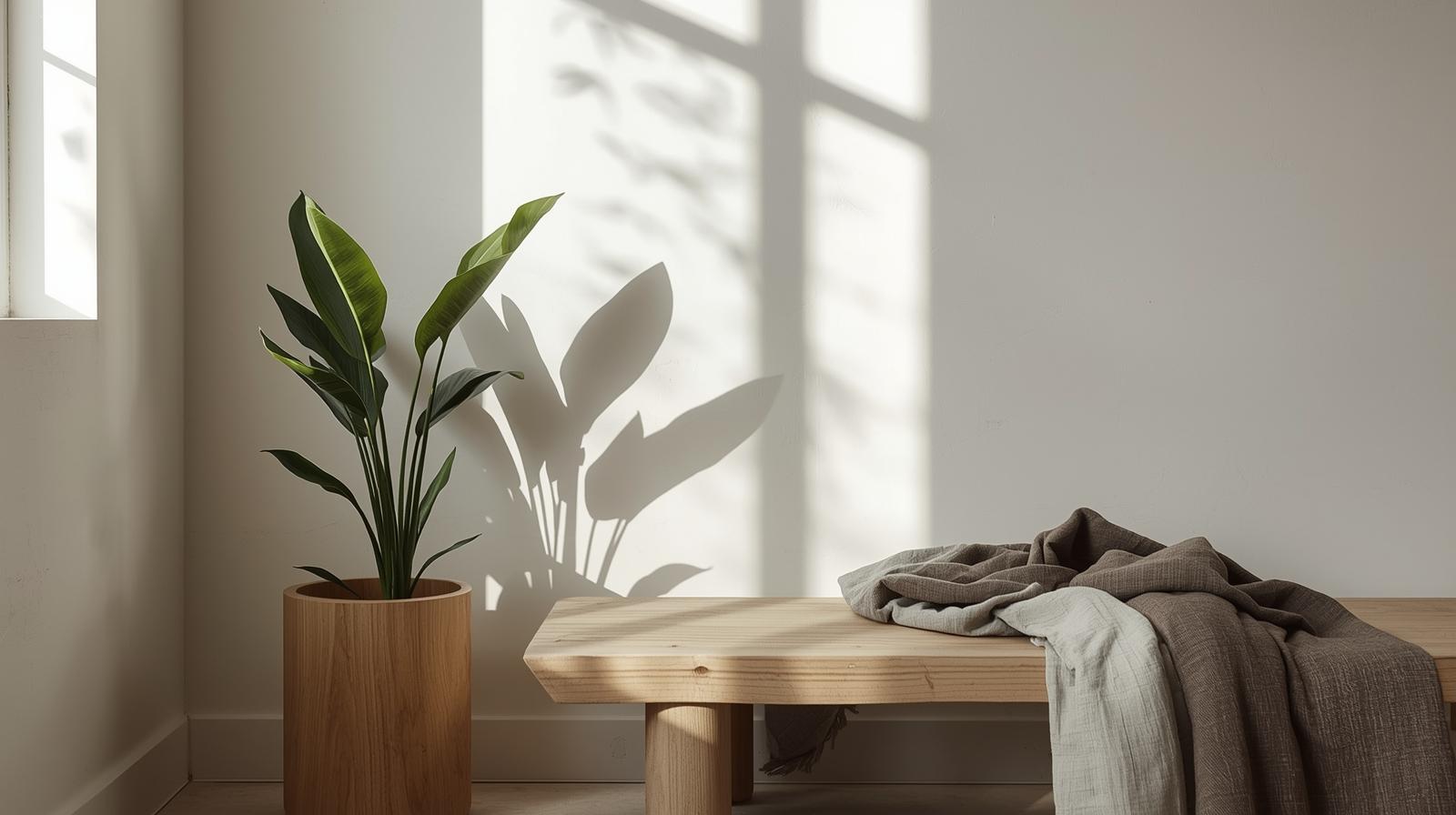
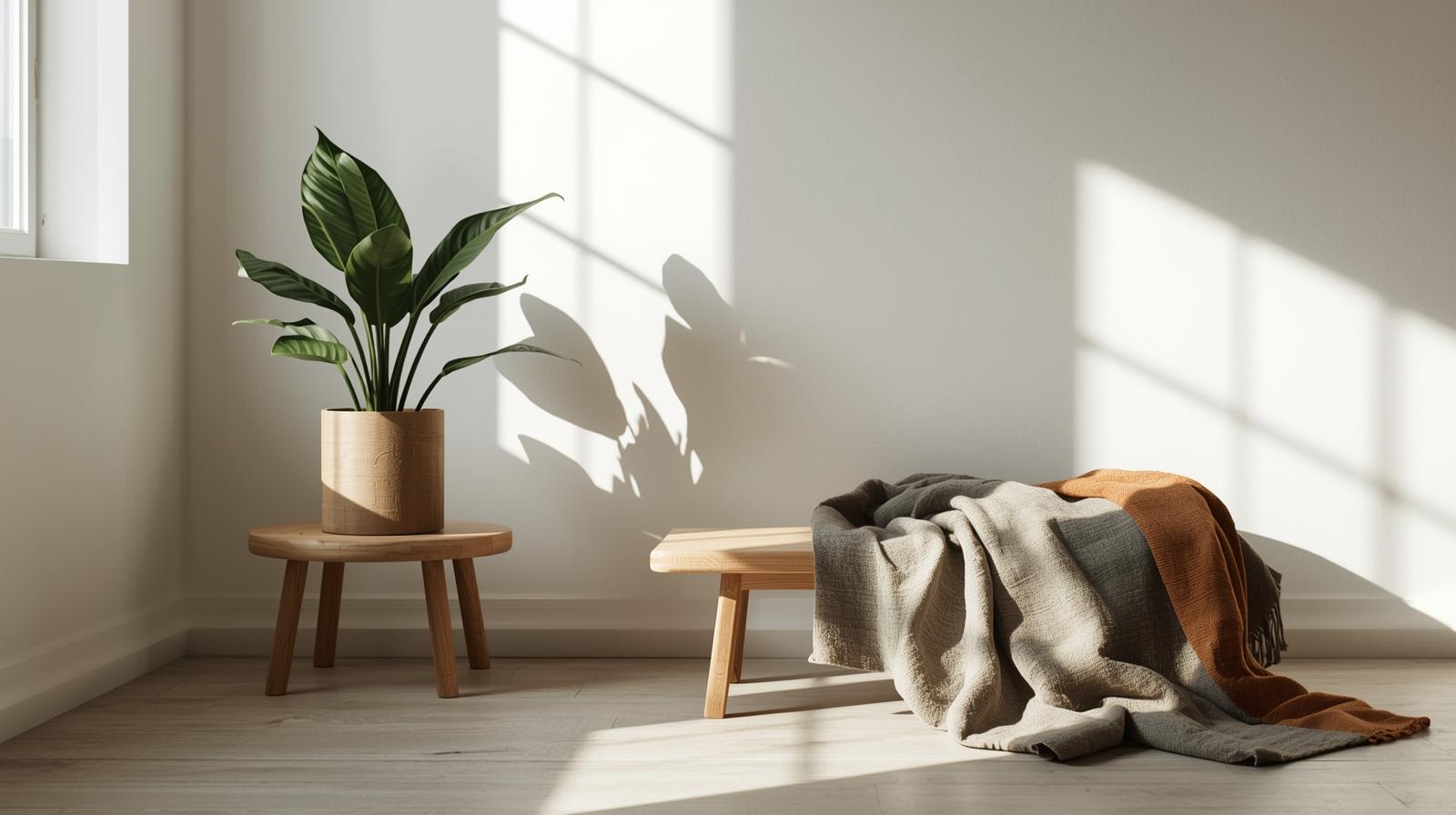
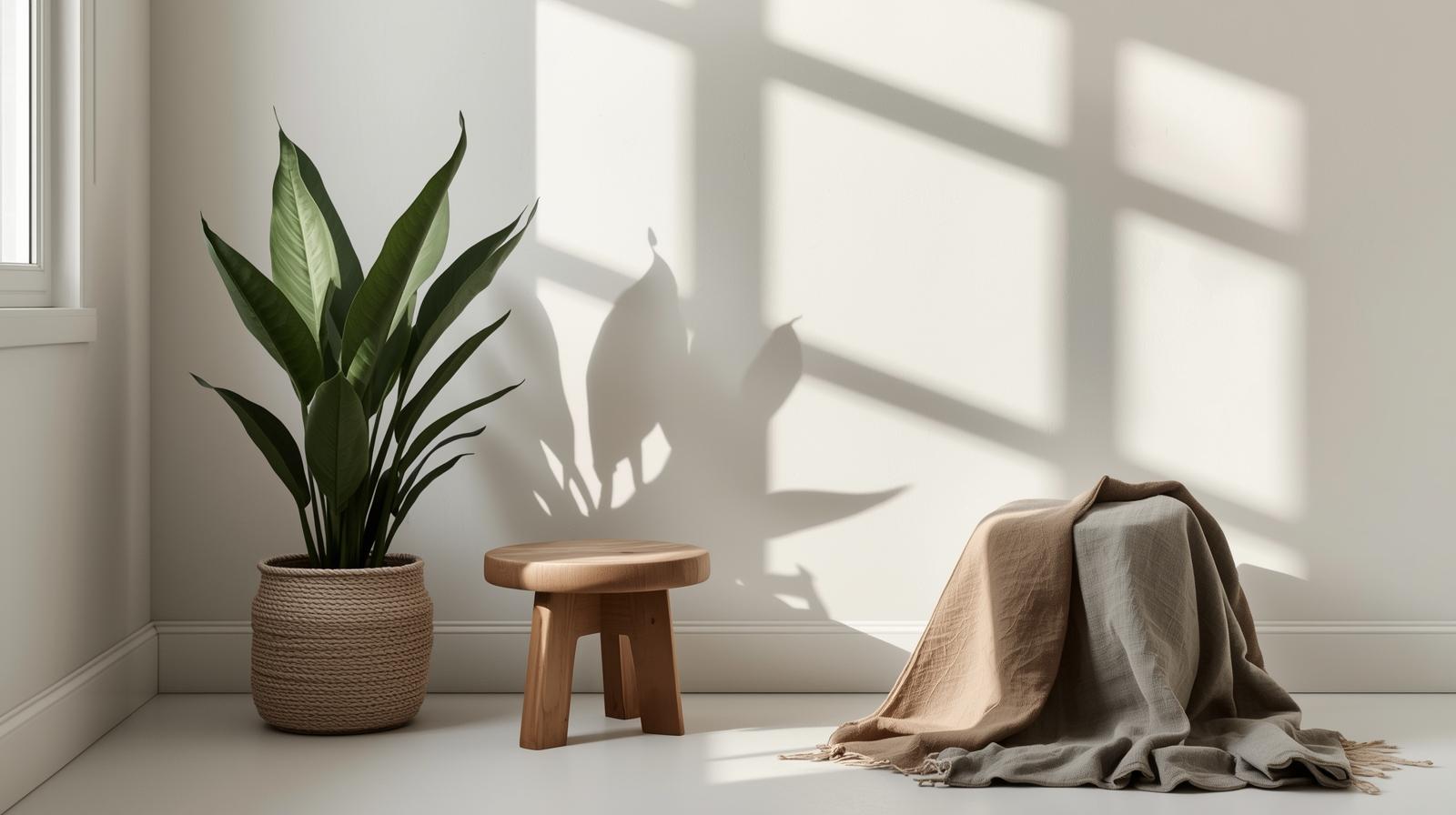
Dust motes drift through a slant of afternoon light, catching on the rough weave of a linen cushion. A single frond of a Snake Plant stands sentinel in the corner, its upright form casting a slender shadow that lengthens with the sun’s retreat. In this quiet convergence of texture, stillness, and soft geometry, the principles of Interior Design, Zen, and Minimalist living reveal themselves—not as rules, but as breath. This is the seed of a sanctuary: not a room, but a rhythm.
The Geometry of Stillness
A Zen corner is not an arrangement—it is an interruption. A deliberate pause carved into the flow of domestic life, where time slows not by decree but by absence. Think of it as negative space made tangible: the Japanese concept of Ma, where emptiness holds as much meaning as form.
Resist the urge to fill. One chair. One plant. One source of light. These are not limitations but invitations—to sit, to see, to simply be. Position this pocket of calm where foot traffic fades: beside a north-facing window, tucked behind a screen, or in the quiet alcove formed by bookshelves.
Choosing the Anchor Piece
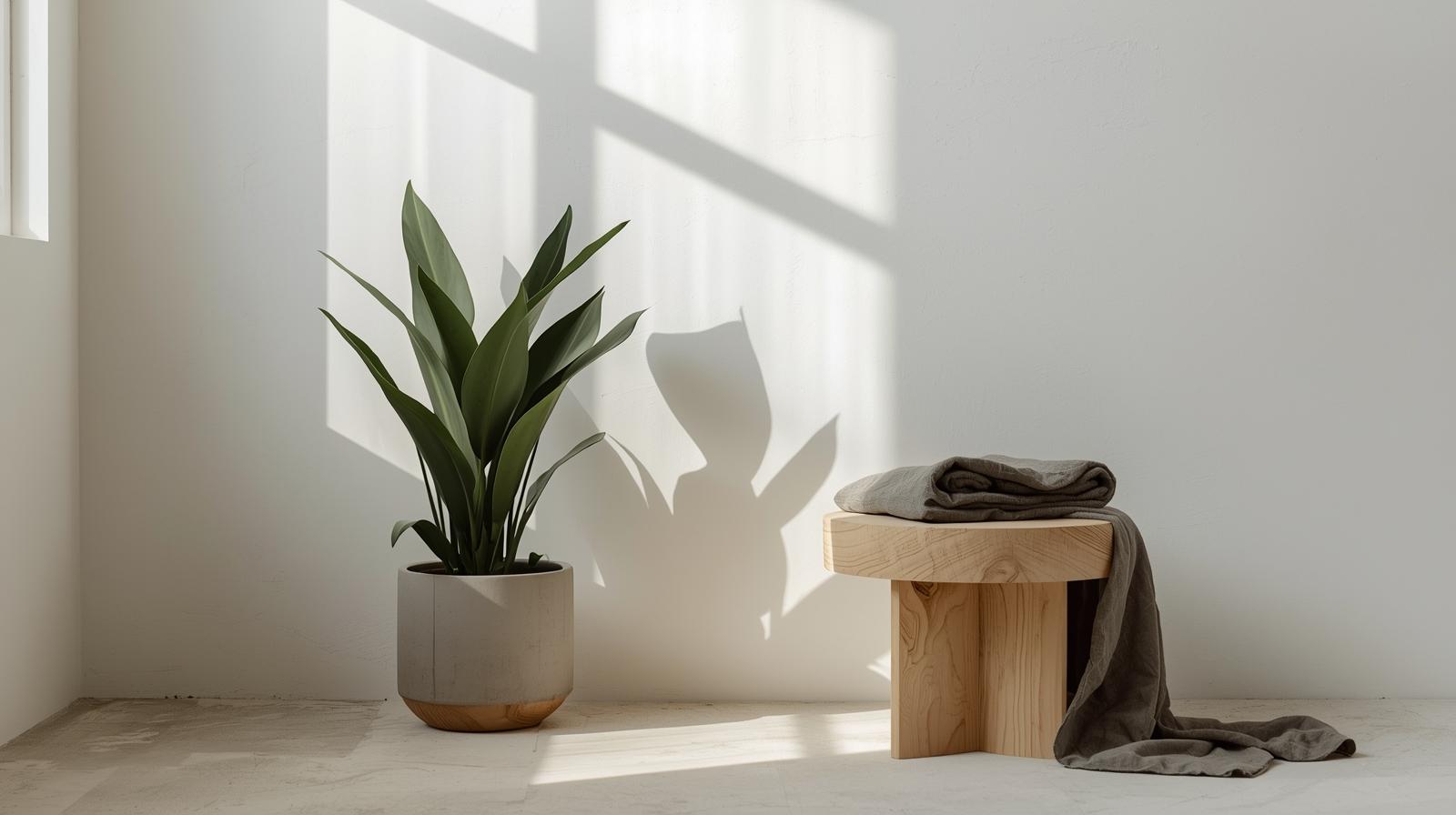
Select seating that encourages stillness, not sprawl. A low wooden bench, a floor cushion stuffed with buckwheat hulls, or a single armchair with clean lines and unadorned wood arms. The goal is posture that supports presence, not collapse.
Materials should absorb sound, not reflect it. Undyed cotton, raw linen, unfinished oak—textures that feel honest under bare feet or fingertips. Avoid anything glossy, padded beyond necessity, or patterned. Let the fabric breathe, and so will you.
Light as Atmosphere
Light is the silent architect of mood. In a Zen corner, it should never glare or dazzle, only soften and reveal. Eastern or northern exposure offers the gentlest natural illumination—cool in the morning, diffuse by afternoon.
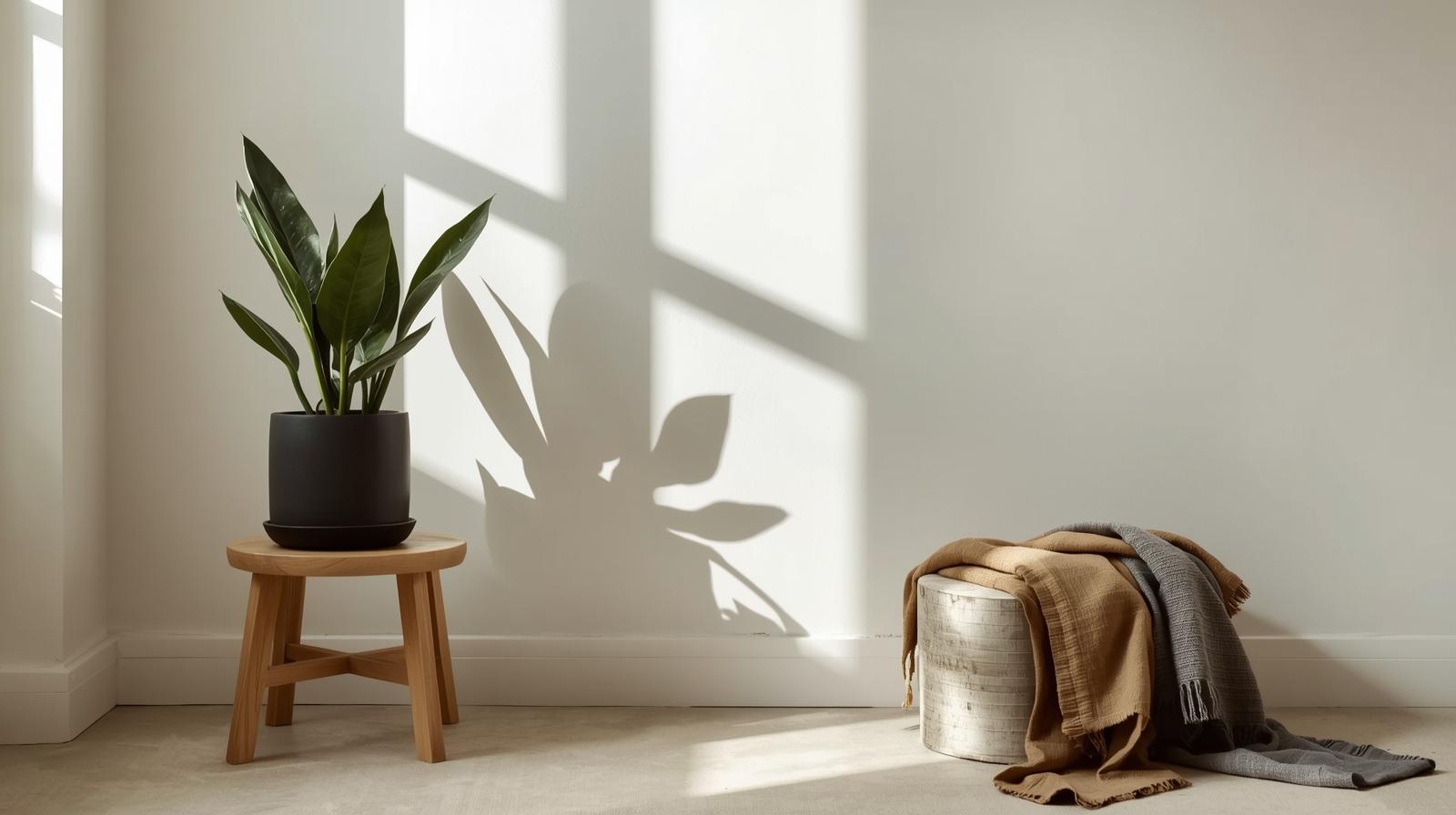
As daylight wanes, introduce warmth through layered artificial sources: a floor lamp with a rice paper shade, a small ceramic table light with a 2700K bulb, or a single beeswax taper in a shallow dish. For deeper guidance on crafting mood through illumination, see our notes on lighting-for-ambiance.
The Role of Shadow
Shadows are not absence—they are depth. A well-placed plant with architectural form, such as a Snake Plant or ZZ, casts a silhouette that shifts with the hour, turning the wall into a living clock. This quiet movement anchors the space in the present.
The upright silhouette of the Snake Plant not only purifies air but also contributes to visual stillness—explore its quiet strength in snake-plant-benefits.
Botanical Companions for Contemplation
Choose plants not for their size, but for their temperament. The ideal companion grows slowly, asks little, and holds its form with quiet dignity. It should not demand attention, but reward observation.
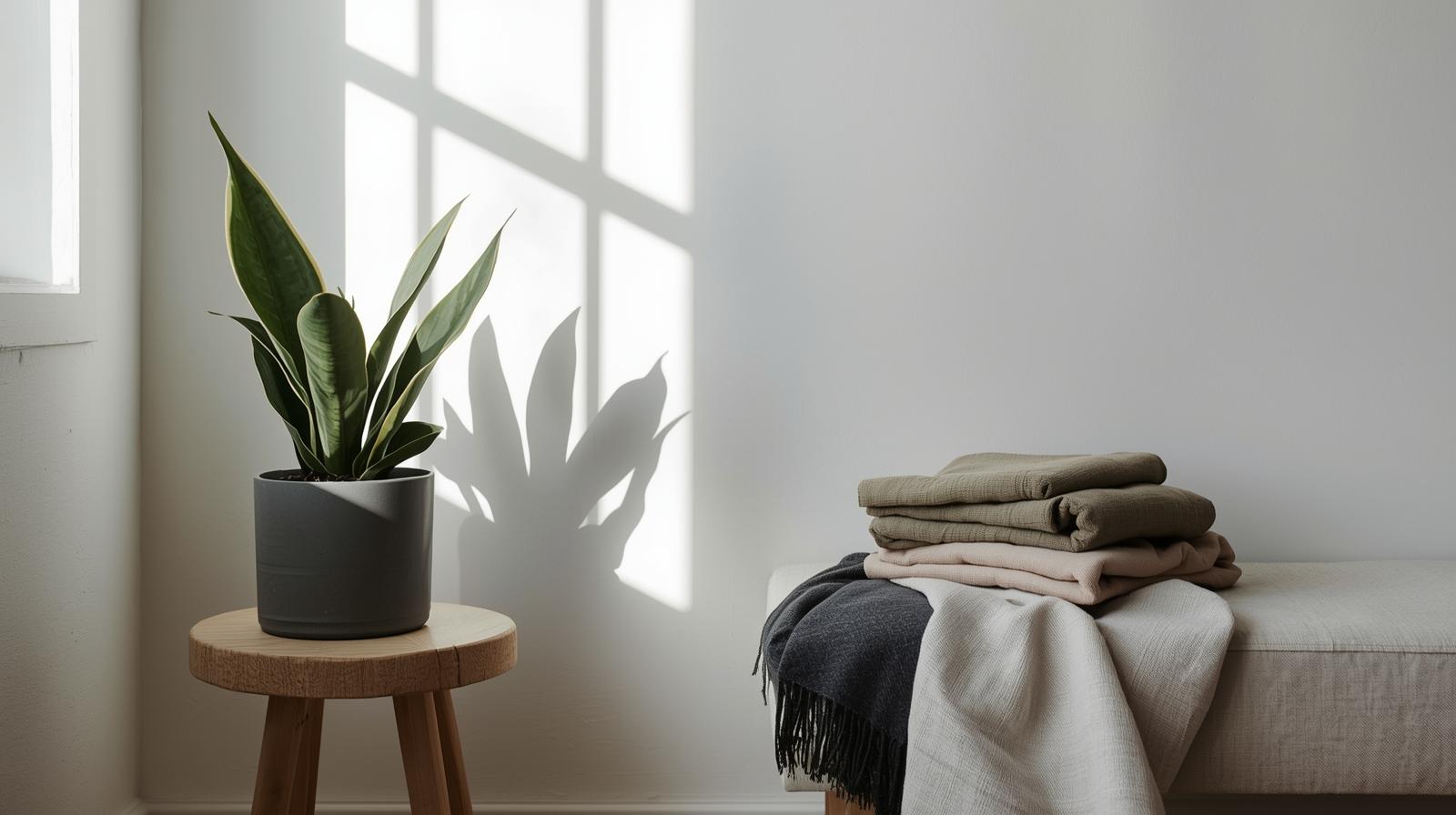
Three species exemplify this ethos: the Snake Plant (resilient, vertical, nearly indestructible), the ZZ Plant (glossy yet unobtrusive, thriving in low light), and the Peace Lily (soft curves, humidity-loving, with blooms that appear like whispered secrets). When selecting green companions for meditation, consider species that foster focus—our guide to best-plants-for-meditation offers quiet allies.
“In the space between breaths, the world reveals itself.” — Zen proverb
Care as Ritual
Watering becomes meditation when done with intention. For a Snake Plant, wait until the top two inches of soil are dry—then water slowly until the pot feels heavy in your hands. Set it down and let excess drain completely; never let it sit in water.
Use a soil mix of two parts potting soil, one part perlite, and one part orchid bark. This ensures drainage while retaining just enough moisture to sustain life without suffocation. Dust leaves weekly with a damp cloth—not to impress, but to honor the quiet exchange between caretaker and plant.
The Silence Between Objects
A Zen corner thrives on subtraction. Remove everything that does not serve stillness: no books, no phones, no decorative bowls filled with keys. If you include an object, let it be singular—a smooth river stone gathered from a walk, a hand-thrown ceramic cup, a single sprig of dried eucalyptus tucked into a narrow vase.
Scent, too, should be subtle. A hidden sachet of dried lavender in a drawer nearby, or the faint aroma of beeswax from a candle, can deepen the sense of retreat without overwhelming the senses. What is absent speaks as loudly as what remains.
Cultivating the Practice, Not Just the Space
A sanctuary is not built in a day, nor maintained by aesthetics alone. It is sustained by return. Five minutes each morning, seated with tea and silence, will root the space in your daily rhythm more surely than any perfect pillow or pot.
Pair your presence with a simple act: count ten breaths, trace the veins of a leaf with your eyes, or write a single sentence in a journal. The corner’s power lies not in its arrangement, but in the consistency of your attention. Let it evolve slowly—like a plant, like a mind settling into itself.
Common Questions
Can a Zen corner work in a studio apartment?
Yes. Define it with a change in floor covering—a tatami mat, a wool rug, or even a large linen cloth. Directional lighting and a single plant can signal a shift in purpose within a shared space.
What if I don’t meditate?
Meditation isn’t required. The corner is for pausing—sipping tea slowly, watching rain, or simply sitting without purpose. Presence is the only prerequisite.
How often should I refresh the space?
Seasonally. Rotate a dried branch in winter, introduce a flowering orchid in spring, or swap cushion covers with the light. Let the corner breathe with the year.
Can I use artificial plants?
While real plants offer subtle movement and life-force, a high-quality silk specimen may suffice if care is impossible. But note: the ritual of tending living greenery is part of the sanctuary’s soul.
Notice how your own space already holds pockets of quiet—waiting only for your attention to become sacred. Sit there. Breathe. Let the light fall where it will.