
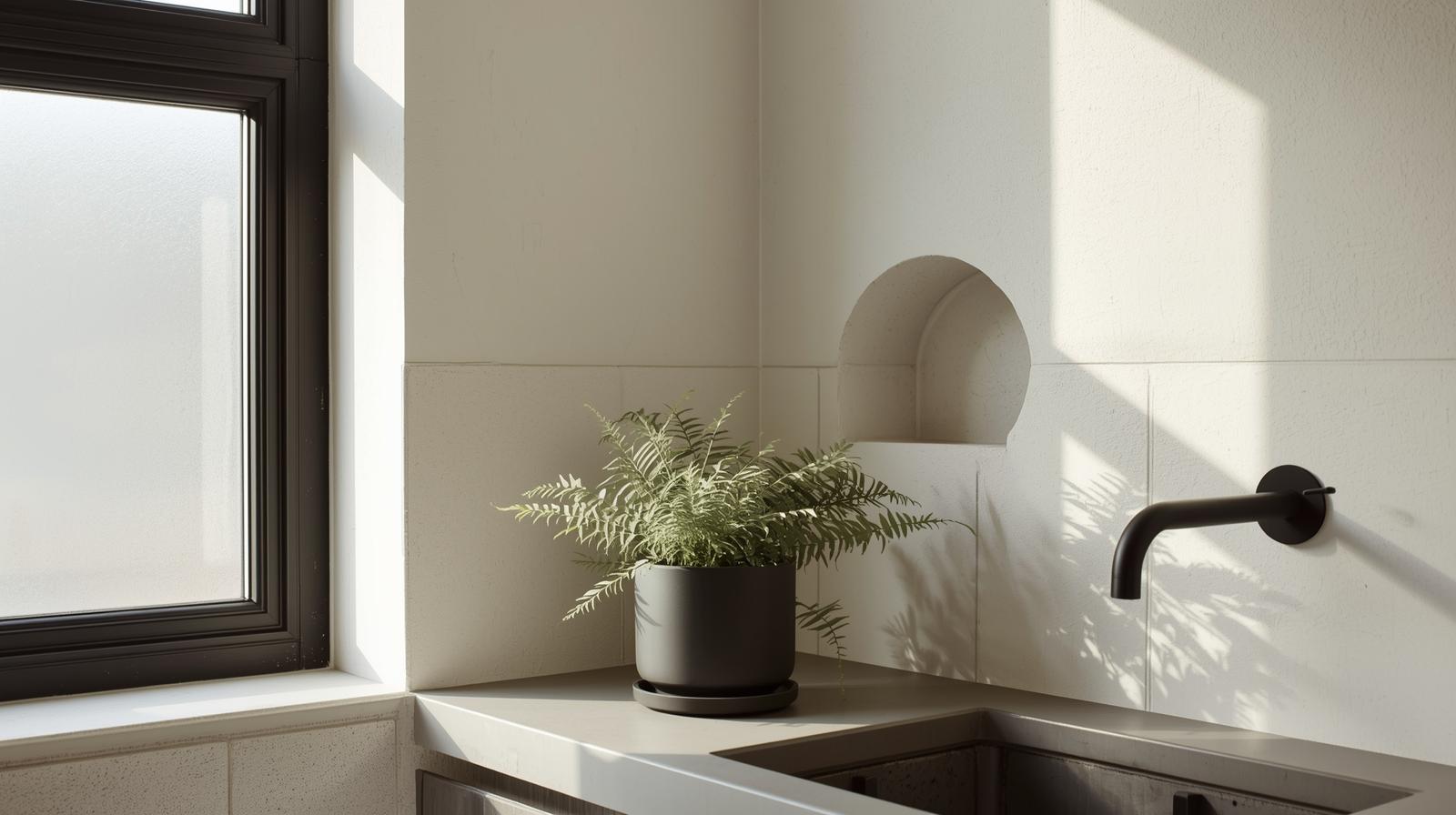
Steam curls from the showerhead, pooling in droplets along cool tile. The air thickens—not with clutter, but with possibility. In that suspended breath between rinse and towel, you notice it: a whisper of green unfurling in the corner, fronds trembling like secrets held in damp palms. This is not just a bathroom. It’s the edge of a rainforest, waiting to be remembered.
Why Ferns Belong in the Steam
Ferns never evolved to survive dry air. Their ancestors thrived in Carboniferous swamps long before flowers existed—moist, shadowed, and still. Your bathroom, especially after a hot shower, echoes that ancient world.
Unlike succulents with thick, waxy skins, fern fronds are thin and porous. They breathe through their surfaces, drawing moisture straight from the air. When humidity dips below 40%, they respond with brown tips, curling edges—their quiet protest.
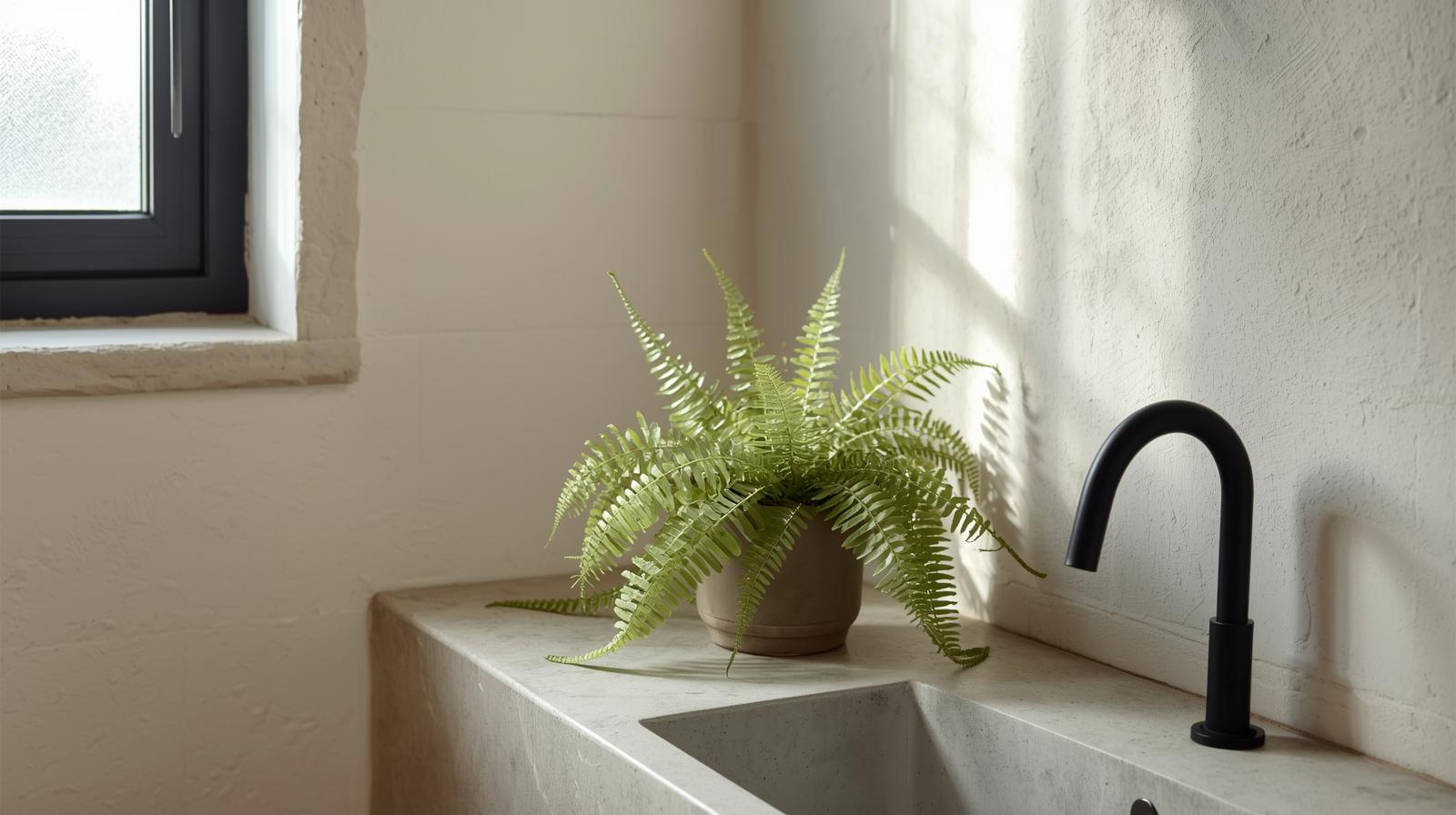
Grab a hygrometer (the small, unobtrusive kind that sticks to tile with a suction cup). If it reads between 50% and 70% after your morning routine, you’ve got a microclimate worth nurturing. And when light filters through the lingering mist, catching each droplet on a frond like a lens—well, that’s not just botany. That’s atmosphere.
Choosing Your Quiet Companion
Not all ferns are cut from the same spore. Some demand devotion; others forgive neglect. Match the plant to your rhythm, not your Pinterest board.
The Maidenhair Fern is exquisite—and fussy. Its black stems and lacy leaves collapse at the first sign of dry air. Only choose it if your bathroom steams daily and you’re willing to mist with intention. Think of it as a silent barometer for your self-care.
The Bird’s Nest Fern, by contrast, is generous. Its broad, rippled fronds gather moisture like cupped hands. Tuck it on a shelf near a north-facing window, and it will thrive even in modest light. (It’s also one of the few ferns that won’t shed constantly—ideal for minimalist spaces.)
For color, the Japanese Painted Fern offers silvered fronds with a blush of burgundy along the veins—like twilight captured in foliage. Keep it slightly cooler and away from direct sun, or the hues fade to green.
And if your vanity is narrow or your space tight, the Button Fern fits neatly beside soap dishes and toothbrush holders. Its round, bead-like leaflets feel almost playful—like nature winking at your morning routine.
Avoid Boston Ferns in compact, poorly ventilated bathrooms—they need airflow as much as moisture. If you’re set on one, read our full guide on Boston fern care before committing.
Placement as Intention
Where you set your fern matters more than how many you own. Place it where you’ll see it—not as decoration, but as a companion.
Elevate it. A teak stool, a floating shelf, even a stack of worn linen towels—lift it above cold tile floors where water pools and roots chill. Cold feet stress ferns faster than dry air.
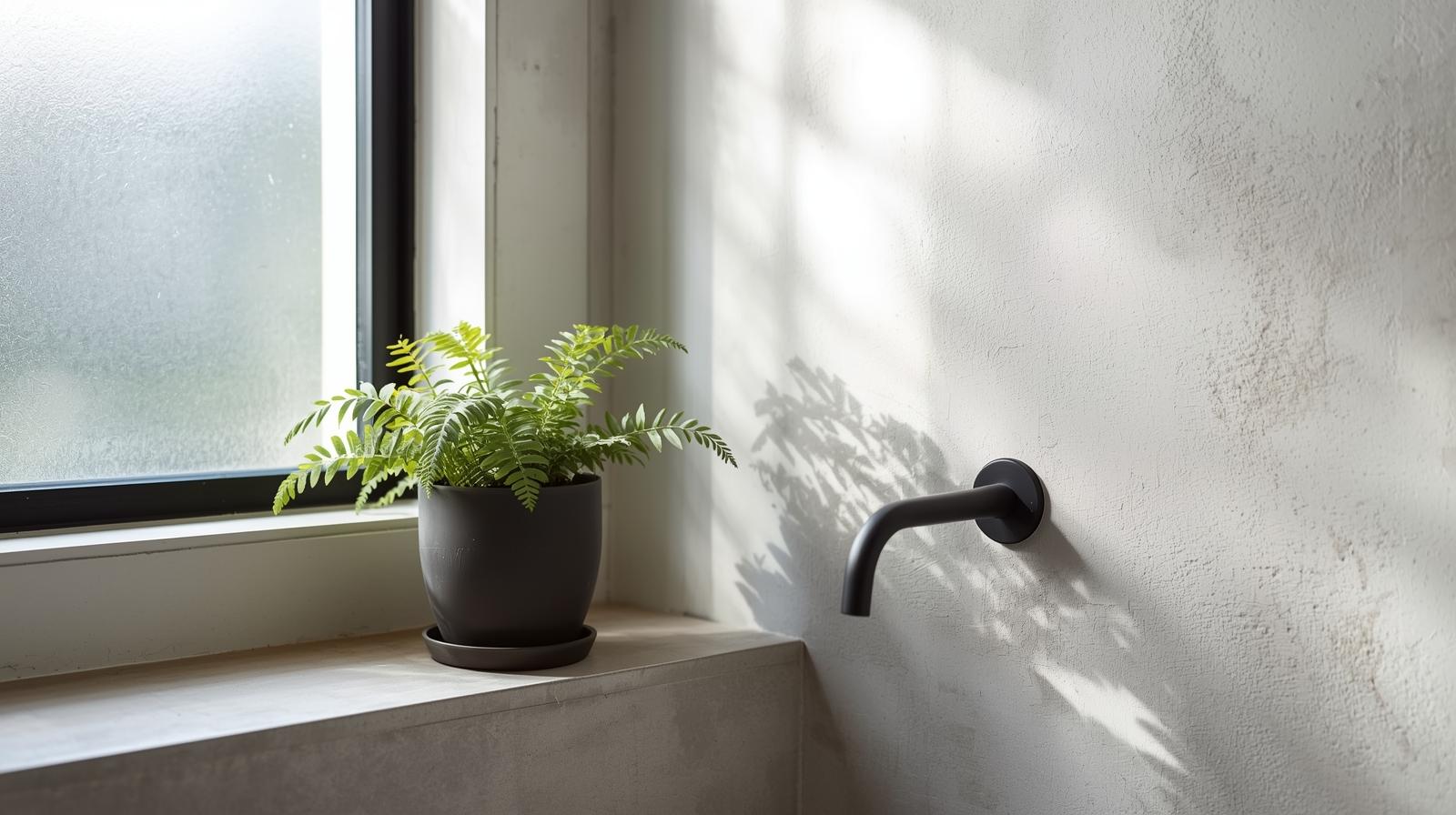
Watch the light. Morning sun through a frosted window? Perfect. Harsh afternoon glare off white walls? Too much. Ferns love diffused brightness—the kind that paints soft gradients on walls, not sharp shadows.
And leave space around it. Let the fronds breathe. A single fern in an empty corner speaks louder than five crowded on a windowsill. This isn’t about filling voids. It’s about honoring quiet.
The Quiet Thirst: Watering Without Worry
Overwatering kills more ferns than underwatering. Their roots need air as much as moisture. Soggy soil suffocates them slowly, silently—until one day, the whole plant collapses like a sigh.
Press your finger two knuckles deep into the soil. If it feels like a wrung-out sponge—cool, slightly resistant, but not wet—you’re golden. If it’s bone-dry or sludgy, adjust.
For terracotta pots (which breathe beautifully but dry fast), try bottom-watering: set the pot in a shallow basin of room-temperature water for 15 minutes. Let it drink from below. Then lift it out, drain, and return it to its perch. The weight will feel different—lighter when dry, substantial when hydrated.
And misting? It’s not just about humidity. It’s a ritual. Three slow sprays while you exhale. Watch the droplets cling, then slide. That moment—small, deliberate—is where calm begins.
“To care for a fern is to practice patience in miniature—a daily act of faith in slow unfolding.” — Elara Moss, The Still Garden
Beyond the Frond: Designing Your Spa Atmosphere
A fern isn’t just a plant in your bathroom. It’s the first note in a quiet composition.
Pair it with raw textures: unglazed ceramic, woven bamboo, river stone. These materials absorb sound, soften edges, and echo the forest floor. Avoid glossy surfaces that reflect harsh light—opt for matte finishes that hold shadow.
Keep scents simple. Skip heavily perfumed soaps that compete with the green, mineral smell of damp soil. A drop of eucalyptus in the shower is enough—clean, not cloying.
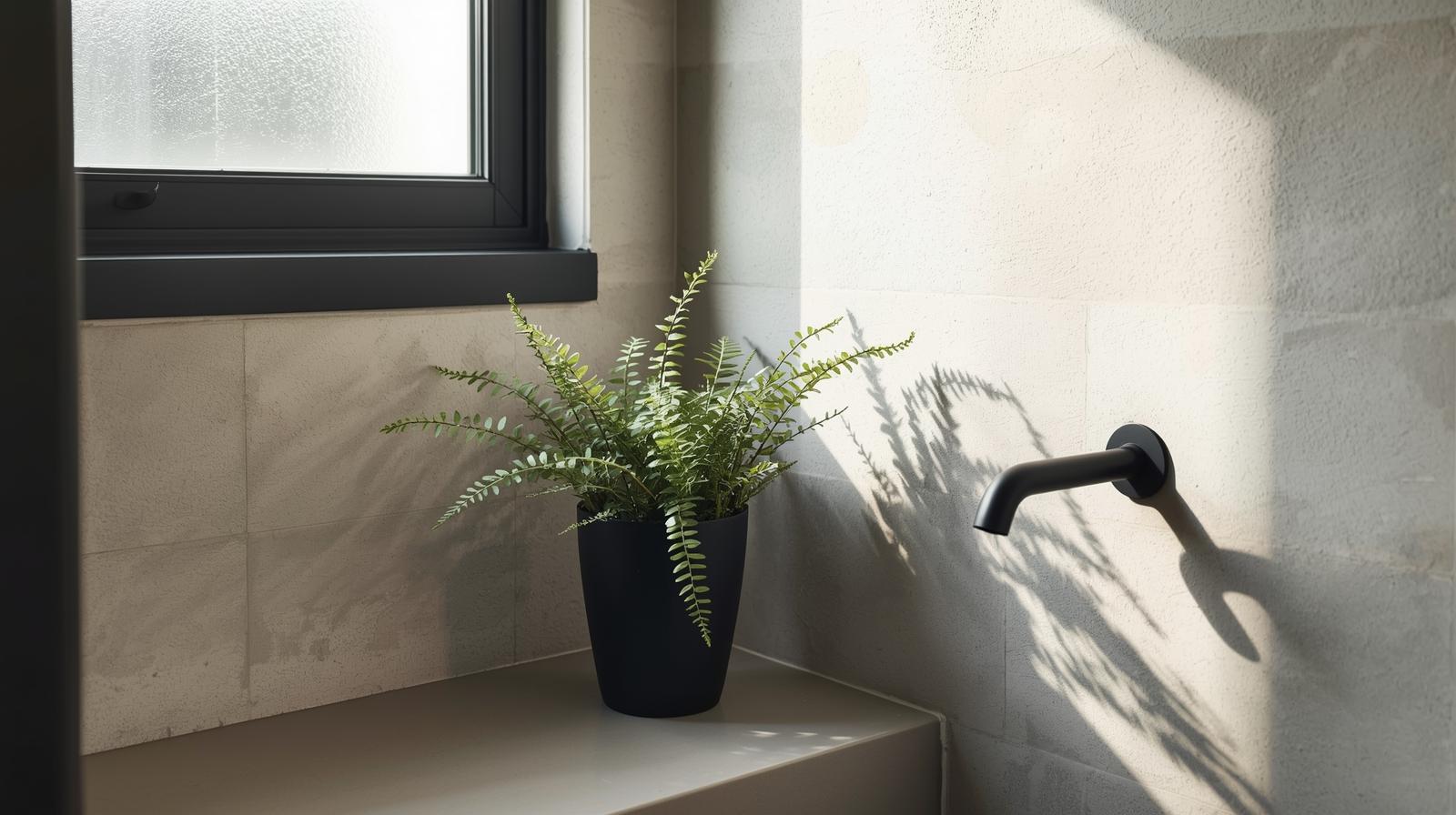
At night, place a small LED puck light beneath the pot. The fronds cast lace-like shadows on the wall—living art that shifts with steam and stillness. And in the quiet after the water stops, listen: sometimes, you can hear the faintest rustle as fronds adjust to the cooling air.
Let your fern be imperfect. A dropped frond on the tile isn’t failure—it’s part of the cycle. Sweep it gently into your palm and compost it. Honor the release.
When the Air Turns Thin: Humidity Hacks for Dry Bathrooms
Not every bathroom steams like a Turkish bath. If yours feels more like a desert after brushing your teeth, don’t despair.
Group your fern with other humidity-loving plants—a Calathea, a Prayer Plant, even a small Peace Lily. Together, they create a shared breath, a microclimate stronger than any one alone.
A pebble tray works, but only if done right: fill a wide dish with stones, add water just below the surface, and set the pot on top. Never let the base sit in water—that invites rot. Refresh the tray weekly to prevent algae.
Or, tuck a tiny ultrasonic humidifier into a cabinet. Run it for 20 minutes while you shower. The mist will linger long after you’ve toweled off.
And if you rarely use the tub? Open the door during laundry day. Let the steam from the dryer drift in. Small acts of sharing go a long way—for plants, and for us.
Common Questions
Can I keep a fern in a windowless bathroom?
Yes—if you’re willing to supplement light. A full-spectrum grow light on a timer (12–14 hours daily) can mimic indirect sun. The Bird’s Nest or Button Fern adapts best. Keep humidity high, and rotate the pot weekly for even growth.
Why are my fern’s tips turning brown?
Usually low humidity or chemical sensitivity. Tap water’s chlorine and fluoride can scorch delicate fronds. Switch to rainwater, distilled, or filtered water. Trim only the brown parts—not the whole frond—and increase ambient moisture with misting or grouping.
How often should I fertilize bathroom ferns?
Sparingly. Once every 6–8 weeks during spring and summer with a diluted organic liquid fertilizer (half-strength). Never in winter, when growth slows. Ferns aren’t hungry—they’re content with consistency.
Are ferns safe around pets?
True ferns—Maidenhair, Bird’s Nest, Button—are non-toxic to cats and dogs. Avoid “asparagus ferns” (not real ferns) and “fern palms,” which can cause vomiting or skin irritation. When in doubt, stick to the classics.