
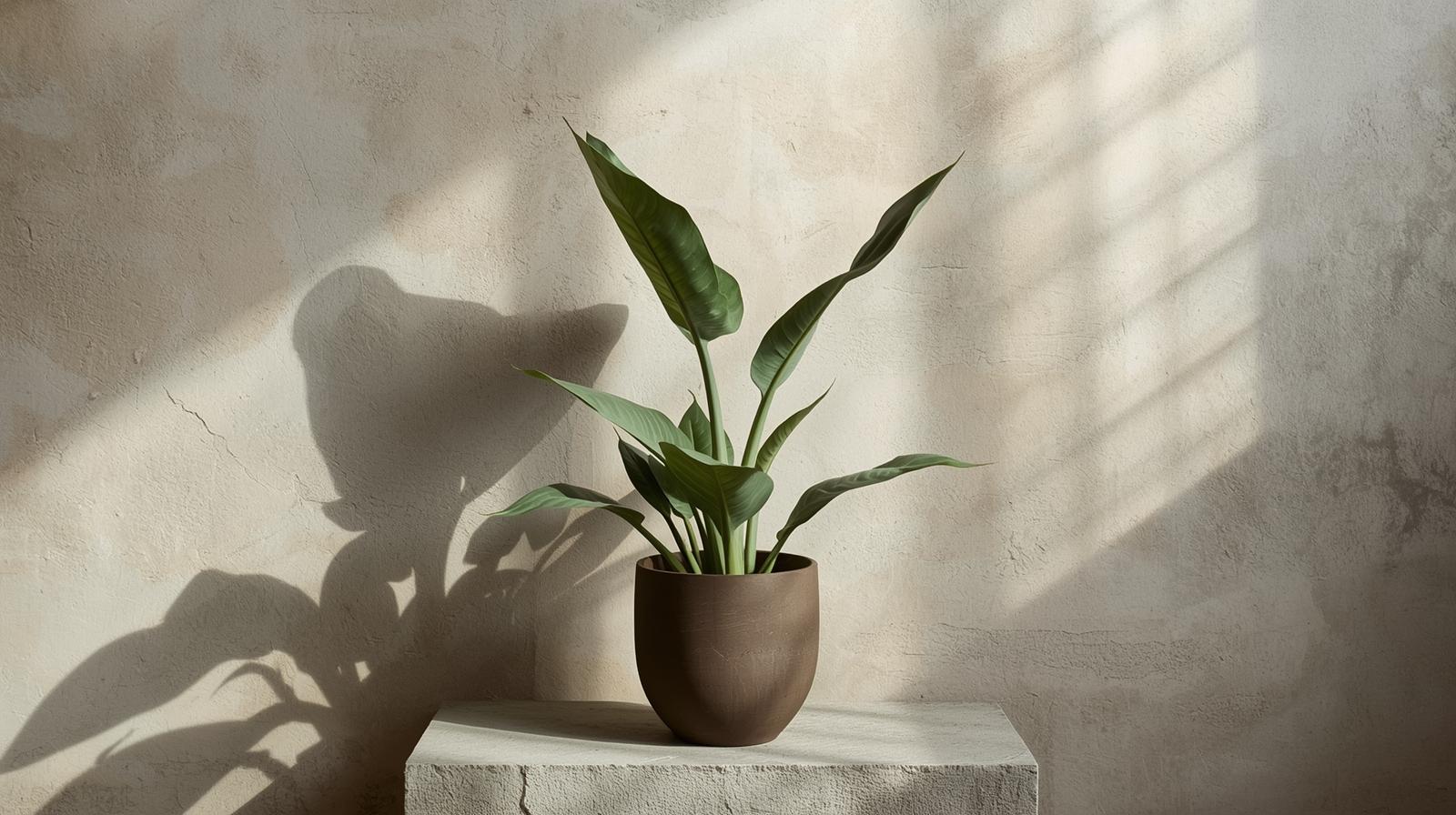
Dawn light slips through the kitchen window, just shy of direct—soft, forgiving. On the sill, a Calathea unfurls its leaves like hands opening after a long night’s prayer. The undersides shimmer faintly, veins tracing ancient scripts in deep maroon. There’s a quiet rustle, almost imperceptible, as the plant shifts toward the glow. Not all movement is loud. Some of it is a whisper between leaf and light, a daily ritual performed without audience, yet full of grace.
The Living Clock of the Forest Floor
Calatheas don’t keep time with hands or chimes. They move with the sun’s slow arc—lifting their leaves in the evening like folded hands at dusk, lowering them again at first light. This is nyctinasty, a botanical reflex honed in the humid understories of Brazil, where competition for filtered light shaped every gesture into survival.
Watch yours at twilight. You might catch the subtle hinge at the leaf’s base—the pulvinus—swelling with water, adjusting its posture as if bowing to the day’s end. (It’s not praying. But it might as well be.)
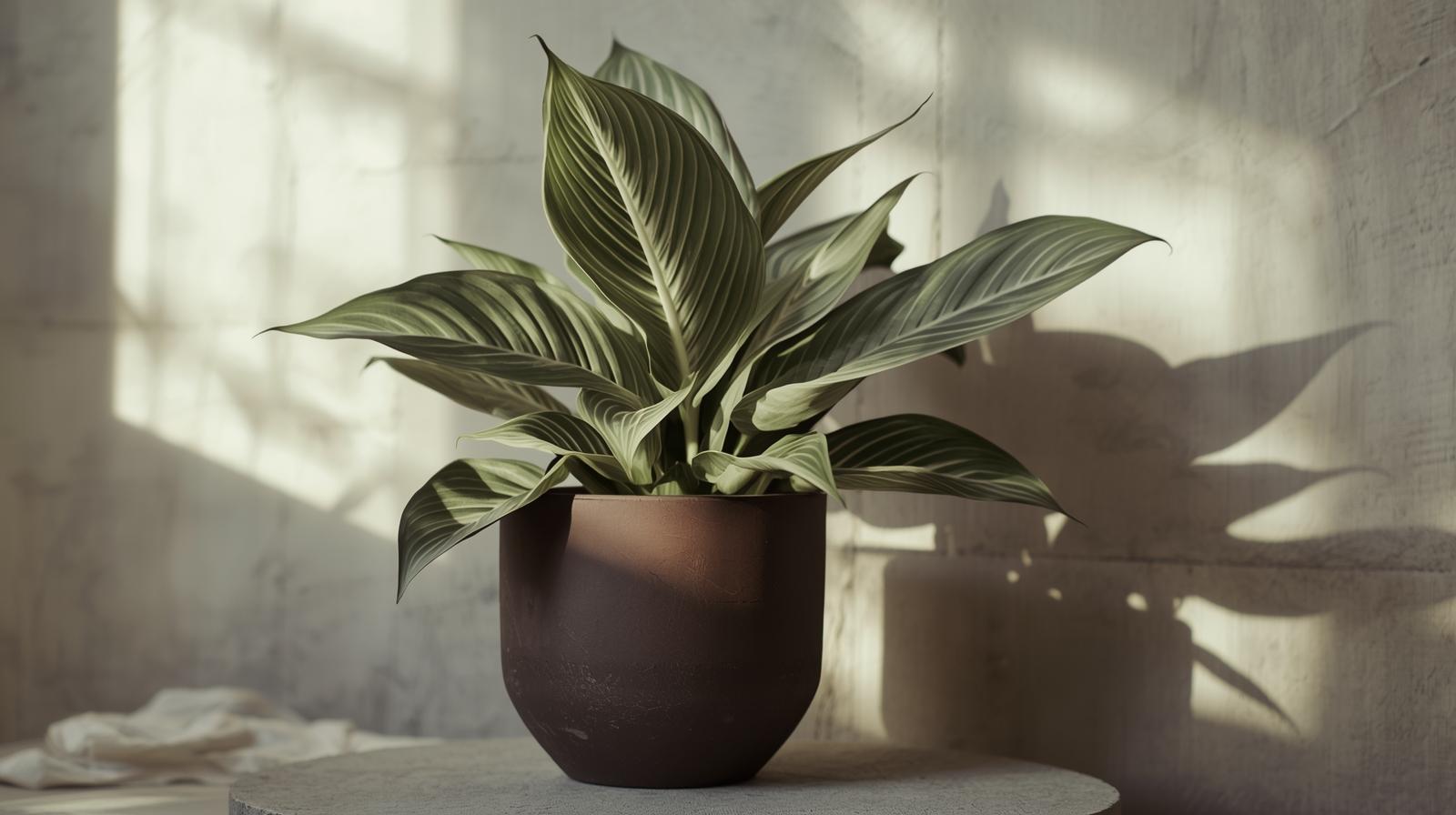
Try this: make your morning coffee, then stand quietly beside your plant for two minutes. Let its rhythm set the pace for your day. No phone. Just breath and leaf.
When Stillness Speaks Louder Than Growth
Unlike the showy Monstera or the relentless Pothos, a Calathea won’t sprint toward the ceiling. It grows slowly, deliberately—sometimes barely at all. And that’s the point. Its language isn’t in new leaves, but in the tilt of an old one, the deepening of a pattern, the way it holds moisture in its air like a secret.
Healthy Calathea leaves feel supple, cool to the touch, with a slight give—like the skin of a ripe plum. If they crisp or curl inward, it’s not a tantrum. It’s a quiet plea: the air is too dry, or the water shocked me, or simply, I need you to notice.
The Language of Patterns
Run your eyes along the feathered silver veins of a Calathea medallion, or the bold zebra stripes of a Calathea zebrina. These aren’t just decoration. In the wild, such markings break up the leaf’s outline—camouflage against forest predators. Indoors, they become meditative anchors.
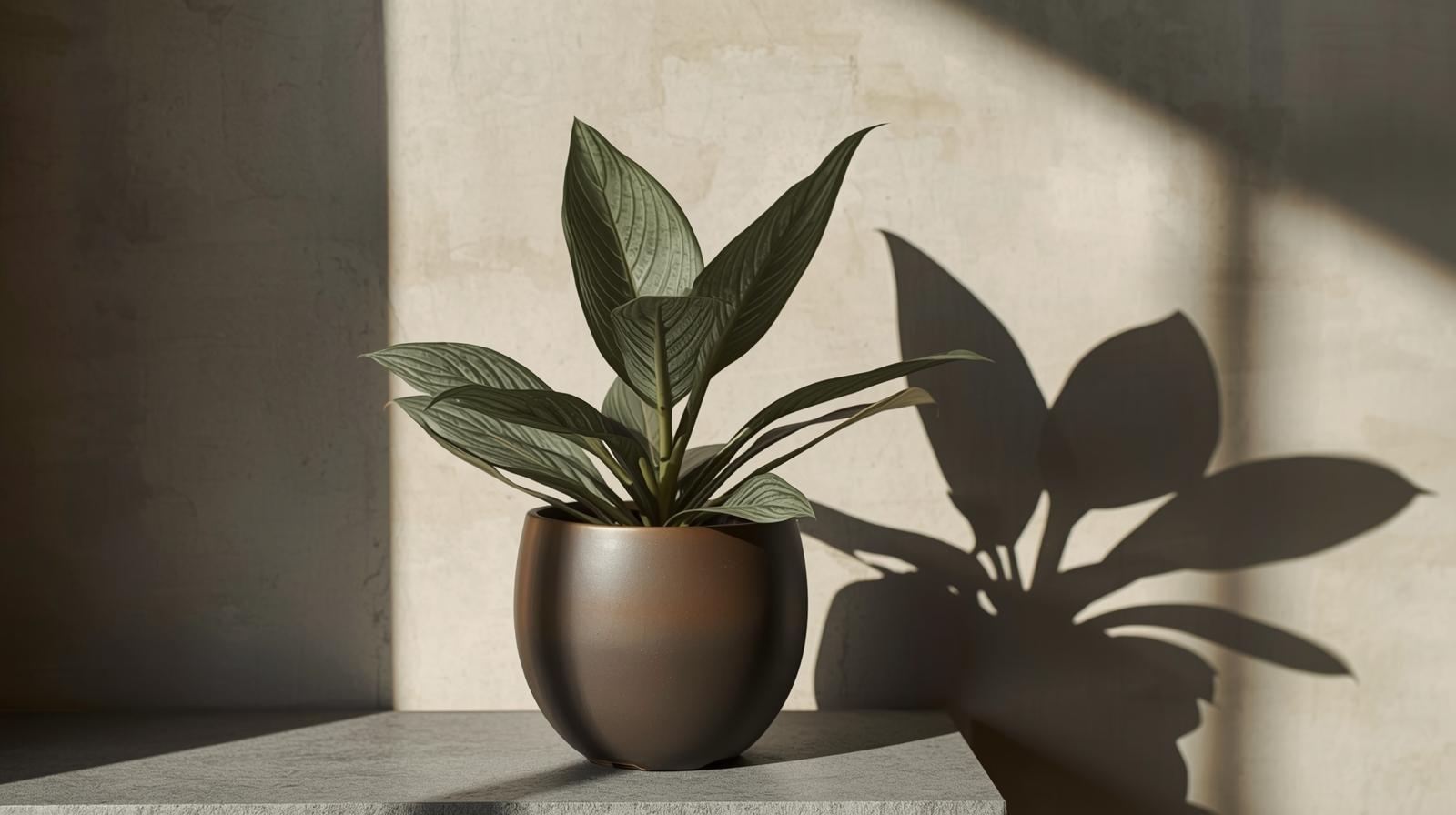
Sit with your plant on a slow afternoon. Trace one pattern with your gaze from base to tip. Let your mind follow the line until your thoughts soften. This is how you learn its moods—not by measuring, but by witnessing.
The Quiet Thirst
Calatheas hate soggy feet but despise dry spells even more. The soil should feel like a sponge you’ve just wrung out—damp, never dripping. Stick your finger in up to the second knuckle. If it comes out cool and slightly clinging, you’re golden.
And the water itself matters. Tap water, with its chlorine and fluoride, can scorch leaf tips into brittle brown lace. Let it sit in an open pitcher overnight—let the chemicals gas off. Or better yet, use rainwater collected in a ceramic bowl on your balcony. (Your plant will thank you with glossier leaves.)
When you water, do it slowly. Pour in circles around the base, not down the center. Feel the pot grow heavier in your hands—that’s your cue to stop.
Breathing Together
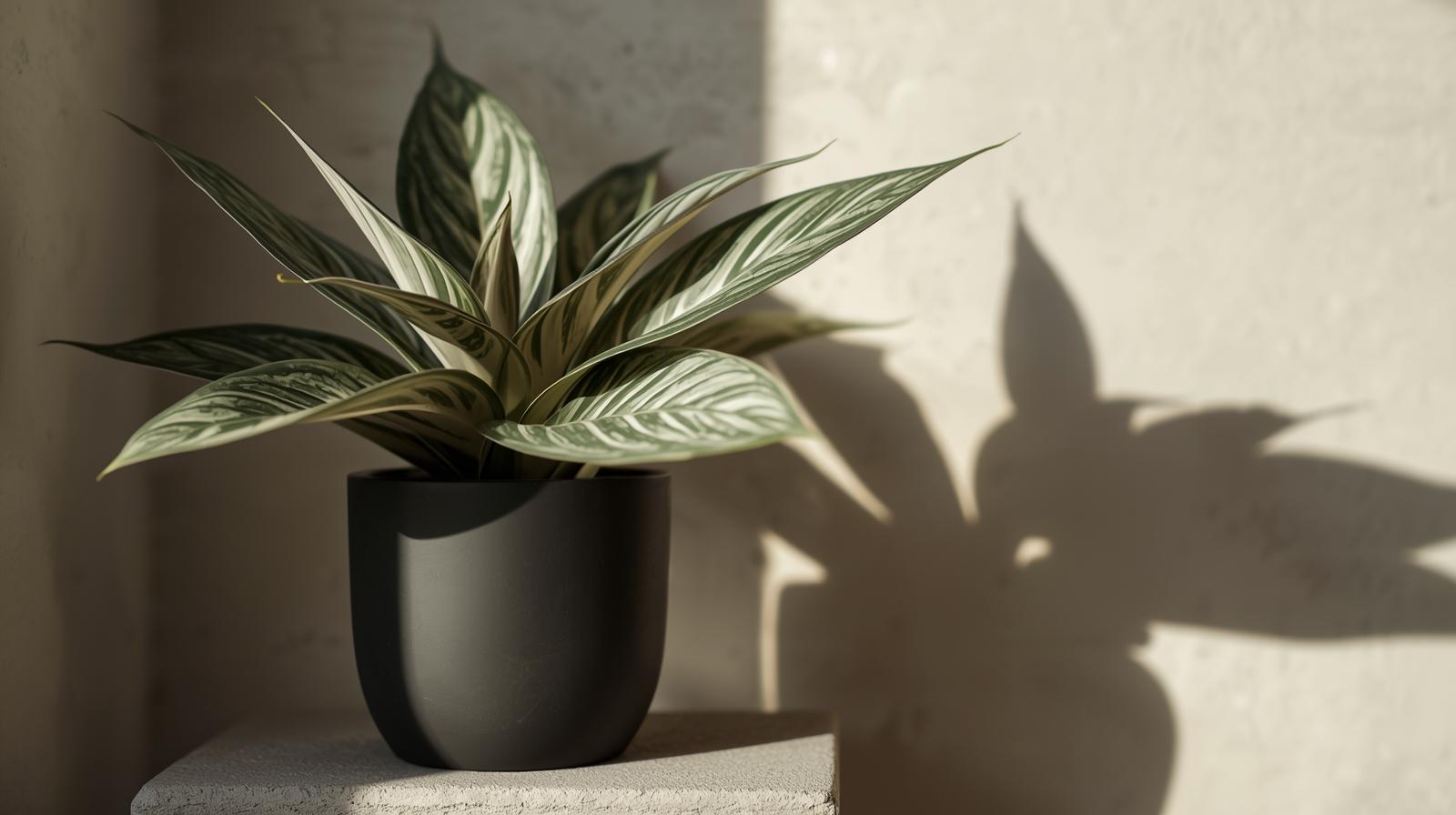
Calatheas don’t just like humidity—they breathe it. Their stomata, the tiny pores on their leaves, open wider in moist air, exchanging gases with ease. In dry rooms, they seal up tight, stressed and silent.
Group your Calathea with other green companions—ferns, Fittonias, even a trailing Peperomia. Their collective transpiration creates a microclimate, a shared breath. A pebble tray works too, but fill it with intention: arrange the stones like riverbed stones, pour water just below their surface, and let evaporation rise like a soft sigh.
If your home runs dry, especially in winter, explore our gentle humidity rituals—small acts that nourish both plant and person. And rest easy: Calatheas are safe around cats and dogs, so their quiet presence won’t endanger curious paws.
“Plants are the slow, deliberate thoughts of the earth.” — Unknown
Dancing in the Dim
Direct sun is a betrayal to a Calathea. It scorches those delicate patterns into pale ghosts. What it craves is indirect light—the kind that filters through a sheer curtain, bounces off a white wall, or drifts in from a north-facing window.
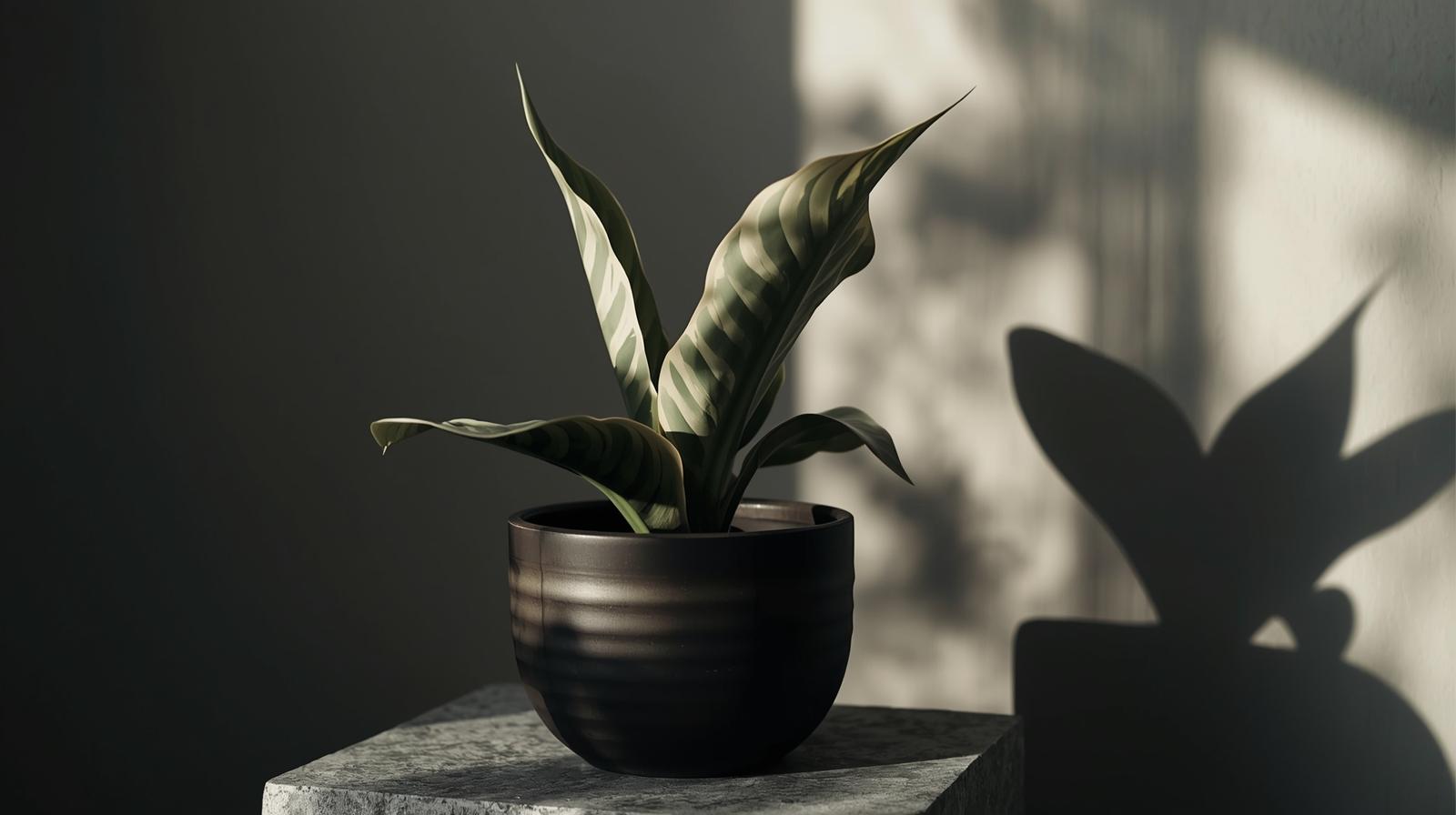
Think of it this way: in its native forest, sunlight never falls straight. It dapples. It glances. It arrives softened by layers of canopy. Recreate that. A spot three feet back from an east window? Perfect. A shaded corner brightened by a warm LED grow light? Also fine.
If you’re building a quiet nook in a dim room, let the Calathea be your centerpiece. Pair it with other shade-lovers like the Cast Iron Plant or the Parlor Palm—ideas you’ll find in our guide to low-light sanctuaries.
Rotate the pot a quarter-turn each week. Not because it’s fussy—but because it wants to move evenly toward the light, like a dancer turning slowly in place.
The Art of Letting Go (of Perfection)
Brown tips will happen. A lower leaf may yellow and drop. Don’t panic. This isn’t failure—it’s conversation.
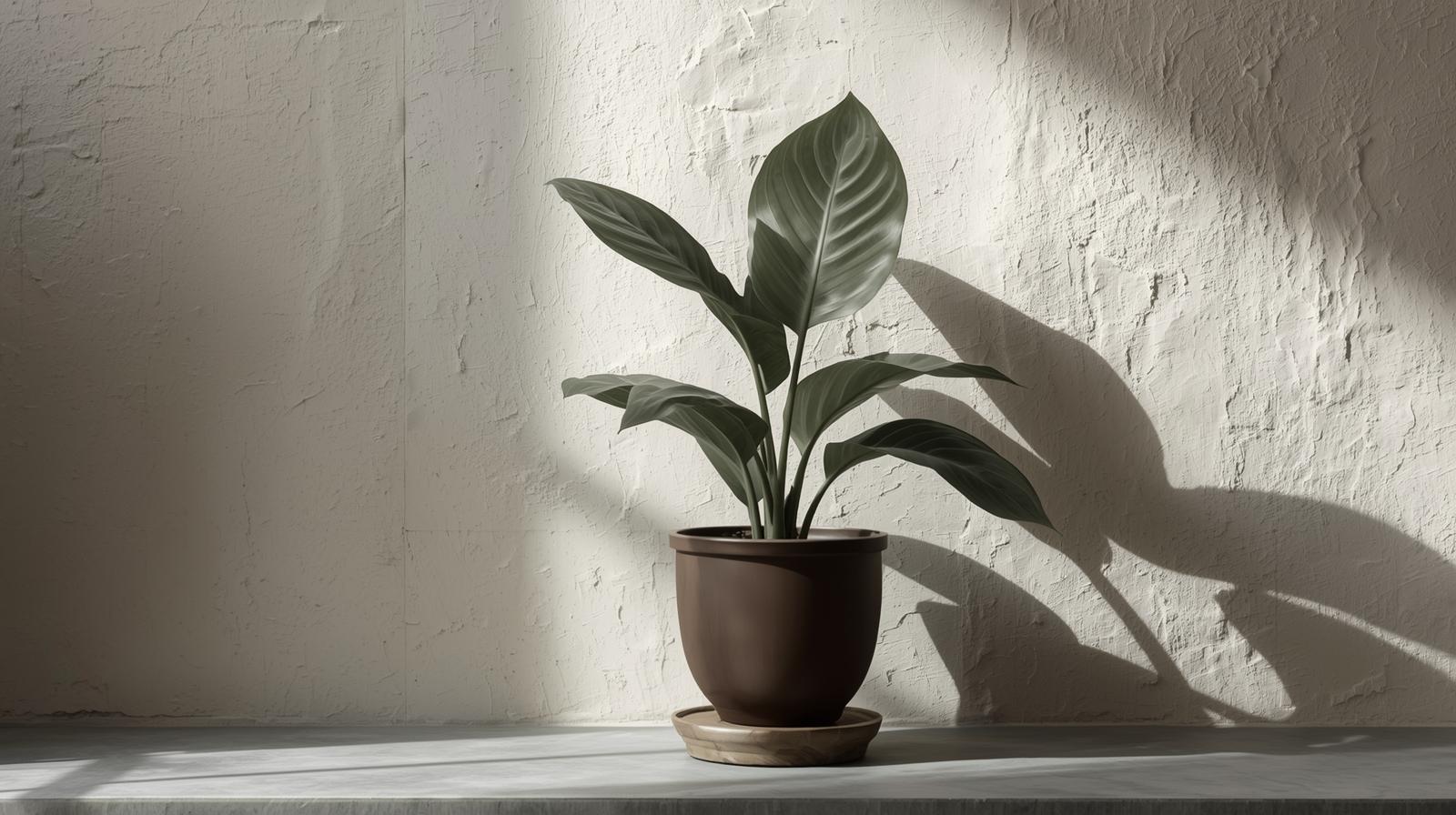
Calatheas are honest. They show stress quickly, yes—but they also forgive quickly, if met with consistency. Trim only what’s truly dry, using clean scissors angled just above the soil. Leave the rest. Let the plant shed what it needs to.
Keep a small notebook nearby. Jot down the date when a new leaf emerges, or when you notice the evening “prayer” motion returning after a dry spell. Over time, you’ll see patterns—not just in the foliage, but in your own care. In your attention. In your calm.
Common Questions
Why do Calathea leaves move up and down?
It’s called nyctinasty—a response to light changes. Water shifts in the pulvinus (a joint-like structure at the leaf base), causing the leaves to rise at night and lower by day. It’s automatic, ancient, and utterly mesmerizing to watch.
Are Prayer Plants safe around cats and dogs?
Yes. Calatheas are non-toxic to pets. While large ingestions might cause mild stomach upset, they won’t poison your furry friends—making them a thoughtful choice for compassionate homes. See our full list of pet-safe indoor plants for more peaceful companions.
Why are the patterns on my Calathea fading?
Too much direct light bleaches the pigments. Move your plant to a spot with bright but indirect light. New leaves will emerge with their full, intricate markings restored.
Can I grow a Calathea in a bathroom?
Absolutely—if the bathroom gets some natural light (even from a high window) or consistent artificial brightness. The humidity from showers mimics its tropical home. Just avoid placing it directly under a vent or in total darkness. For more ideas on nurturing green life in shadowed spaces, visit our low-light sanctuaries guide.