
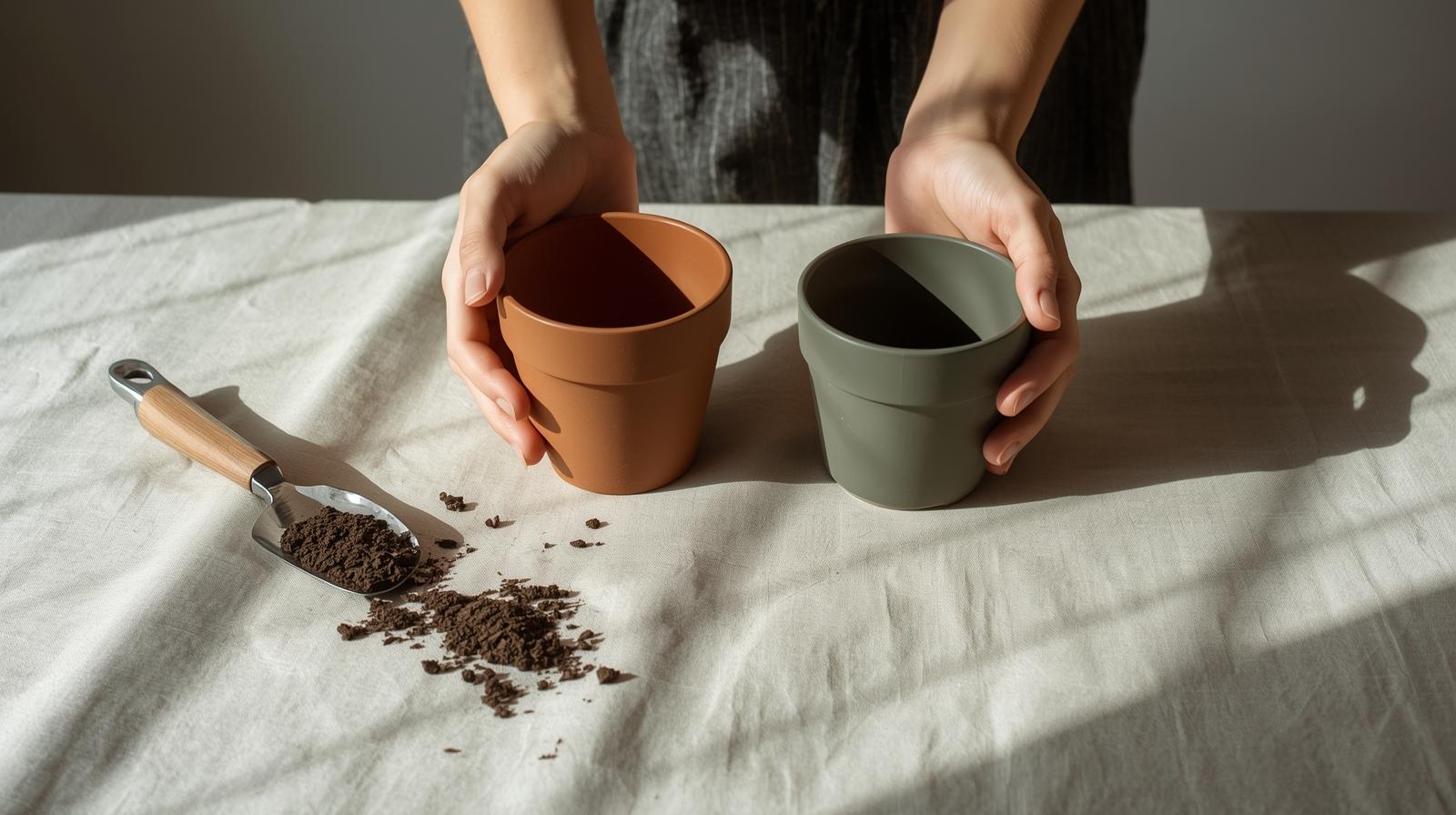
The scent of damp earth rises as you press your thumb into the soil—cool, crumbly, alive. Beside you, a terracotta pot exhales a faint, mineral sigh, its porous walls darkened by yesterday’s rain. In another corner, a glossy ceramic vessel holds its moisture close, smooth and silent. Both cradle green life, yet they breathe in utterly different rhythms. This is where your care begins: not with a watering can, but with a choice of clay.
The Quiet Thirst of Clay
Terracotta doesn’t hide its intentions. Water seeps through its walls like breath through skin, leaving a cool trace on the outside within minutes of watering. Run your palm over it—damp, slightly gritty, honest. That evaporation isn’t a flaw; it’s a rhythm your plant’s roots recognize from desert floors and sun-baked riverbanks.
Ceramic, especially when glazed, keeps its secrets. Water stays in. The soil stays wet. For a fern or a peace lily, that’s kindness. For a succulent, it’s a slow suffocation.
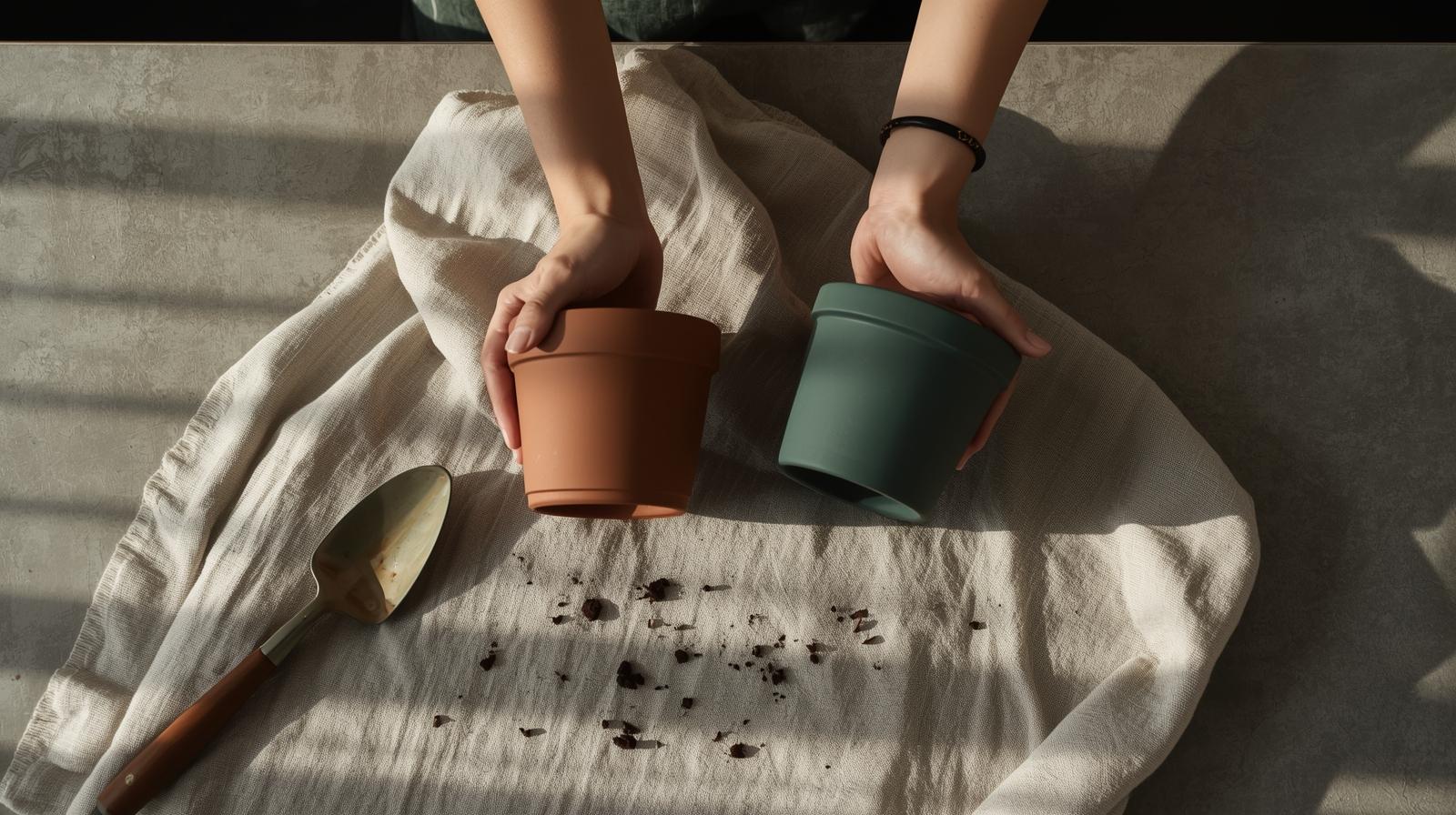
“Plants do not ask for luxury—they ask for honesty. A pot that tells the truth about water is a pot that honors life.” — Anonymous gardener, Kyoto, 1923
When Breath Becomes Boundaries
Roots need air as much as they need water. In a sealed ceramic pot without drainage, they drown in silence. Terracotta’s porosity creates micro-currents of airflow through the soil—tiny lungs for your plant’s underground world.
But don’t mistake breathability for universality. A maidenhair fern in terracotta will crisp at the edges by noon in summer. (You’ll find yourself watering twice a day, resenting the chore.) For moisture-lovers, ceramic is kin—so long as you’ve checked for a drainage hole. If there isn’t one, treat it as a cachepot: keep your plant in its nursery pot, and lift it out to water.
Or—try this: mix extra perlite or orchid bark into your potting blend. It won’t make ceramic breathe like clay, but it buys your roots a little more space to sigh.
The Weight of Stillness
There’s a quiet gravity to terracotta. It sits heavy on the shelf, unpolished, unpretending. You feel it when you lift it—solid, earthen, real. Ceramic can feel like an ornament: light, smooth, beautiful but distant. (Unless it’s hand-thrown stoneware, thick and warm—then it sings a different song.)
That white bloom on your terracotta? Don’t scrub it away like a stain. It’s calcium and salts migrating outward—a sign the pot is working. A vinegar-damp cloth will soften it if it bothers you. But consider leaving it. Imperfection is part of its language.
And remember: terracotta cracks in frost. It’s not built for winter balconies. Bring it in before the first freeze—your pot, like your plant, has limits.
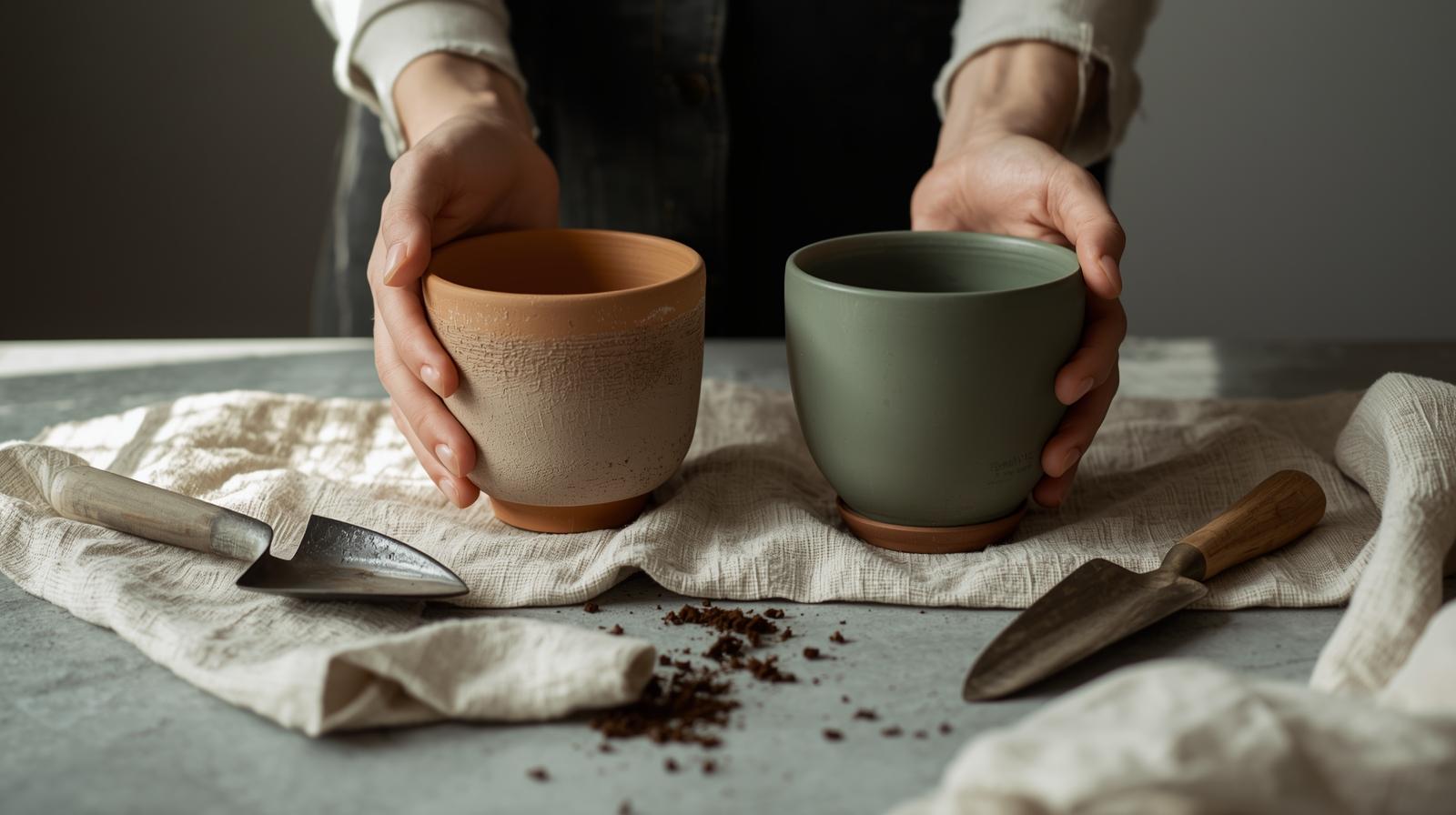
Choosing by Ritual, Not Just Root
Your pot shapes your daily ritual more than you think.
Terracotta asks for attention. It dries fast in dry air, faster still in summer sun. You’ll find yourself checking it each morning—pressing a finger into the soil, watching the color of the clay. It pulls you into presence. (Some call this mindfulness. Gardeners just call it Tuesday.)
Ceramic, by contrast, holds space without demanding it. Water on Sunday, check again Wednesday. It suits a quieter rhythm of care—ideal if your life moves fast above ground, even if your roots crave steadiness below.
If you lean toward ceramic, read our thoughts on selecting ceramic pots—especially how glaze thickness affects moisture retention. And always, always pair it with a plant that matches its pace.
The Whisper Between Pot and Palm
Before you pour a drop, place your hand on the pot.
If it’s cool—wait. If it’s room temperature, or even slightly warm, your plant is ready. This is how you learn to listen. Not through timers or apps, but through touch. Through the subtle shift in weight, the change in color along the rim.
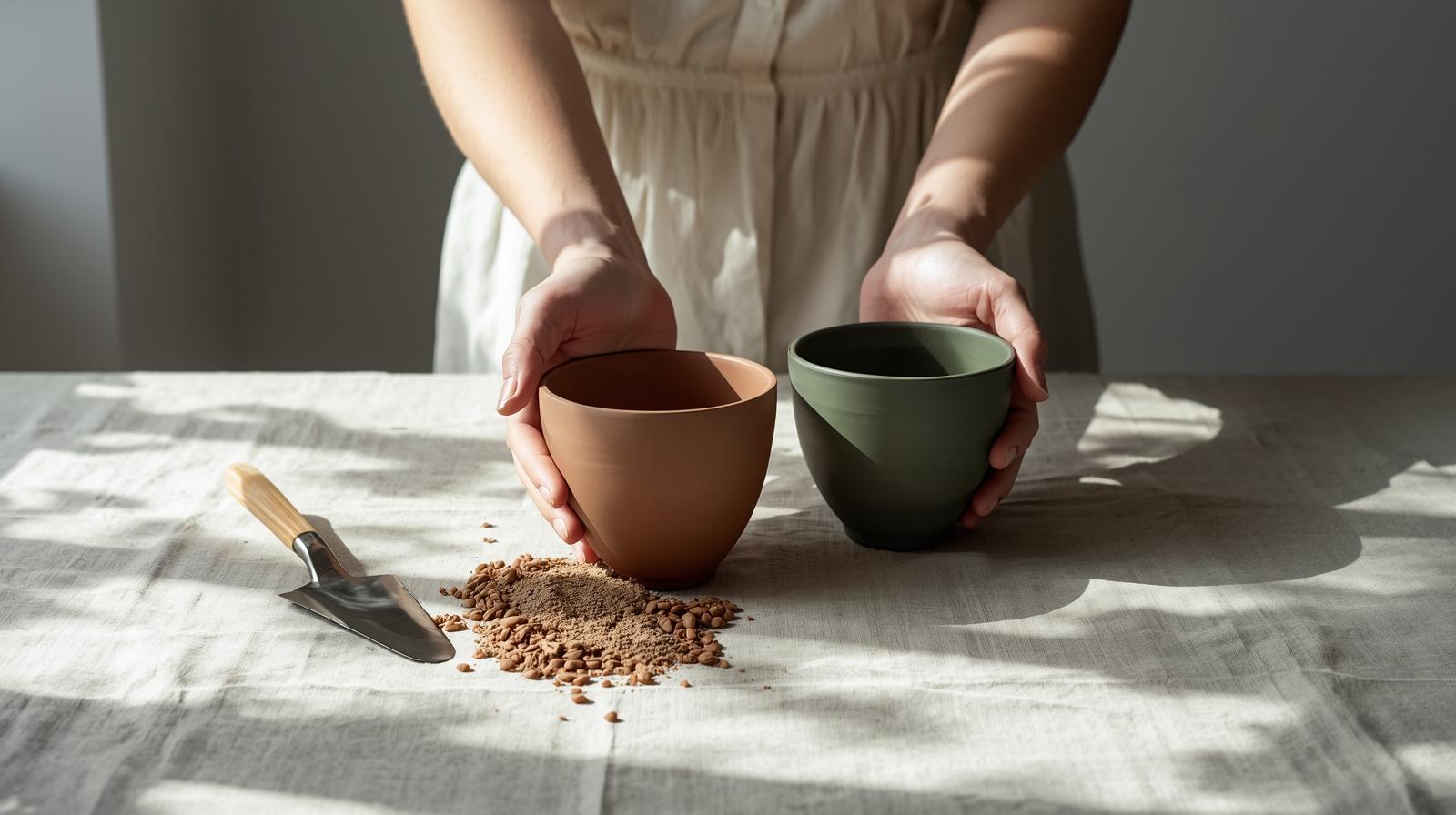
Terracotta ages with you. It darkens with use, softens at the edges, holds the memory of every season. Ceramic stays pristine—beautiful, yes, but less intimate. It doesn’t change. (Or maybe it does, and we’re just not looking closely enough.)
Either way, your choice isn’t just about drainage. It’s about the kind of relationship you want: one that asks for daily dialogue, or one that offers quiet companionship. Both are valid. Both can be sacred.
And if you’re still unsure? Start with your hands in the soil. Read our guide to grounding with soil. Sometimes the answer isn’t in the pot—but in the pause before you choose it.
Common Questions
Can I use terracotta for tropical plants?
Only if you’re ready to water often and keep humidity high—near a tray of pebbles and water, or in a steamy bathroom. Otherwise, they’ll dry out faster than you can refill your kettle. For most tropicals, ceramic (with drainage) is gentler.
Why does my terracotta pot leave rings on my windowsill?
It’s not leaking—it’s breathing. Moisture evaporates through the walls and condenses where the pot meets the cool surface. A thin cork mat or wooden coaster solves it. (And adds a little warmth to the arrangement.)
Do ceramic pots suffocate roots?
Not if they have drainage. Without it, yes—water pools, oxygen vanishes, roots rot. If your favorite ceramic pot lacks a hole, use it as a decorative shell. Keep your plant in its plastic nursery pot, and slip it inside. Water it separately, then return it once it’s stopped dripping.
Which is more eco-friendly?
Unglazed terracotta is usually fired at lower temperatures, contains no synthetic coatings, and will eventually return to dust. Glazed ceramic uses more energy and may contain heavy metals—look for pieces labeled food-safe or plant-safe. When in doubt, choose local, handmade, or secondhand.