
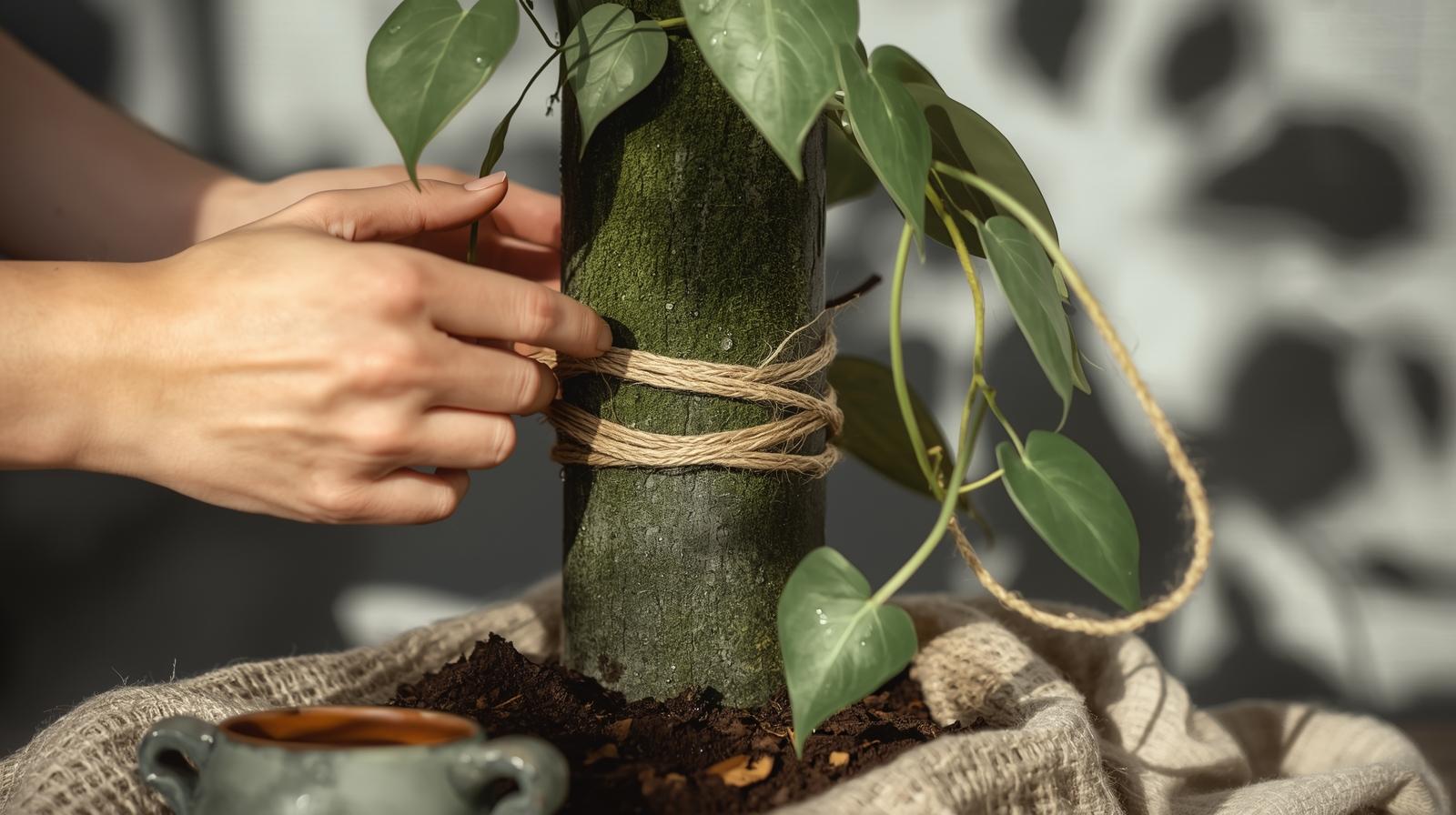
There’s a quiet pact between a climber and its support—a silent agreement written in tendril and time. In a world that prizes speed, watching a vine inch upward, searching, testing, trusting, is an act of rebellion. It reminds us that growth isn’t always loud or fast; sometimes, it’s the gentle press of a leaf against moss, the slow unfurling of faith in something solid to hold it.
The Language of Climbing
Not all climbers move the same way. Some, like Monstera deliciosa, send out aerial roots—soft, pinkish tendrils that seek moisture and texture. Others, like sweet peas, curl delicate tendrils around anything thin enough to grasp. Pothos wraps its stems in slow spirals, while ivy uses tiny adhesive pads, almost like fingertips, to cling to walls.
Understanding this behavior is the first act of respect. A moss pole won’t help a twining plant that needs something narrow to spiral around. And a trellis might overwhelm a young Monstera still learning to reach. Watch your plant for a week before choosing its companion. Notice where it leans, where it pauses. It’s already telling you what it needs.
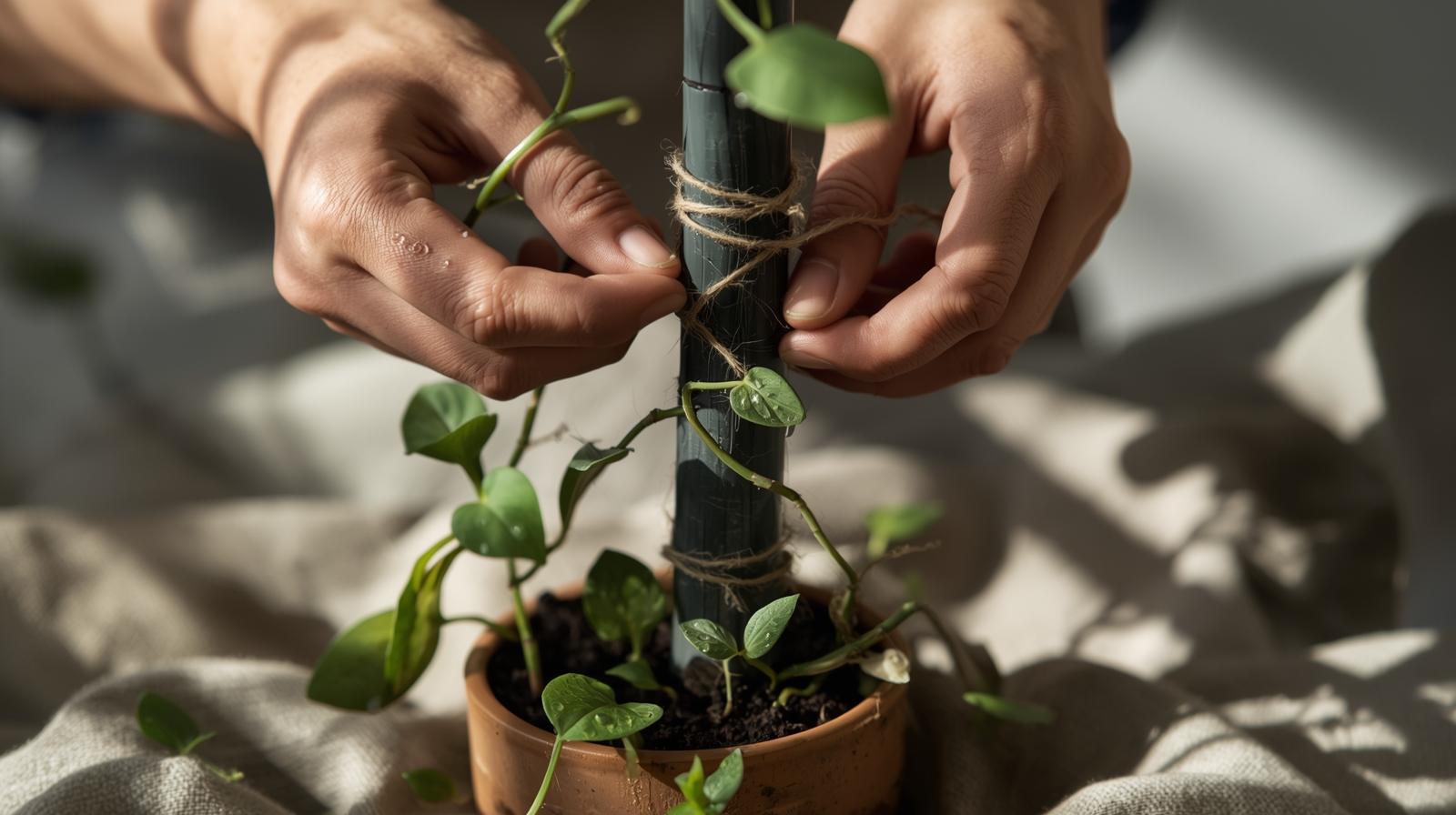
The scent of damp sphagnum, the slight give of a well-hydrated pole under your thumb—these are the quiet signals that you’re offering the right kind of support.
Why Moss Poles Speak to Tropical Souls
Moss poles aren’t just pretty. They’re ecological memory. In the rainforest understory, Monsteras climb tree trunks wrapped in centuries of moss, ferns, and decaying leaves—surfaces that hold water like a sponge and offer nutrients through the air. A dry wooden stake? Too sterile. Too silent.
To install one without trauma: water your plant the day before. Gently loosen the root ball just enough to slide the pole down the center—angled slightly toward the main stem. If you’re adding it to an established pot, press it deep into the soil near the base, then ease the nearest vine toward it. No forcing.
And if you’re repotting—a perfect moment to introduce long-term support—wrap the pole in fresh sphagnum first, soak it in room-temperature water until it’s heavy with moisture, then nestle it in as you fill the new pot. (This is also when you can check root health—see our repotting tips for guidance.)
The Art of Gentle Guidance
Tying a vine too tightly is like holding someone’s hand so hard they can’t breathe. Use soft cotton string, strips of old t-shirt, or those tiny plant pins you can bend with your fingers. Loop it loosely around the stem and pole—enough room for a fingertip to slide between.
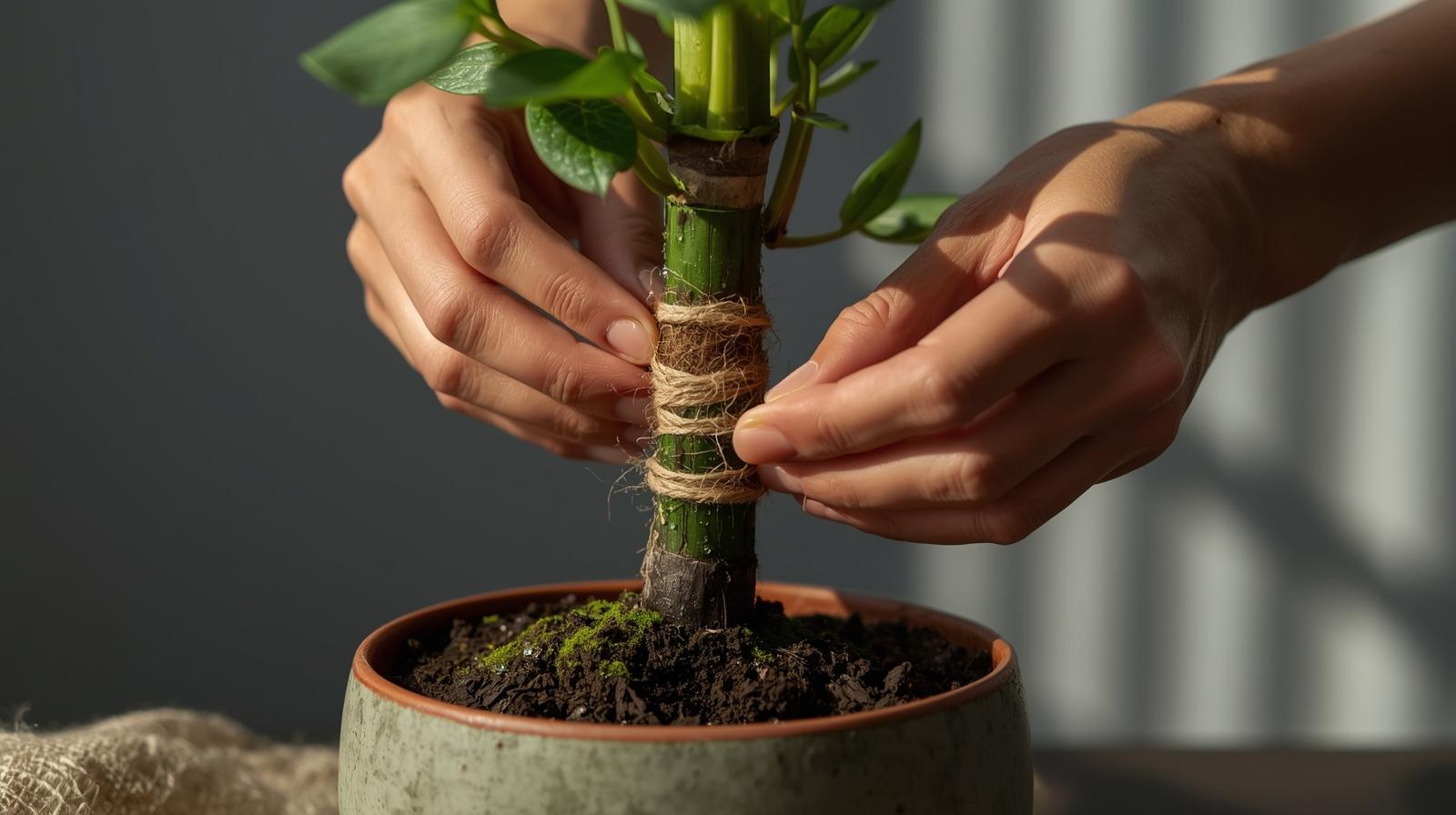
Do this in the morning, when the air is still cool and the plant is turgid—full of water, resilient. Your hands should be clean, not cold. Warmth matters. And as you guide that stem, pause. Feel the slight resistance, the subtle give. This isn’t correction. It’s conversation.
Over time, the plant will send out roots that fuse with the moss. At that point, you can cut the ties away. Let it stand on its own terms.
Timing Is Tenderness
Spring is when climbers wake up. That’s when they’re most willing to reach. But if you offer support in winter—when light is thin and energy is low—you might be asking for a promise the plant can’t keep.
Signs it’s ready: new leaves emerging upright, aerial roots plump and white (not shriveled brown), stems stretching toward the light with purpose. If your Monstera’s leaves are drooping or growing sideways like it’s lost its compass, it’s not lazy—it’s asking for a hand.
And remember: a plant that’s recently been moved, repotted, or stressed won’t climb. It needs stability first. Just like us.
When the Climb Stalls—Listening to Silence
Sometimes, despite your care, the vine stops. It hangs there, limp, as if reconsidering the whole idea of upward movement. Don’t panic. This isn’t failure. It’s recalibration.
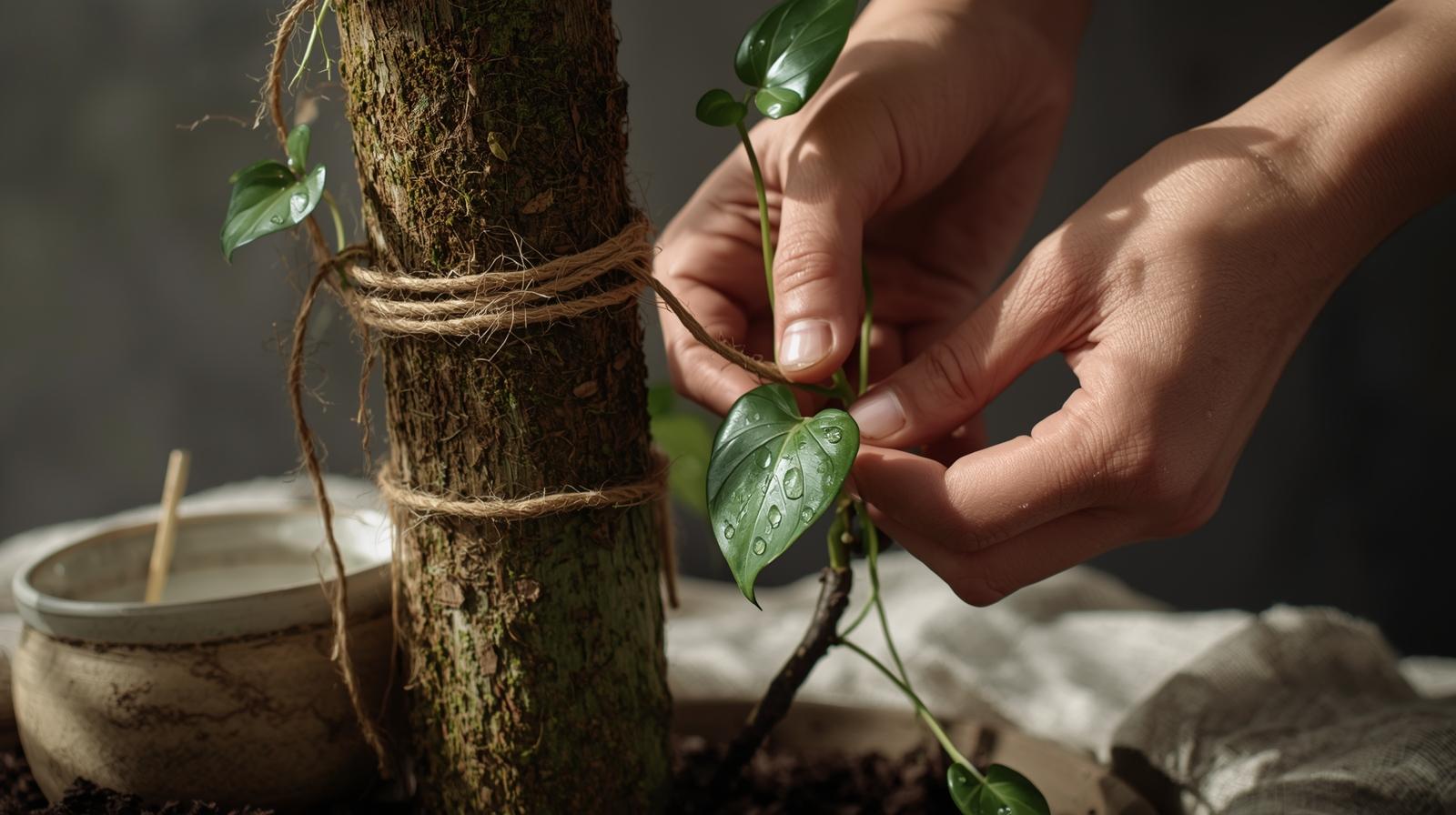
Check the moss pole. Is it bone-dry? Aerial roots won’t attach to something that offers no moisture. Mist it daily—better yet, pour a small cup of water directly over the top so it trickles down through the fibers. Feel the difference: dry moss is brittle; hydrated moss is cool, springy, alive.
Also check the light. Climbing takes energy. If your plant’s in a dim corner, it may simply not have the reserves to grow vertically. Move it closer to a north or east window. Rotate it weekly so all sides get their turn in the sun.
“A vine does not argue with the wall. It learns its shape, and grows accordingly.” — Anonymous
Beyond the Pole—Designing a Living Lattice
For those who dream in green, a single pole is just the beginning. Imagine a wall-mounted grid of bamboo, draped with pothos and philodendron, their vines weaving through the spaces like slow green rivers. Or a corner where a Monstera climbs a tall moss pole, while a trailing Scindapsus spills from a shelf above—creating layers of movement.
When designing this, leave room. Crowded supports suffocate. Let light slip through the gaps. Let leaves breathe. And choose materials that age well: untreated wood, jute, coir. Nothing plastic. Nothing that shines.
If you’re nurturing a Monstera toward its full glory—those dramatic splits and holes—proper vertical support is non-negotiable. It’s in climbing that it remembers its wild self. (More on that transformation in our guide to Monstera deliciosa growth.)
The Ritual of Checking In
Make it a habit: every Sunday morning, with your tea, stand beside your climber. Run your palm along the pole. Are new roots pressing into the moss? Has a leaf unfurled since last week? Gently loosen any ties that have grown tight.
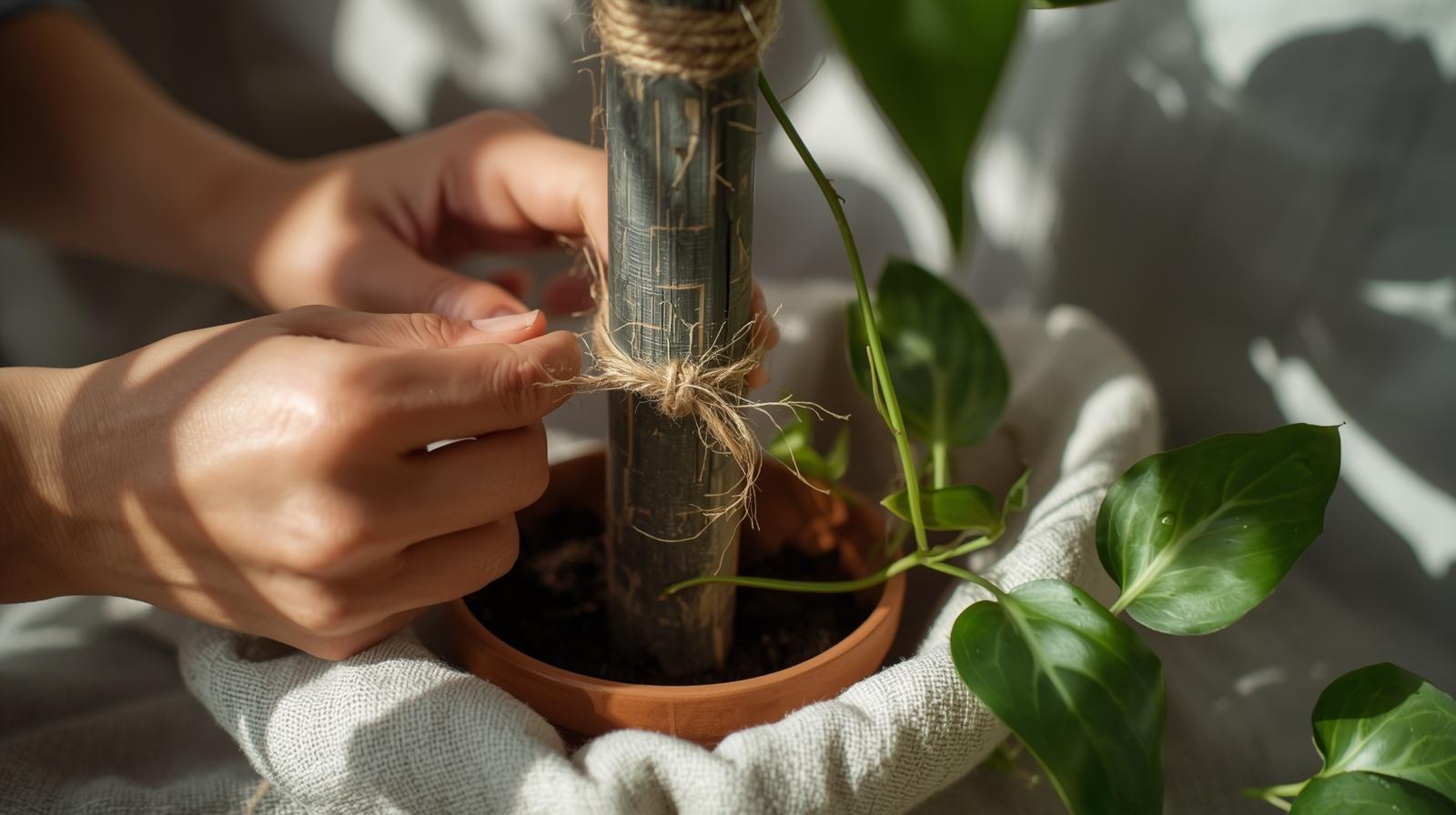
This isn’t maintenance. It’s companionship.
And when those vines grow long—so long they brush the floor—don’t just trim them back. Snip below a node, place the cutting in water, and start again. Propagation is the gift climbing plants give us in return for our patience. (Our method for propagating pothos works beautifully for most trailing climbers.)
You’re not just growing a plant. You’re growing a lineage.
Common Questions
Can I make my own moss pole?
Absolutely. Wrap damp sphagnum moss around a sturdy bamboo or PVC pipe—about 1–2 inches thick. Secure it with fishing line or cotton twine, coiling tightly from bottom to top. Soak it overnight before inserting it into your pot. It’ll last months, and as it breaks down, it feeds the aerial roots.
My Monstera won’t attach to the moss pole—why?
Dry moss is the usual culprit. Aerial roots need consistent moisture to latch on. Mist the pole daily, or pour a small amount of water over the top every few days. Gently press the roots against the surface and secure them with a soft tie—just until they take hold. Patience. It can take weeks.
How tall should a moss pole be?
Aim for your plant’s current height plus 12–18 inches. Monsteras can add a foot of growth in a single season under good light. Some gardeners use extendable poles or stackable sections for long-term companionship.
Do all climbing plants need support?
Indoors, no. Many adapt beautifully to trailing from shelves or hanging baskets. But if you want that upward, architectural form—the kind that fills a corner with living sculpture—support isn’t optional. It’s how they remember who they are.