
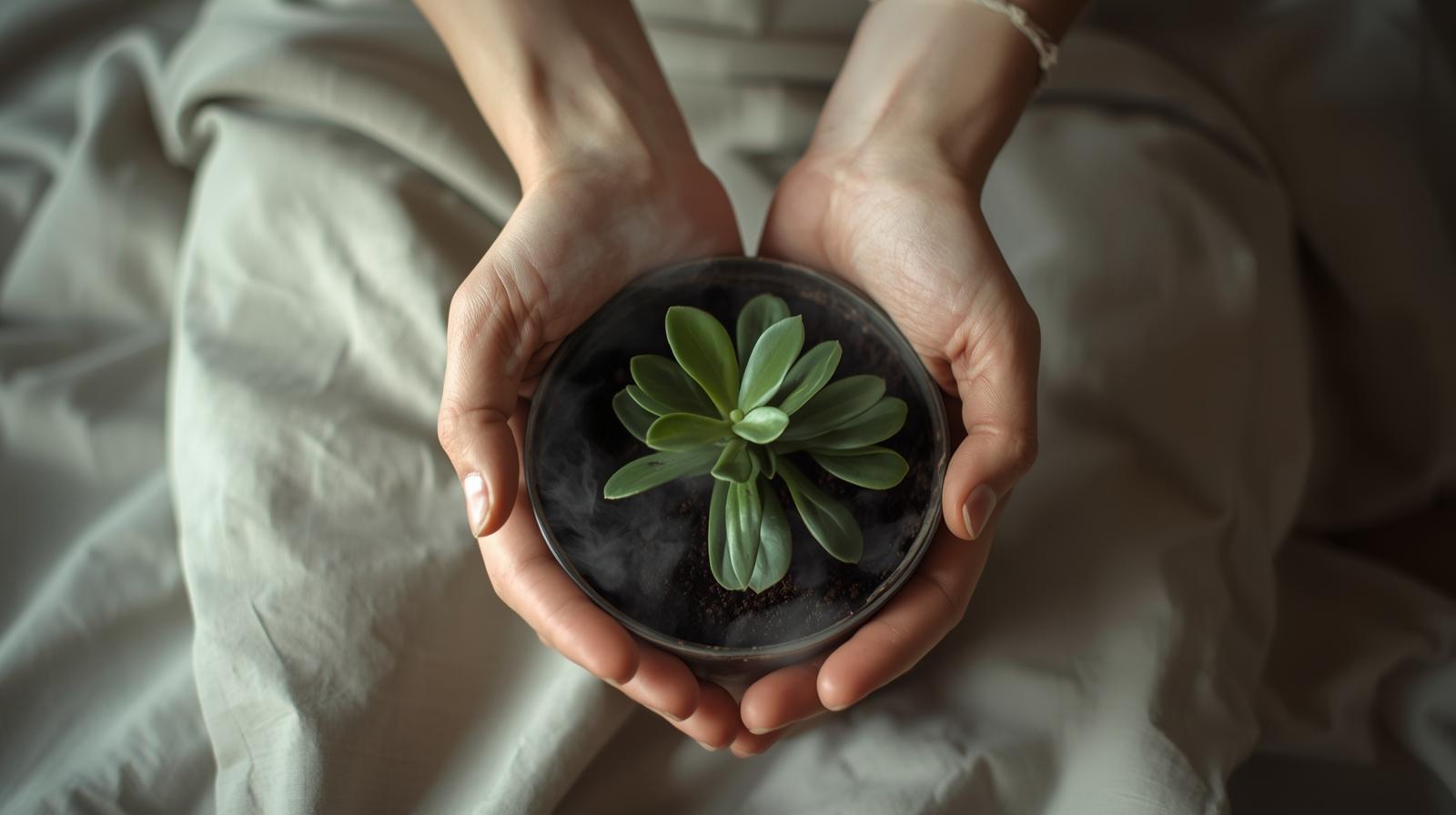
There’s a particular hush that settles when fingers sink into damp soil—cool, granular, alive. The scent rises: petrichor mingled with the quiet decay of compost, a fragrance older than language. In this gesture—repotting—a mind unspools its knots, not through effort, but through contact. Mental health, often sought in stillness or silence, sometimes reveals itself most clearly in the simple act of making space for roots to breathe. Soil becomes both medium and medicine; repotting, a ritual of renewal that begins not in the mind, but in the hands.
The Quiet Alchemy of Repotting
Repotting is rarely listed among wellness practices, yet it holds a quiet potency. It asks for presence: the weight of a root ball in your palms, the sound of dry soil crumbling, the deliberate press of earth around new space. Unlike scrolling or scheduling, it cannot be rushed. The hands move while the mind stills.
This is not maintenance—it is communion. Studies suggest that contact with soil microbes like Mycobacterium vaccae may gently elevate serotonin, but the deeper shift is less chemical than existential. In touching earth, we remember we, too, are grounded beings.
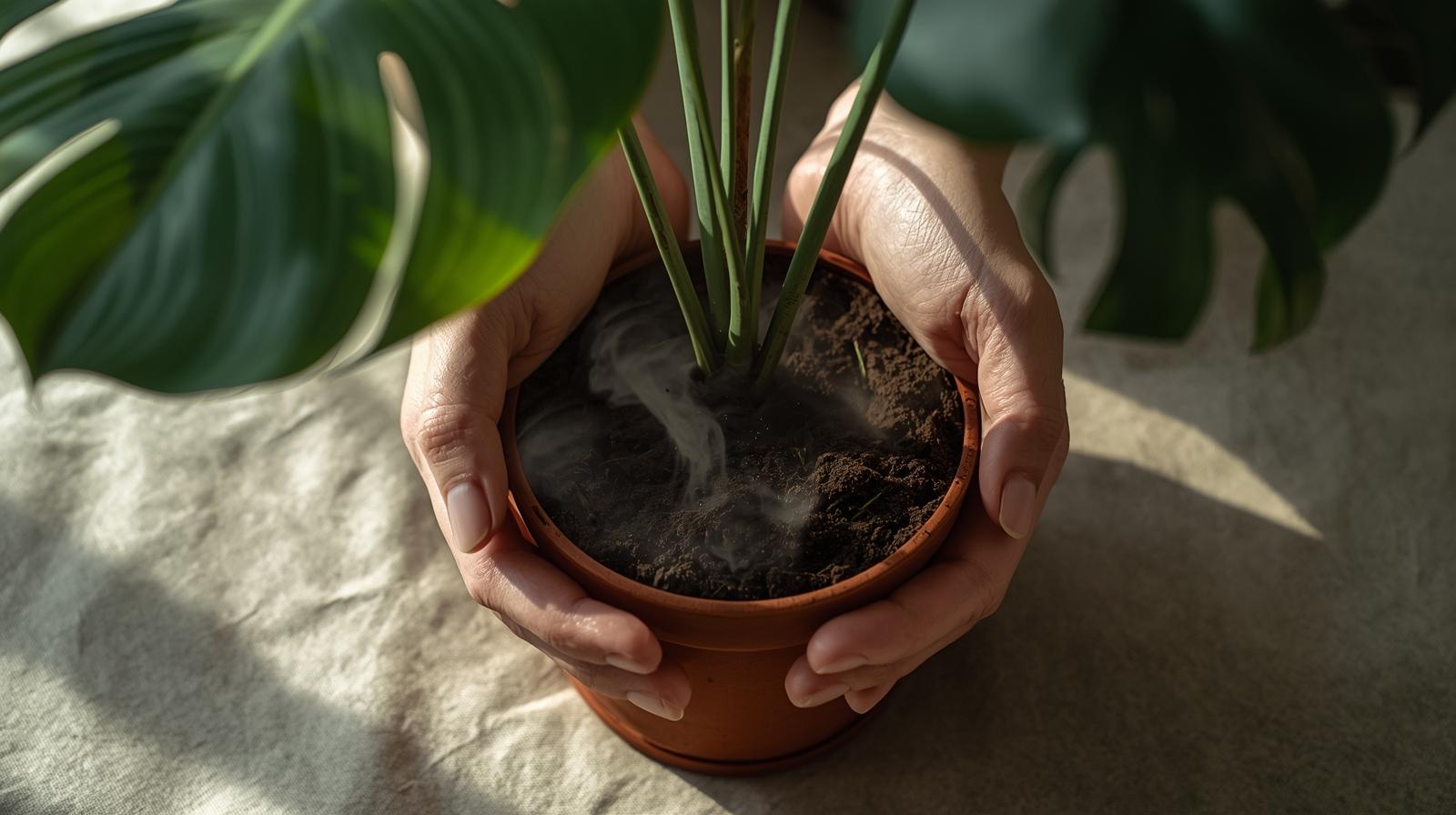
“The earth is not a resource. It is a relationship.” — Robin Wall Kimmerer
Reading the Signals: When a Plant Asks for More Room
Plants speak in subtleties. A pot that dries within hours of watering, leaves that pale without cause, or roots circling the surface like quiet pleas—these are invitations, not emergencies. The plant isn’t failing; it’s ready.
Before upending the pot, observe. Gently lift the plant and check beneath. If roots coil tightly or emerge from drainage holes, it’s time. This moment of assessment deepens the awareness cultivated in our guide to root-bound-signs.
Preparing the Vessel: Intention in Every Layer
The new pot is more than a container; it is a promise of room to grow. Terracotta breathes with the seasons, ceramic holds warmth in winter, stoneware anchors sprawling forms. The choice carries quiet intention—explore how form and function converge in selecting-ceramic-pots.
Begin with drainage: a layer of pebbles or broken pottery prevents stagnation. Then, a hollow in the center for the root ball—shaped not with haste, but with the same care one might cradle a sleeping bird.
Crafting a Soil Blend That Breathes
Not all soil is equal. A blend that holds moisture without suffocating roots mimics the forest floor where many houseplants originated. Try this foundational mix:
- 2 parts peat-free potting compost
- 1 part perlite or pumice
- 1 part well-aged leaf mold or compost
When squeezed, the mix should hold its shape briefly, then crumble softly—a texture that invites root exploration. Never pack it tight; let air move through, as it does beneath trees.
The Ritual Sequence: From Unpotting to Settling In
Repotting unfolds in stages, each a small act of reverence:
- Water the plant the day before—hydrated roots bend rather than break.
- Hold the base, invert gently, and ease the plant free. Never pull from the stem.
- Loosen the outer roots with your fingertips, teasing apart only what yields easily.
- Center in the new pot, fill gaps slowly, and tap the sides to settle without compaction.
- Top with moss, gravel, or a dusting of compost for visual calm.
Finish with a slow, circular pour—just enough to moisten the new soil without flooding. This moment of stillness complements the principles of the meditative-watering-ritual, where attention flows as slowly as the water itself.
The First Week: Witnessing the Adjustment
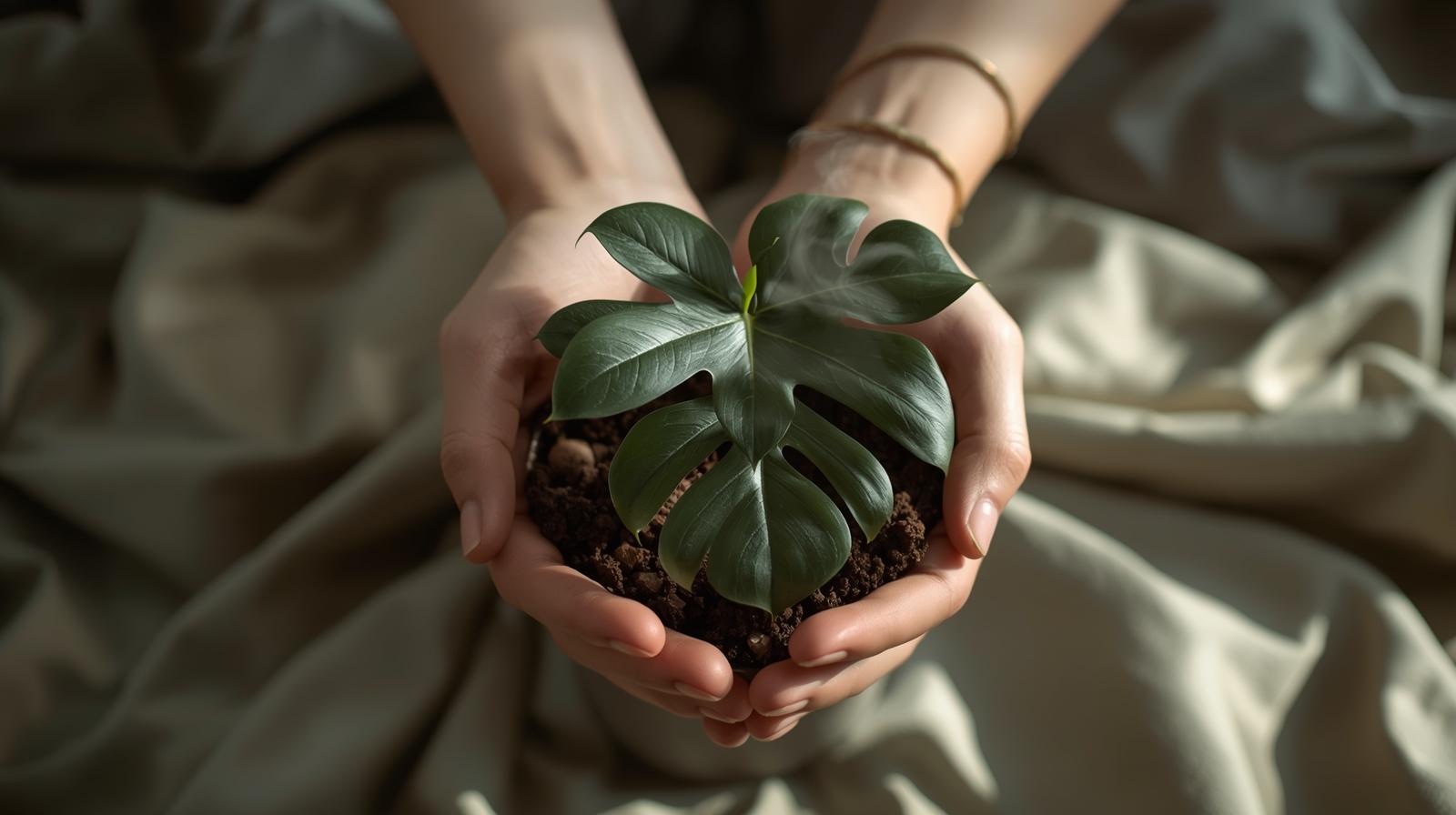
Place the repotted plant in diffused light, away from drafts or sudden temperature shifts. The first few days are a quiet negotiation between root and earth.
Resist the urge to overwater or fertilize. Instead, observe. A slight droop may appear—it is not distress, but integration. New growth will follow, often softer, greener, more assured.
Beyond the Pot: Repotting as Metaphor
To make space for roots is to acknowledge that growth requires release. We, too, outgrow containers—old habits, worn narratives, tight expectations. Repotting mirrors the inner work of letting go, of trusting that what lies ahead holds room for expansion.
In Japanese aesthetics, ma—the space between things—is where meaning breathes. The empty chamber of a new pot is not void; it is potential. Like the careful pour of a watering can, repotting asks for presence—an extension of the mindfulness woven through meditative-watering-ritual.
Common Questions
How often should I repot my houseplants?
Most thrive with repotting every 12–18 months, though slow growers like ZZ or Snake Plant may need it only every 2–3 years. Watch the plant, not the calendar.
Can I reuse old soil?
Not recommended. Nutrients deplete, and pathogens may linger. Fresh soil offers renewed vitality—both biologically and symbolically.
My plant drooped after repotting—did I do something wrong?
Mild drooping is normal as roots re-establish. Keep conditions stable: consistent moisture, no fertilizer for 4–6 weeks, and indirect light.
Is there a best time of day to repot?
Early morning, when ambient light is soft and the air still, aligns with the plant’s natural hydration cycle and your own quietest mental state.
After the soil is smoothed and the last crumb brushed from the rim, sit awhile. Notice how your breath has slowed, how your shoulders have dropped. The plant will grow into its new room; you, too, have been changed by the act of making space. Return to your window, your shelf, your quiet corner—and listen to what else might be asking for room to breathe.