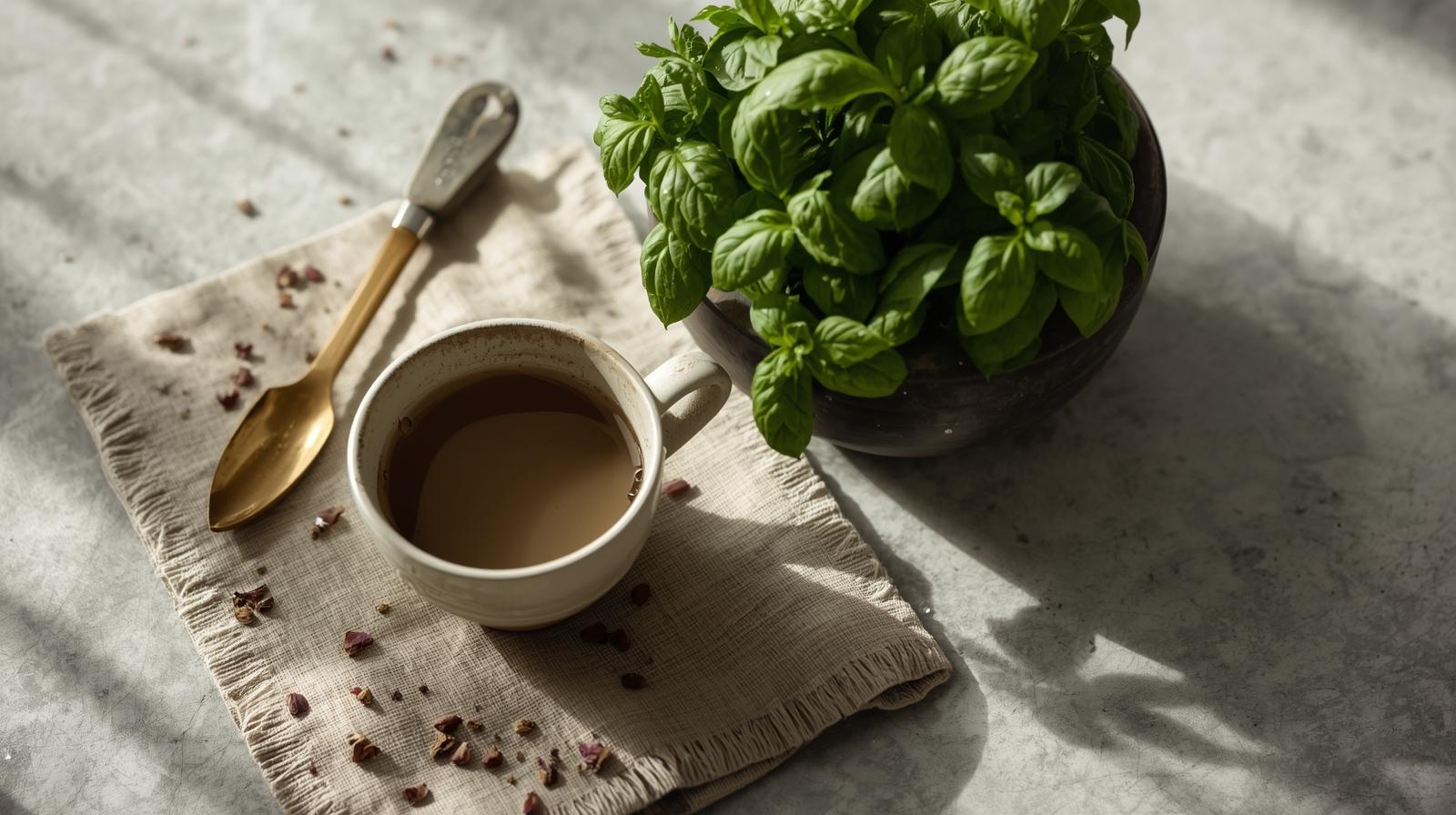
The steam from your morning tea curls upward, catching the low winter light that slants through the kitchen window. Beside the kettle, a single basil leaf—still dewy from last night’s misting—gives off a peppery sweetness that mingles with the bergamot. You brush your fingers against its velvety surface, and for a moment, the inbox, the traffic, the to-do list dissolve. This isn’t just a plant on the sill. It’s a quiet rebellion against hurry.
Why Your Kitchen Needs a Living Spice Rack
Forget the plastic clamshells wilting in the crisper drawer. A living herb on your counter is a slow exhale in a world of fast consumption. When you crush a mint leaf between your palms, the burst of menthol isn’t just flavor—it’s a signal to your nervous system: you are here. Science calls it aromatherapy. We call it remembering to breathe.
These plants work quietly. Basil’s volatile oils sharpen focus. Mint cools the mind like a shaded stream. And unlike dried herbs, which lose potency within weeks, a living plant keeps its chemistry alive—right up until the moment you snip it. Try this: before you check email, stand by your windowsill. Inhale deeply. Let the scent anchor you. (It takes less time than scrolling.)
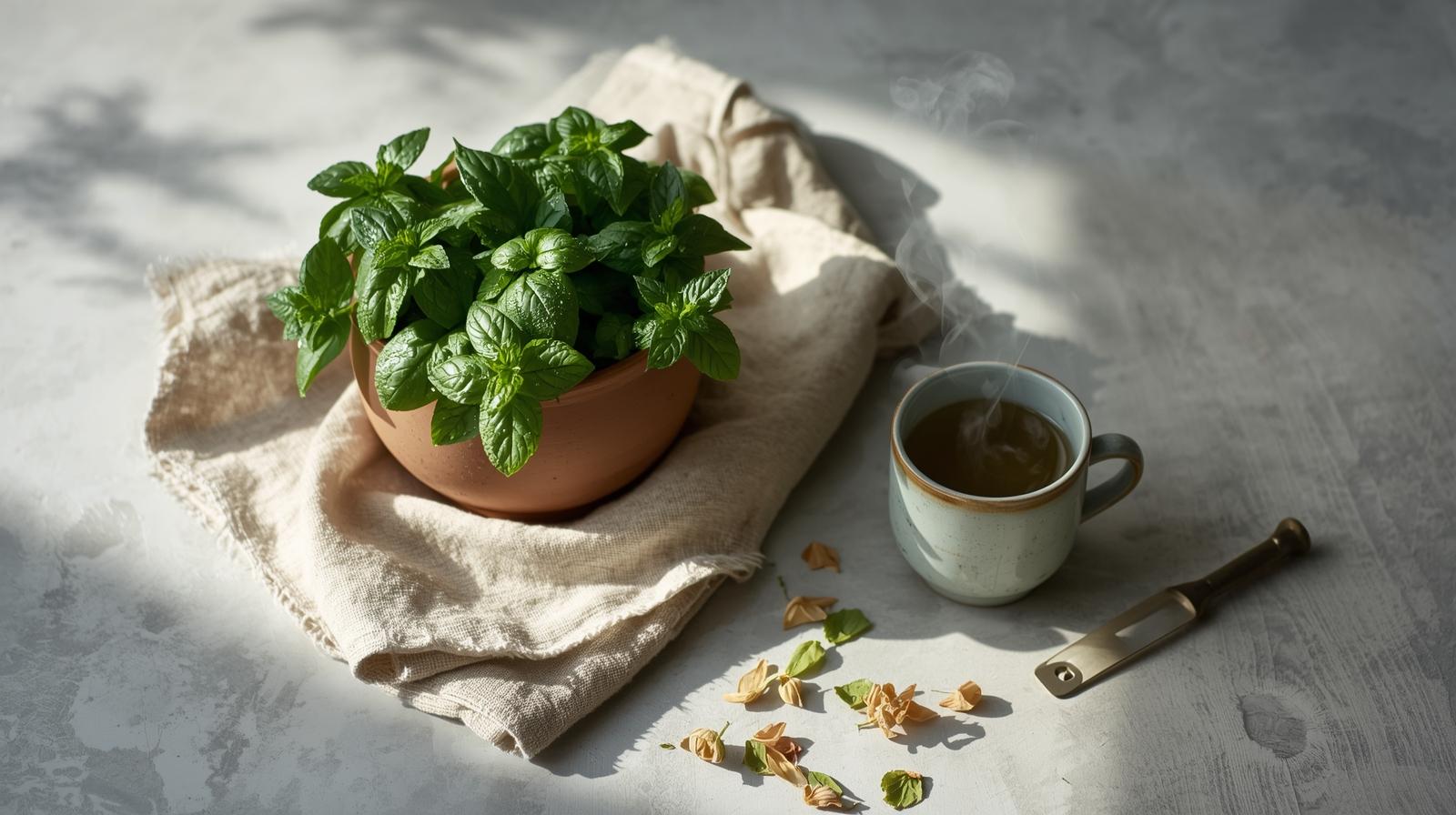
Many of these herbs—like lemon balm or thyme—also steep into calming infusions. If you’ve ever wondered how to deepen your ritual beyond the teacup, our notes on tea and botany might feel like a familiar path.
The Three Herbs That Whisper Back
Basil is sun-drunk and generous. Mint is cool, resilient, and quietly assertive. And lemon balm? It’s the gentle friend who shows up with soup when you’re tired. These aren’t just plants. They’re personalities you learn to read.
Place basil where morning light floods in—ideally a south or west window. It will lean toward the glow, stems stretching with quiet urgency. Water only when the top inch of soil feels dry to the touch, like slightly damp sand. Mint, on the other hand, tolerates lower light (an east or north sill works) and prefers its soil just barely moist—never soggy. Its roots creep with purpose, so keep it in its own pot. (It’s not greedy—just enthusiastic.)
Harvest by pinching just above a pair of leaves. Not with scissors, but with your fingertips. Feel the snap. That’s where new growth begins. Do this weekly, even if you don’t “need” the leaves. It’s how you say thank you.
Basil’s Secret Language
Basil droops for reasons beyond thirst. A cold draft from a cracked window? It shivers. Overwatered soil? Its roots suffocate in silence. Pale leaves mean it’s hungry for light; yellow ones signal drowning. Watch closely.
Old Italian gardeners swear by talking to their basil—calling it by name as they cook. “Buongiorno, Genovese.” It sounds whimsical, but sound vibrations may actually stimulate growth. Or maybe it’s just that attention changes everything. Try it. Whisper while you stir your sauce. See if the leaves lift a little.
The Quiet Thirst
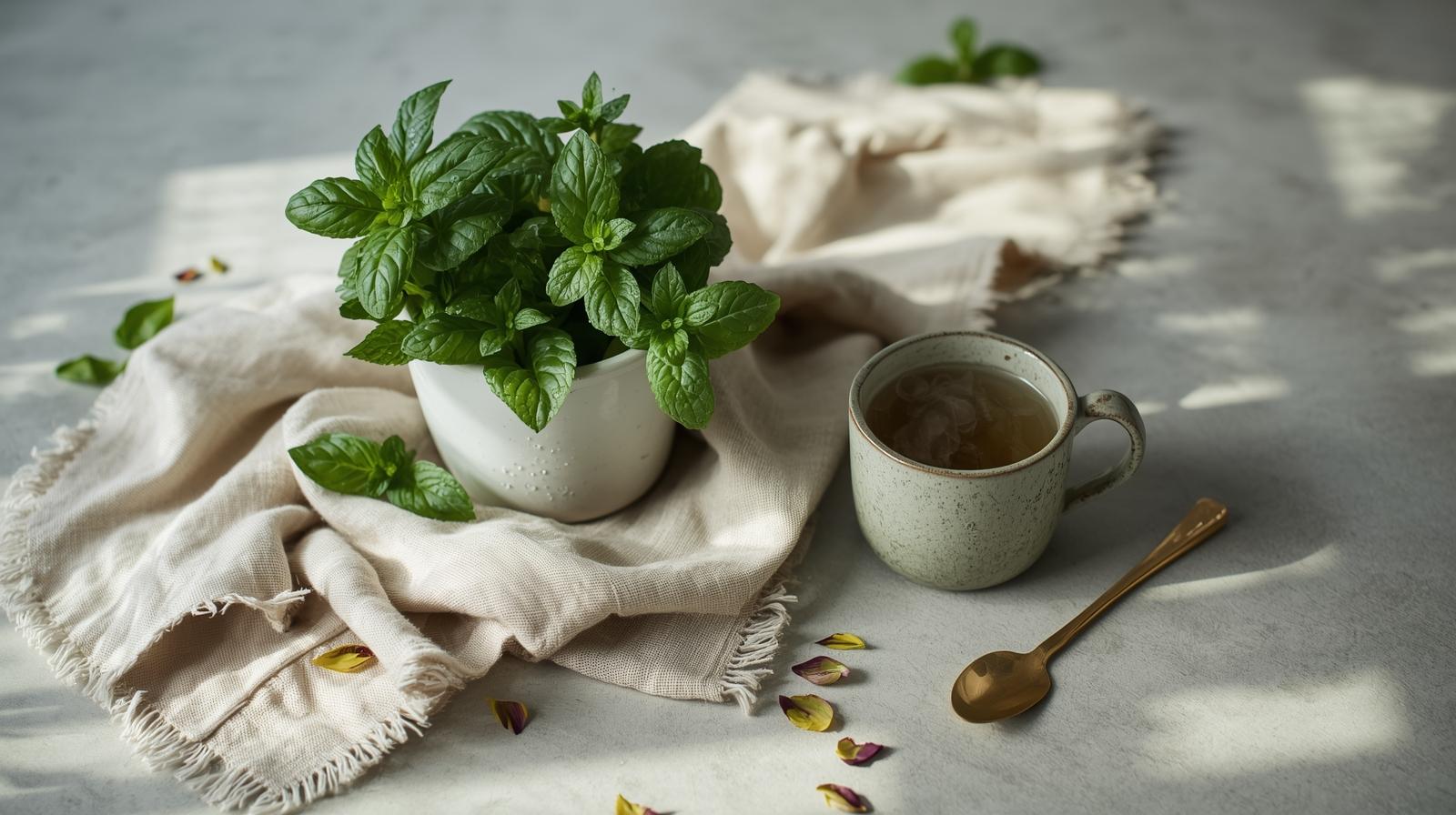
Overwatering kills more herbs than neglect. The pot feels heavy. The soil stays dark. The leaves soften, then collapse. It’s not malice—it’s love gone too far.
Instead, learn the weight of a “just right” pot. Lift it after watering. Then lift it again in three days. Your hands will memorize the difference. Or press two knuckles deep into the soil. If it clings, wait. If it crumbles like dry cake, pour slowly—room-temperature water, never cold—until it sighs out the bottom.
Terracotta helps. Its porous walls breathe, wicking away excess moisture. Plastic holds onto every drop. Choose accordingly. And in winter, when the air is dry and radiators hum, mist the leaves lightly—but never at night. Dampness in the dark invites rot.
For more on how ambient conditions shape plant health, our guide to lighting for ambiance explores the gentle interplay of shadow and nourishment.
Light as Nourishment, Not Just Illumination
Light isn’t a checkbox. It’s food. It’s time. It’s the reason your basil tastes of summer even in January.
Morning sun—soft, golden, angled—is ideal. Harsh afternoon glare can scorch tender leaves. If your kitchen faces north, don’t despair. Mint and parsley adapt. Or supplement with a small full-spectrum bulb for 4–6 hours during the darkest months. But keep it subtle. This isn’t a grow room—it’s a sanctuary.
Rotate your pots a quarter-turn every few days. Watch how the stems curve toward the window. What are you leaning toward? (A question worth sitting with.)
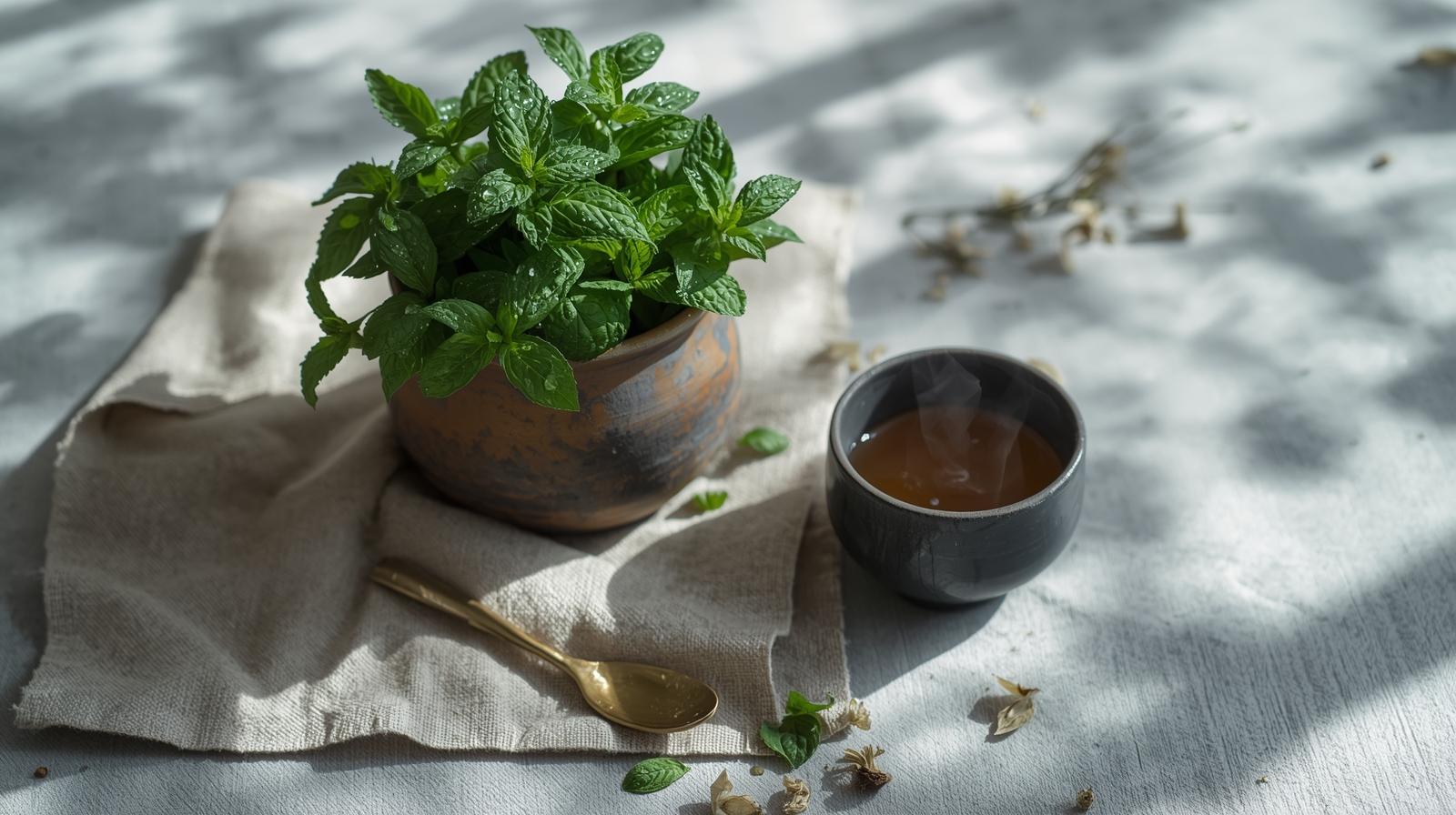
“Plants are the slow, deliberate thoughts of the earth.” — Wendell Berry
Harvesting as a Form of Gratitude
Never strip a plant bare. Take only what you need—and always from the top. Cut just above a leaf node, where two small leaves emerge. New branches will sprout there, bushier and stronger.
Before you toss those leaves into a salad or sauce, place them on a small ceramic dish. Let them rest for a moment. This isn’t superstition. It’s acknowledgment. You’re part of a cycle: care, receive, reciprocate.
Like the aloe vera that offers gel from its leaves after a sunburn, these herbs give without asking for much in return. If you’ve ever kept an aloe on your windowsill, you know this quiet exchange. For more on that green healer, see our piece on aloe vera healing.
When the Leaves Speak of Distress
Leggy stems? It’s reaching. Not failing—asking. Move it closer to the light. Brown leaf tips? The air is too dry, or mineral salts have built up in the soil. Flush the pot thoroughly once a month: run water through until it runs clear from the drainage holes.
And if a plant dies? Don’t call it a failure. Call it a lesson in attention. Compost it gently. Thank it. Then try again—maybe with a sturdier mint this time.
Journaling helps. Note the day you brought it home. The weather. Your mood. Plants remember more than we think.
Beyond the Pot—Weaving Herbs into Daily Rhythm
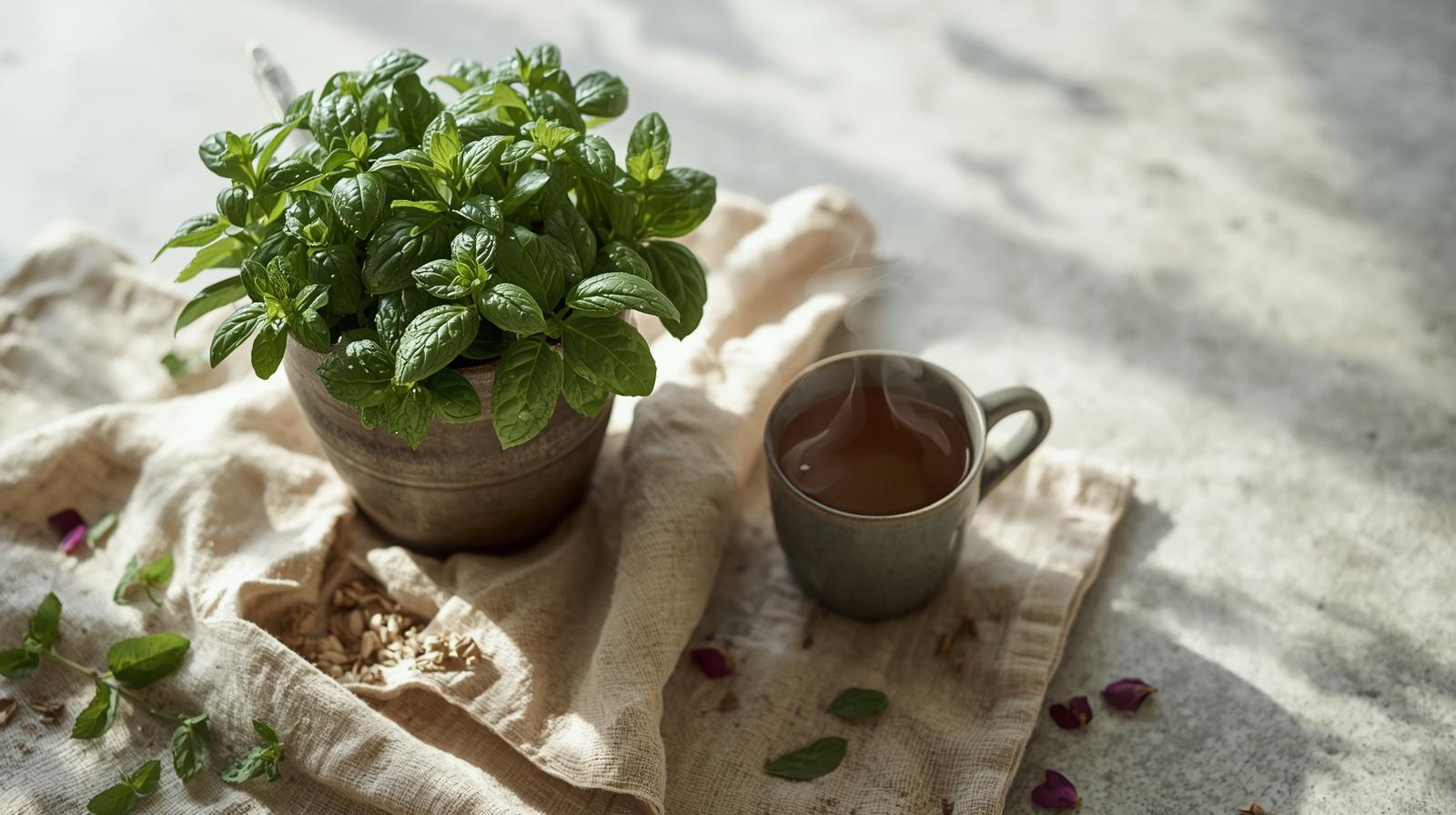
Tuck a mint leaf behind your ear while you work. Its cool scent rises with your body heat—a private reminder to stay present.
Float a few basil blossoms in your water glass at dinner. They’re edible, delicate, and quietly beautiful. Or hang small bundles upside-down in a closet—not for long-term storage, but as a slow-release scent altar that perfumes your linens.
Make a habit of pausing by your sill three times a day. Ten seconds. No phone. Just you and the green. Watch how the light shifts across the leaves. Notice new growth. This is where mindfulness lives—not in grand gestures, but in tiny returns.
And if you’re curious how other botanicals deepen daily rituals, our reflections on tea and botany might offer another thread to follow.
Common Questions
Can I grow basil and mint in the same pot?
No—mint sends out runners that will overwhelm basil’s roots. They also prefer different moisture levels. Keep them in separate pots, even if they share the same sunny sill.
Why does my indoor basil taste bland?
Likely insufficient light. Flavor compounds like linalool and eugenol develop under strong sunlight. Move it to a south-facing window, or add a grow light for 4–6 hours during darker months.
How often should I fertilize?
Only during active growth (spring through early fall), and always at half-strength. Think of it as herbal tea for your plant—not a meal. Overfeeding creates lush but flavorless leaves.
Can I use kitchen scraps to start new plants?
Yes. Place 4-inch stems of mint or basil in a glass of water on a bright windowsill. Change the water every two days. Once roots are an inch long, pot them in soil. Don’t wait too long—water roots struggle to adapt to soil if left too long.