
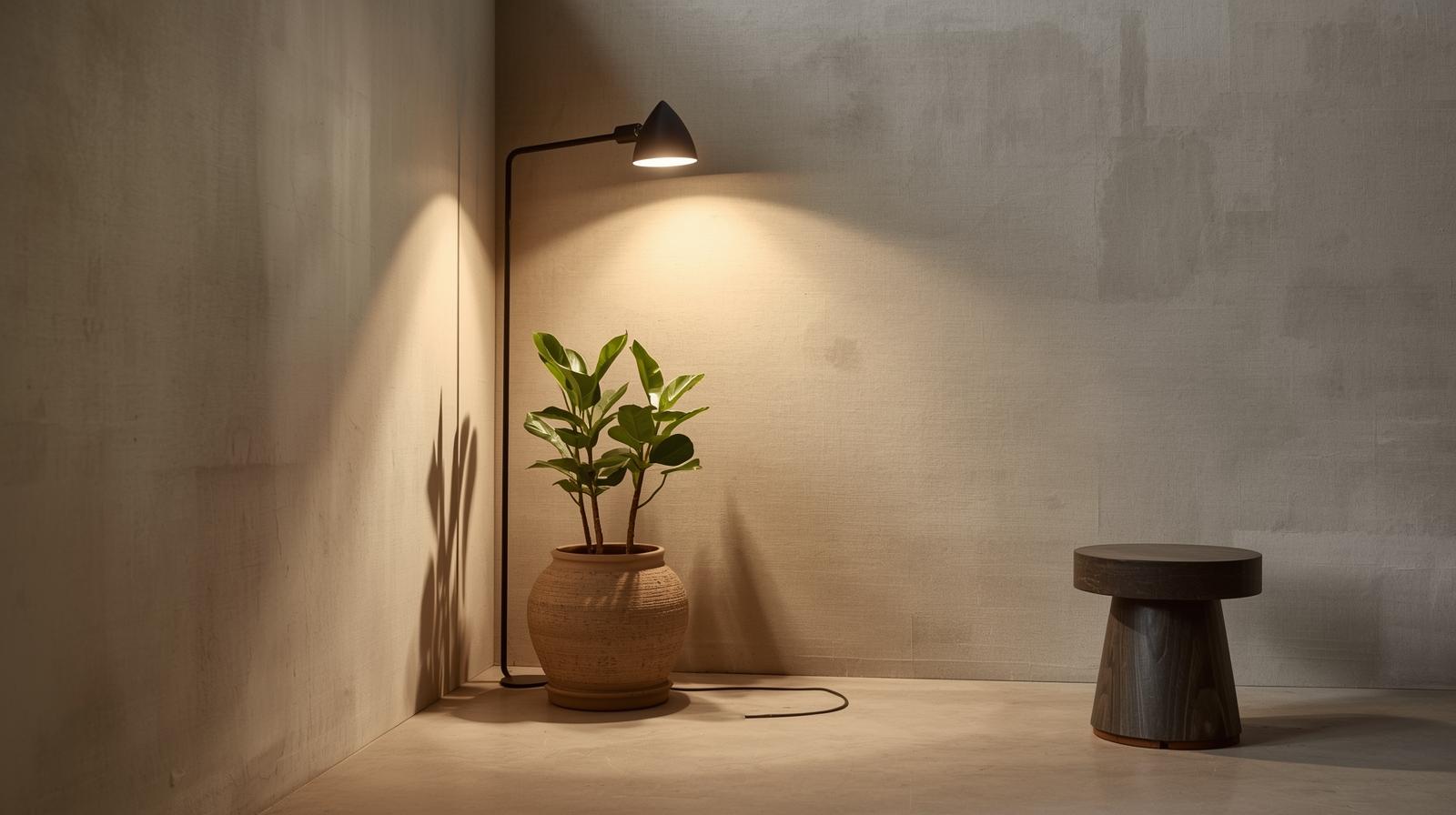
Winter dusk settles early, and the room softens into indigo. Outside, the world is muffled under frost; inside, a single strand of warm LED light spills over the edge of a trailing pothos, casting lace-like shadows on the wall. The air smells faintly of damp soil and beeswax. In this quiet hour, light isn’t just function—it’s feeling. And your plants? They’re not just surviving. They’re glowing with you.
When Light Becomes Language
Light speaks. Not in words, but in moods. A harsh overhead bulb shouts. A low, diffused glow murmurs. In sanctuary design, how we light a room tells a story about how we want to live in it—slowly, tenderly, with room for breath.
Grow lights don’t have to be clinical intrusions. They can be part of the conversation. Think of them as collaborators in your home’s emotional architecture—quiet partners that nourish both leaf and spirit.
“Light is the first thing we forget to tend to in winter—yet it’s the very thing that tends to us.” — Anonymous gardener’s journal, 1923
The Myth of the “Invisible” Grow Light
We’ve been taught to hide what’s functional. Tuck the cords. Conceal the fixtures. But what if we stopped apologizing for care?
Today’s grow lights come wrapped in brass, nestled in ceramic, or strung like fairy lights along a bookshelf. Vintage-style filament bulbs now offer full-spectrum output—warm to our eyes, rich in the blue and red wavelengths your Monstera craves. You don’t need a lab setup. Just intention.
Before you buy anything, sit by your window at 4 p.m. in January. Watch where the shadows gather. That’s your canvas.
The Winter Paradox: Plants Need More Light, We Need More Warmth
Here’s the quiet tension of the season: your human self longs for candlelight and wool blankets, while your Calathea silently pleads for photons. It’s not a conflict—it’s a negotiation.
Choose warm-white LEDs between 2700K and 3000K. They mimic the golden hour of late afternoon sun—soft enough for your nervous system, strong enough for photosynthesis. (Yes, plants can use warm light. They’re not as fussy as we think.)
Plug your grow light into a simple timer. Set it to rise with the sun, fade before dinner. Let it echo nature’s rhythm—even when nature feels distant.
Layering Light Like a Landscape
A single source flattens a room. Layering gives it depth—and life.
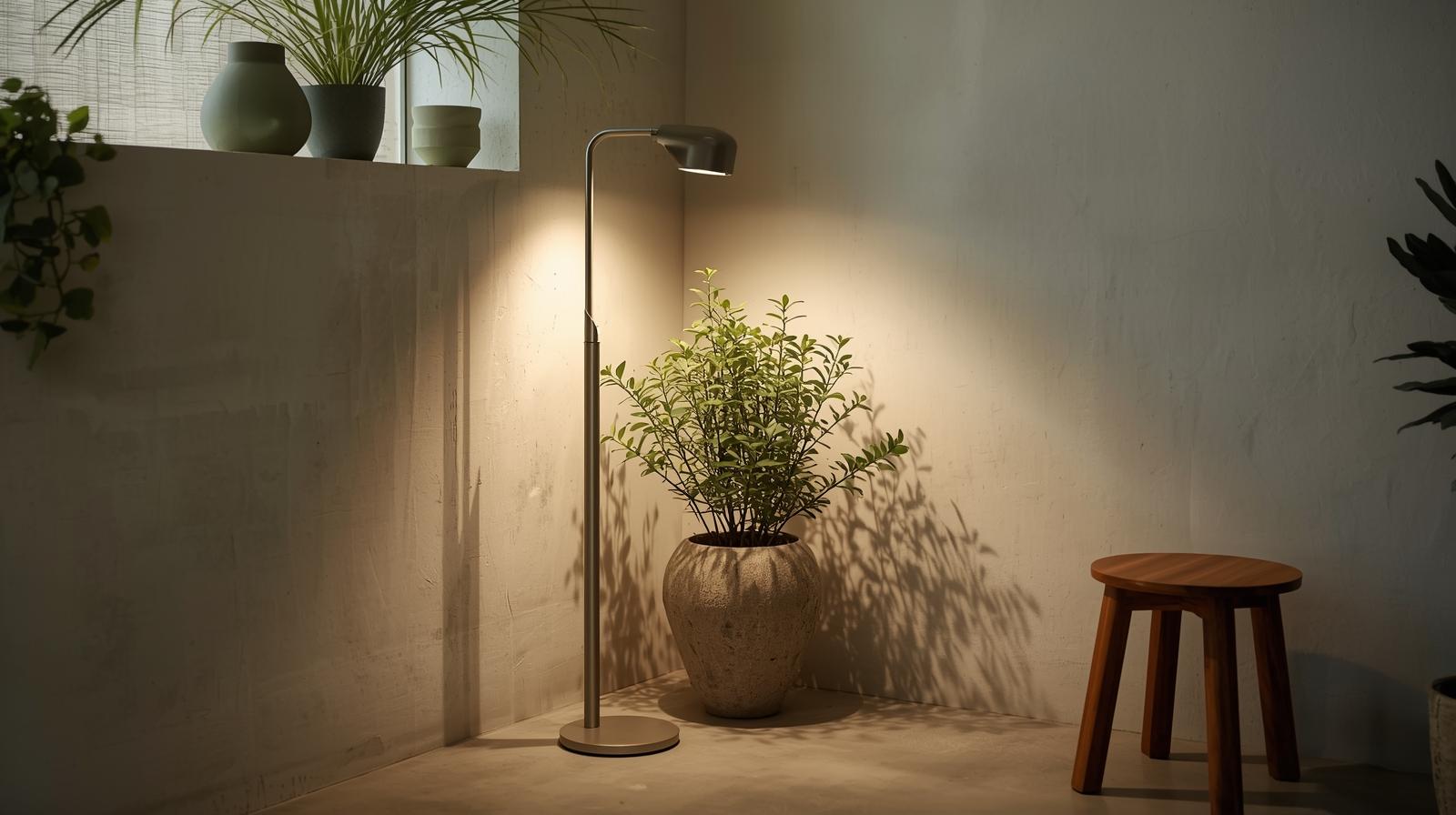
Start with ambient: a floor lamp in the corner, casting a gentle wash. Add task lighting: a gooseneck grow lamp aimed at your herb shelf or succulent collection. Then, accent—maybe a tiny strip under a floating shelf, highlighting the silvery curve of a Haworthia leaf.
Avoid flooding the space. Darkness is not the enemy. It’s the space between notes that makes the music.
Choosing Fixtures That Breathe With Your Space
Your lighting should feel like it grew there—not like it was installed.
A sculptural wall sconce with a built-in grow panel can double as art and agriculture. A woven pendant with a full-spectrum bulb inside? Perfect for a hanging String of Pearls. Even a simple under-cabinet strip can become a horizon line for your countertop jungle.
Sketch a quick “light map” of your room on a scrap of paper. Mark where shadows pool in mid-December. Place your light not just where the plant sits—but where the light *feels* most needed.
The Quiet Hum of Technology
Some grow lights buzz. Faintly. Almost imperceptibly. But in a silent room at night, that hum can feel like static in your bones.
Look for “flicker-free” and “silent driver” in the specs. Or diffuse the source: drape a sheer linen scarf over a bare LED bar, or mount it behind a row of tall grasses. Let the light filter through, softened by leaf and fabric.
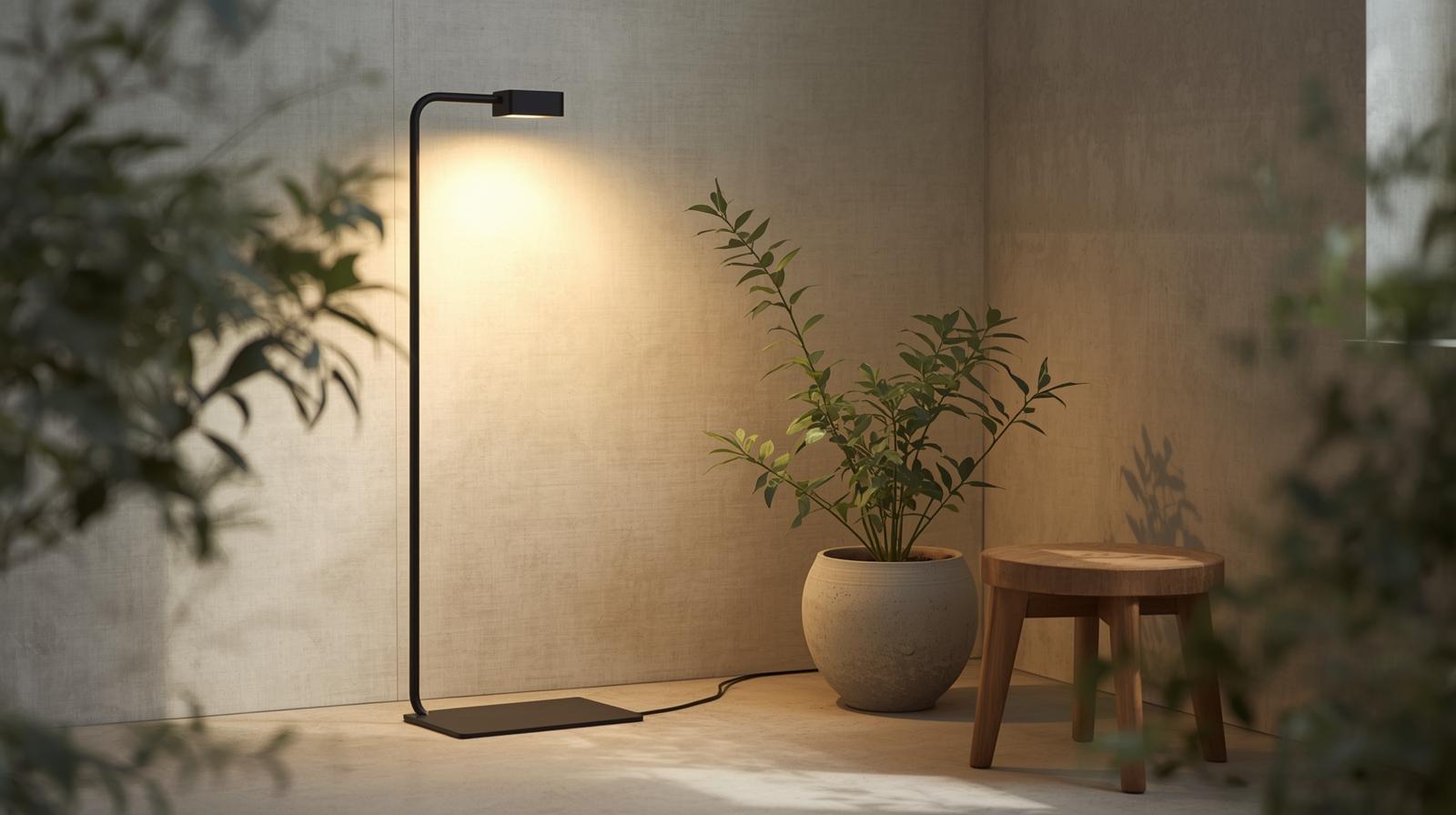
Technology should serve calm—not interrupt it.
Rituals of the Dim Hour
Turning on the grow lights at dusk can be more than maintenance. It can be a ritual.
Pause. Breathe. Watch the leaves lift slightly, as if in recognition. This small act—flipping a switch—becomes a tether to the present. A reminder that care is continuous, even in the darkest months.
Pair this moment with your winter plant care routine. Adjust moisture, check for dust on leaves, whisper a thanks. These gestures stitch us back into the rhythm of living things—something especially grounding when days feel short and sharp. (For more on tending your green companions through the cold season, see our guide to seasonal plant care in winter.)
When Less Is More: Embracing Low-Light Grace
Not every plant demands supplemental light. Some thrive in the gentle gloom of a north-facing room or a hallway nook.
The ZZ plant, the snake plant, the cast iron plant—they are masters of restraint. They ask for little and give presence in return. Their quiet resilience is its own kind of light.
If your space leans toward shadow, lean with it. Create a low-light sanctuary where darkness is honored, not fought. Sometimes the most peaceful room is the one that doesn’t try to outshine the night.
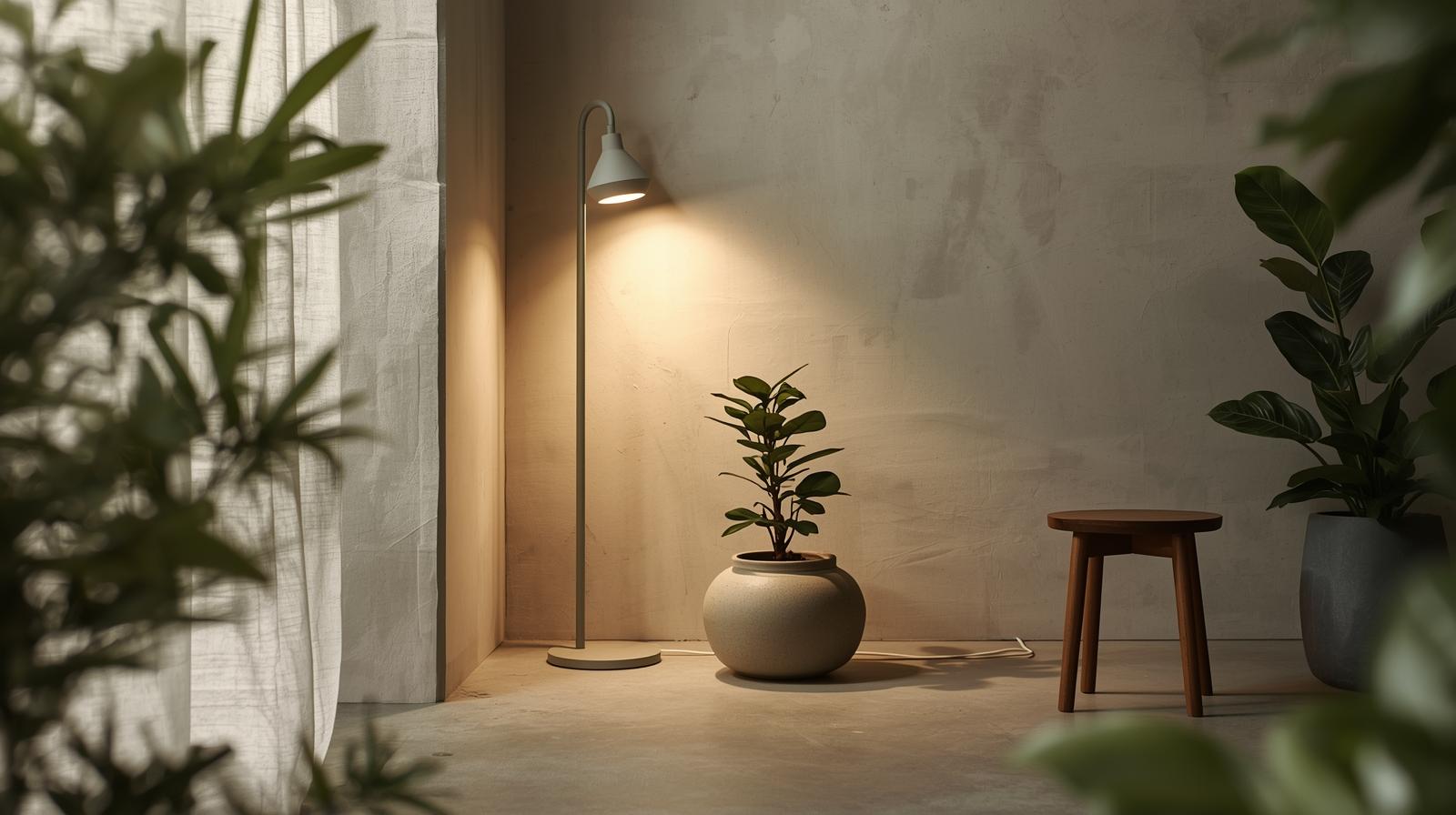
A Gallery of Light: Real Homes, Real Harmony
In a Brooklyn brownstone, a bookshelf glows from within—LED strips tucked beneath each shelf illuminate both dog-eared novels and a thriving Peperomia. The light is so soft, you’d think it was moonlight.
In a Seattle kitchen with a north window, a slim grow bar mounted above the sink keeps basil and mint alive through February’s gray. It’s functional, yes—but also beautiful, like a horizontal sunrise.
And in a Portland bedroom, a sculptural grow lamp with an adjustable brass arm serves double duty: reading light for poetry, and life-giver for a cluster of indoor succulents on the nightstand. The two needs—human and plant—share the same source.
Your home doesn’t need perfection. It needs harmony.
Common Questions
Can I use regular LED bulbs as grow lights?
Only if they’re full-spectrum and deliver enough photosynthetic photon flux density (PPFD). Most household LEDs lack the specific blue and red wavelengths plants rely on in winter. Check the label—or better yet, choose a bulb designed for growth.
Will grow lights disrupt my sleep if used in the bedroom?
Not if you choose warm-white (2700K–3000K) bulbs and turn them off by 8 or 9 p.m. Cool-white or high-intensity panels can suppress melatonin. Keep them out of the sleeping zone—or use them only in morning hours.
How long should I leave grow lights on in winter?
Ten to twelve hours mimics natural daylight. Use a timer. Consistency matters more than duration. Your plants—and your peace of mind—will thank you.
Do succulents need grow lights indoors in winter?
Many do, especially in cloudy climates or low-light apartments. Species like Echeveria and Sedum stretch toward any available light, often losing their compact form without supplementation. For tailored advice, revisit our indoor succulent guide.