
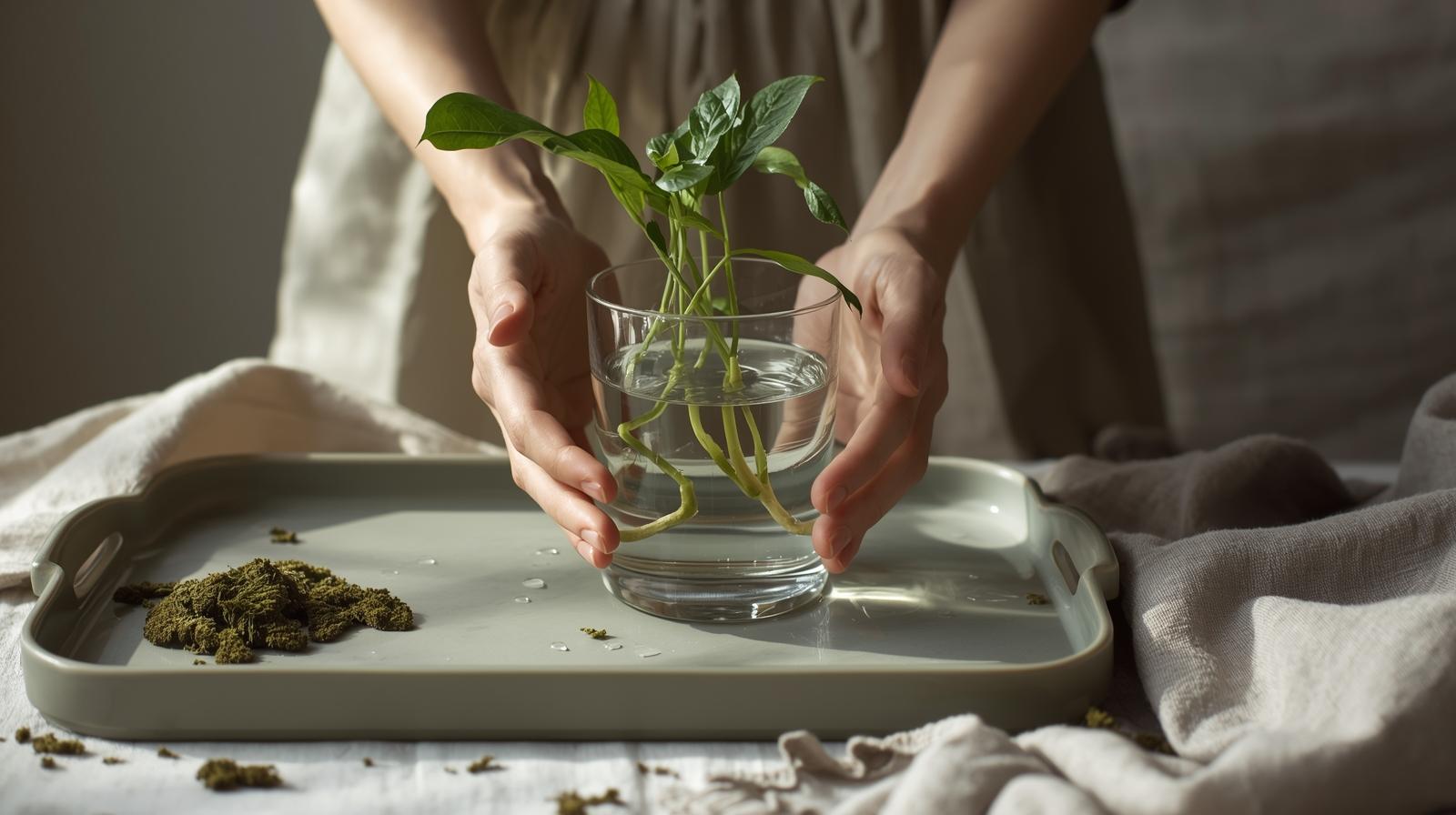
There’s a quiet rebellion in snipping a vine and watching it grow roots in a jar of water. In a world that measures worth by speed and output, propagating pothos asks for nothing but presence—your hands, your patience, and the willingness to believe that life multiplies when tended gently. It’s not gardening. It’s an act of faith in abundance.
The Alchemy of a Single Snip
You don’t need special tools. Just a pair of clean scissors, a glass of water, and a vine that’s stretched a little too far toward the light. The best time to cut is in the morning, when the leaves are plump with dew and the air still holds the coolness of night. Run your fingers down the stem until you feel it—a slight bump beneath the leaf joint. That’s the node. The heart of possibility.
Cut just below it, at a gentle angle. You’ll hear a soft sigh as the stem parts. A drop of milky sap may bead—proof the plant is alive, responsive, ready. This isn’t pruning. It’s collaboration.
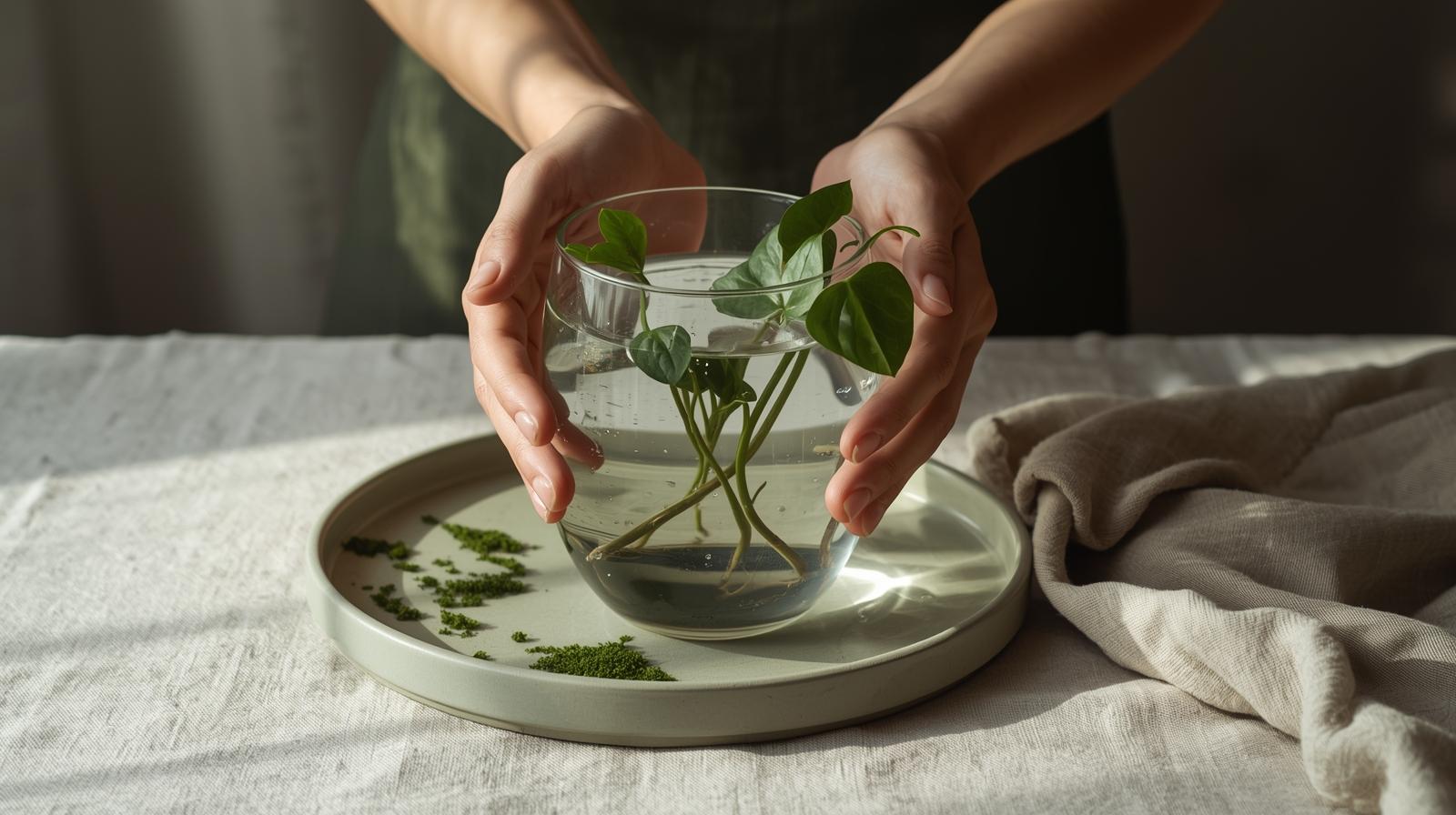
“To plant a garden is to believe in tomorrow.” — Audrey Hepburn
Reading the Vine—Where to Cut and Why
Not every piece will root. A leaf alone, no matter how green, is a dead end. It needs that node—the unsung hero hidden beneath the surface. Look for stems with at least two or three leaves and one visible node. The longer the cutting, the more energy it carries into its new life.
Use sharp, sterilized scissors (a quick wipe with rubbing alcohol does the trick). Dull blades crush rather than cut, inviting rot. And don’t worry if your first few attempts feel clumsy. Pothos is generous. It forgives. (It might even thrive because of your fumbling care.)
Water or Soil? The Two Paths of Rooting
Water propagation is like watching time slow down. Fill a clear vessel—something simple, like the hand-thrown ceramic jars we keep on our windowsills—with room-temperature filtered water. Submerge the node, but keep the leaves dry. Place it where light is bright but indirect: a north-facing sill, or a few feet back from a south window.
Soil propagation is quieter, more mysterious. Dip the cut end in a bit of rooting hormone (optional, but helpful), then nestle it into moist, airy potting mix. Mist the surface. Cover loosely with a plastic bag to hold humidity. You won’t see what’s happening underground—but in a few weeks, new growth will tell you: roots have formed.
Water lets you witness. Soil asks you to trust.
The Waiting Season—Patience as Practice
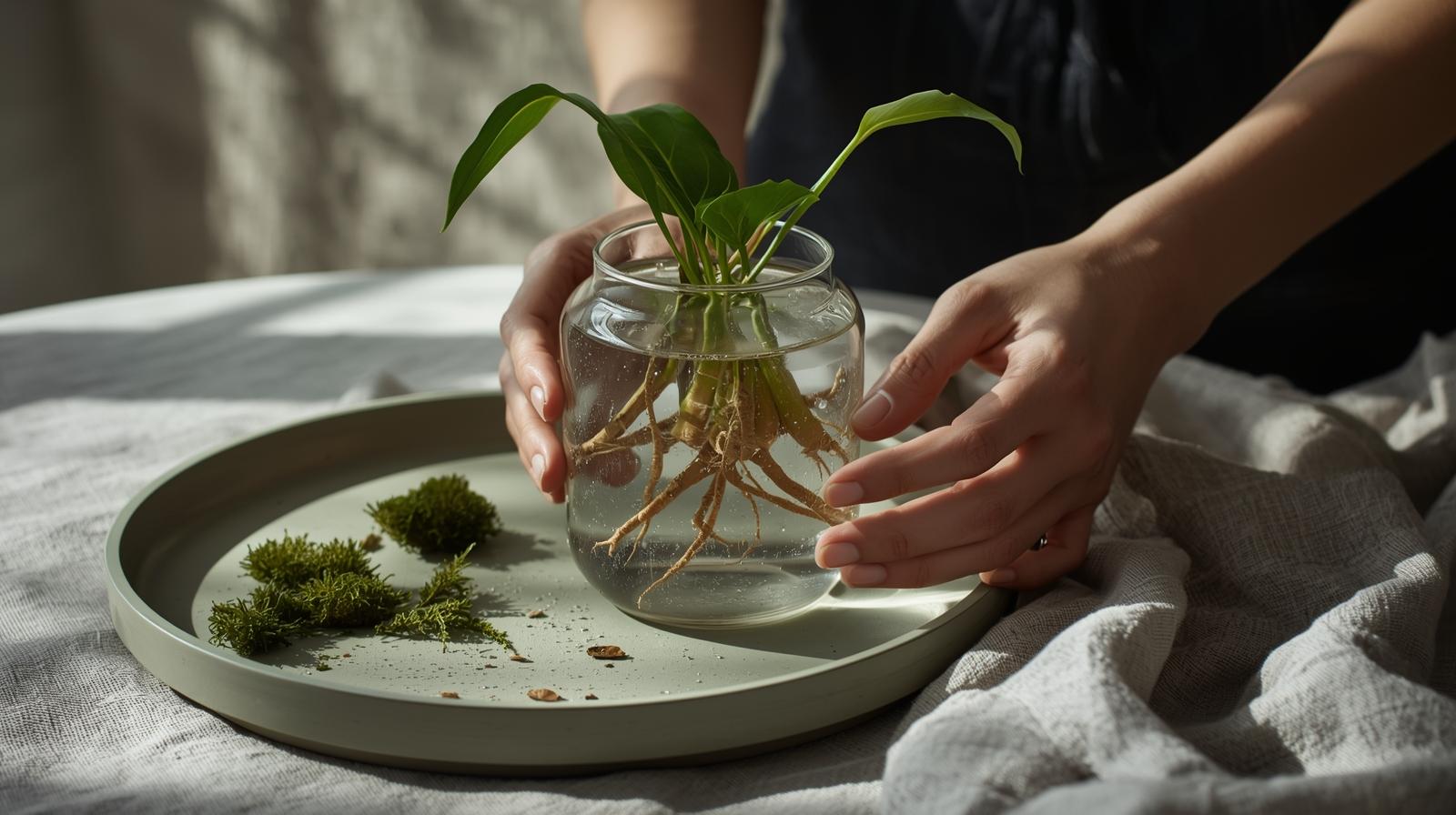
Nothing happens fast. And that’s the point. Check the water every few days. Top it off if it’s low. If it clouds, pour it out, rinse the jar, refill. Rotate the vessel so the roots grow evenly, not lopsided toward the sun. This ritual becomes a pause in your day—a breath between tasks.
After ten days, maybe two weeks, you’ll see it: a white nub pushing from the node. Then another. They curl like question marks, then straighten into threads of life. The first new leaf unfurls slowly, almost shyly. It’s smaller than the others, tender, luminous green.
Don’t poke. Don’t rush. Let it be.
From One to Many—Designing with Abundance
Soon, you’ll have more cuttings than you know what to do with. That’s the magic of pothos—it multiplies without asking permission. Group three jars on a tray by your reading chair. Let vines spill from a high shelf (our floating oak ledges were made for this). Or tuck a rooted cutting into every empty corner: the bathroom sink, the kitchen windowsill, the top of the bookshelf.
Each variety tells its own story. Golden pothos glows like honey in afternoon light. Marble Queen shimmers with silver. Neon shouts joy from a dark hallway. Together, they create rhythm—not symmetry, but a living composition that shifts with the seasons.
Abundance isn’t about quantity. It’s about presence—green, breathing presence—woven into the fabric of your home.
The Gift That Grows—Sharing Cuttings as Connection
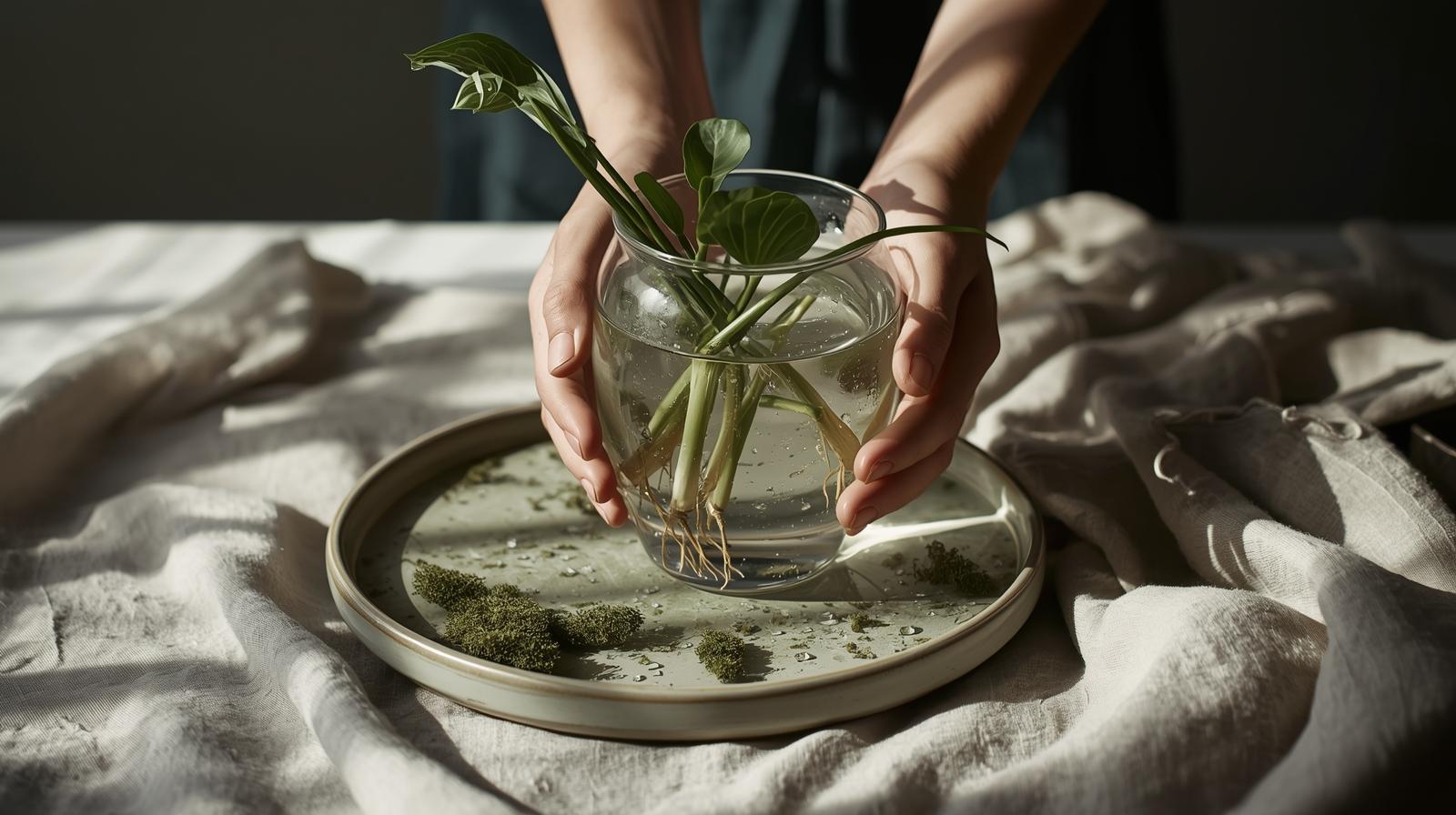
When a friend is grieving, or moving, or just having a hard week, a pothos cutting is a quiet offering. Wrap the rooted stem in damp paper towel, slip it into a small jar or a recycled yogurt cup, and tie a scrap of linen around the rim. Add a note: “This grew in my kitchen window. Now it’s yours.”
Plants remember light. They carry the energy of where they’ve been. Giving a cutting isn’t just passing along foliage—it’s sharing a piece of your calm, your routine, your resilience. We’ve sent cuttings across states, tucked into padded envelopes, and heard months later that they’re still thriving on someone else’s sill.
It’s how we stay connected when words fall short. (And honestly, it’s the best kind of reciprocity—no expectations, just life continuing.) For more on this quiet tradition, explore our thoughts on sharing cuttings as modern-day kinship.
Common Questions
How long does it take for pothos to root in water?
Usually 2–4 weeks. Cooler rooms slow things down. Keep the water clear and the light soft, and roots will come—sometimes sooner than you expect.
Can I propagate a pothos with just a leaf?
No. A leaf without a node is like a boat without a rudder—it floats, but goes nowhere. Always include at least one node below the waterline.
Why are my cuttings turning yellow?
Old water, too much direct sun, or a stressed mother plant. Change the water weekly, move the jar out of harsh light, and choose healthy stems next time.
How many cuttings can I take from one plant?
As long as you leave 2–3 leaves per vine, your pothos will bounce back—often with two new shoots where you cut. Pruning isn’t loss. It’s an invitation to grow fuller.