
You’re folding laundry at dusk when it hits you—the ghost of your grandmother’s garden, carried on the humid air from a single jasmine vine curling around your windowsill. It’s not just scent; it’s summer evenings barefoot on cool stone, her humming as she pruned roses, the hush before fireflies blinked awake. In that breath, time softens. Memory isn’t stored in the mind alone—it lives in the nose, in the quiet chemistry between leaf and limb.
The Invisible Architecture of Scent
Plants exhale more than oxygen. They release volatile organic compounds—tiny, invisible messengers that drift into our nostrils and travel straight to the limbic system, the brain’s emotional core. This is why a whiff of lavender can feel like a hand on your shoulder, or why jasmine at night can pull you back to a moment you thought you’d forgotten.
We don’t just smell a plant. We remember through it.
“Smells are surer than sights or sounds to make your heartstrings crack.” — Rudyard Kipling
Why Indoor Air Needs Botanical Breath
Modern interiors are sealed boxes—filtered, temperature-controlled, emotionally neutral. A fragrant plant breaks that sterility not with noise, but with nuance. The scent of a living thing changes with the hour, the season, even your care. It’s never static.
Try this: place two or three scented plants where you move slowly—by your reading chair, beside your bed, near the kitchen sink. Let their presence become a quiet landmark in your day. (You’ll start noticing them not when you look, but when you breathe.)
Jasmine: The Night-Blooming Memory Keeper
Jasminum polyanthum—with its clusters of starry white blooms—thrives on a bright windowsill and rewards you with perfume that deepens after sunset. Water it when the top inch of soil feels dry, like the warmth of sunbaked stone. Feed it lightly in spring. And at dusk, mist its leaves while you pause. Three breaths. That’s all it takes to turn care into communion.
Its fragrance isn’t just lovely—it’s neurologically soothing. Studies link jasmine’s aroma to reduced anxiety and smoother transitions into sleep, which is why it belongs in the same conversation as plants that invite rest.
Lavender’s Quiet Hum
True English lavender often struggles indoors—it misses the wind, the open sky. But French lavender (Lavandula dentata)? It adapts. Give it a clay pot (unglazed, so roots can breathe), gritty soil that drains like sand through fingers, and a south-facing window where winter sun still reaches.
Don’t just look at it. Brush your palm over its silver-green leaves when your thoughts race. The oils released are sharp, clean, grounding—like walking through a sunlit herb garden at noon. For those learning to keep lavender alive indoors, our guide to lavender indoor care walks you through light, water, and the art of restraint.
Beyond the Obvious: Unexpected Scent-Bearers
Fragrance isn’t limited to flowers. Scented geraniums—rose, lemon, nutmeg—release their perfume when touched. Rub a leaf between your fingers while waiting for the kettle to boil. The kitchen fills not with steam, but with memory.
The curry leaf plant (Murraya koenigii) smells nothing like curry powder. Instead, it offers a bright, citrus-woody note that sharpens focus—perfect near a desk. And sweet olive (Osmanthus fragrans)? Tiny white blossoms appear without warning, filling a room with the ghost of apricot and jasmine. (You’ll catch it mid-step, stop, and wonder: Where is that coming from?)
Cultivating a Personal Scent Library
Think of your home as a living apothecary. Each plant holds a different emotional frequency. Lemon verbena for clarity. Jasmine for nostalgia. Lavender for stillness.
Keep a small notebook—not for plant care logs, but for scent notes. “Today, brushing the geranium made me think of my aunt’s porch in June.” Over time, you’ll map your inner world through aroma. And when you want to return to a feeling, you’ll know which leaf to touch.
Many of these plants double as tea ingredients—steep lemon verbena or scented geranium leaves for a ritual that engages taste and smell. It’s a quiet bridge between botany and breath, explored more deeply in our piece on tea and botany.
The Art of Slow Inhalation
Most of us smell in passing—while watering, while walking by. Try this instead: stand before your jasmine or lavender. Cup your hands gently around the foliage (don’t crush it). Inhale through your nose for four slow counts. Hold for two. Exhale for six.
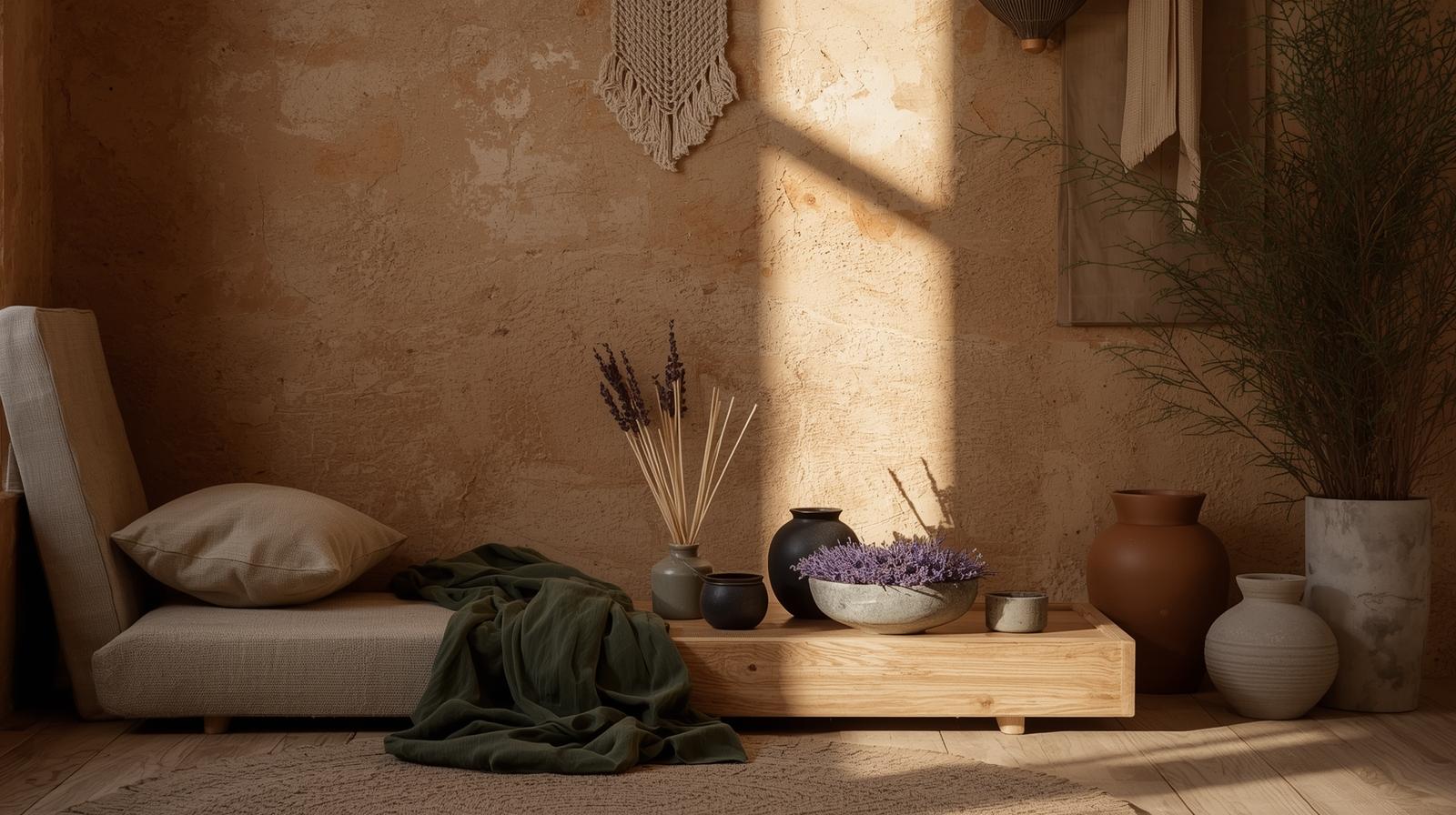
Notice where the scent lands. Is it in your chest? Your throat? Behind your eyes? This isn’t aromatherapy as trend—it’s attention as practice. And in a world that rewards speed, choosing to smell slowly is a quiet rebellion.
One note: fragrance should never overwhelm. A single strong-scented plant per room is often plenty. Let it be a whisper you lean in to hear—not a shout you can’t escape.
Common Questions
Can I grow jasmine indoors without a green thumb?
Yes—if you give it what it asks for: bright, indirect light (east or west windows are ideal), consistent moisture (never soggy), and cooler nights. It’s not fussy, just clear in its needs. Drooping leaves mean it’s thirsty. Yellow leaves? You’re loving it too much with water.
Does lavender really help with sleep if it’s just sitting on a shelf?
Only if it’s healthy enough to release oils. A stressed lavender stays silent. Brush the leaves gently before bed, or tuck a few dried sprigs into your pillowcase. For best results, pair it with other bedroom plants that support sleep.
Are fragrant plants safe around pets?
Jasmine and lavender can be toxic to cats if ingested in quantity. Keep them high—on shelves, in hanging planters—or choose safer options like scented geraniums (non-toxic) or sweet olive (low risk). When in doubt, place beauty out of reach.
Why doesn’t my indoor lavender smell?
It’s likely not getting enough direct sun—lavender needs at least six hours of strong light daily. And if the soil stays damp, the roots sulk, and the oils fade. Repot into a gritty mix (think: half potting soil, half perlite), place it in a south window, and let the soil dry completely between waterings. Patience often brings the perfume back.