
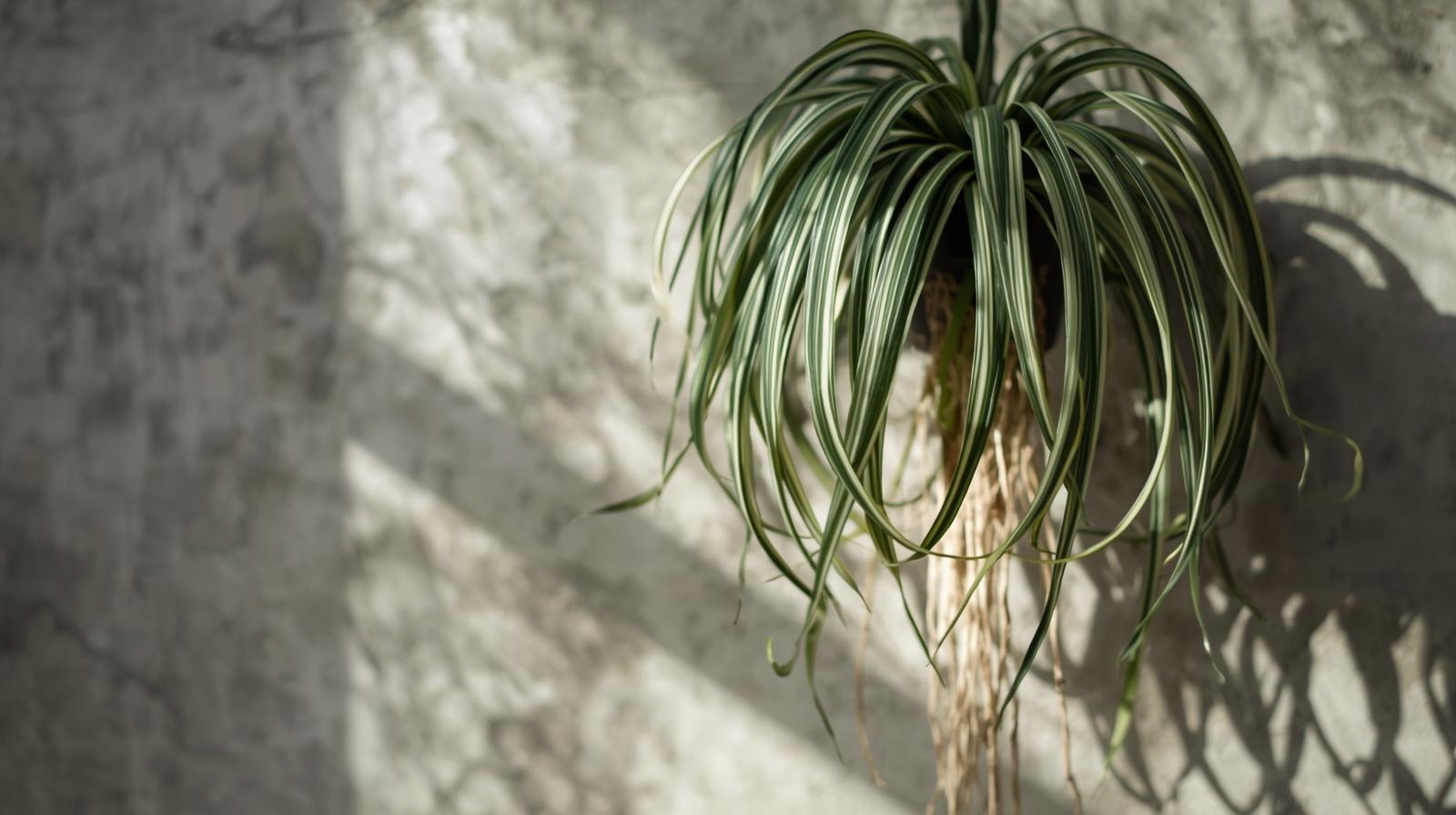
Sunlight slants through the kitchen window, catching the fine hairs on a cascade of slender green leaves. A single spiderette dangles mid-air like a tiny acrobat, its roots still pale and searching. There’s something quietly exuberant about a spider plant—its joyful sprawl defies neatness, yet it purifies the very air you breathe without asking for much in return. In a world that prizes control, this unassuming Chlorophytum offers a gentle rebellion: thriving through generosity, not perfection.
A Plant with a Generous Spirit
It doesn’t posture. It doesn’t sulk when you forget to water it for a week. The spider plant simply is—steady, green, and quietly prolific. Native to the shaded banks of South African rivers, Chlorophytum comosum evolved to handle shifting light and intermittent rain. That’s why it forgives the dim corners and distracted care of our modern homes. It’s not just tolerant—it’s generous.
And safe. Entirely non-toxic. You can place it on a low shelf without fear if you share your space with curious cats or toddlers. (In fact, it’s one of our top picks for pet-safe indoor plants.) Its leaves may get nibbled, but it won’t harm your loved ones—only offer more green in return.
“The best things in life are not things—they are gestures of life returning to itself.” — Adapted from Robin Wall Kimmerer
Why It Belongs in Your Sanctuary
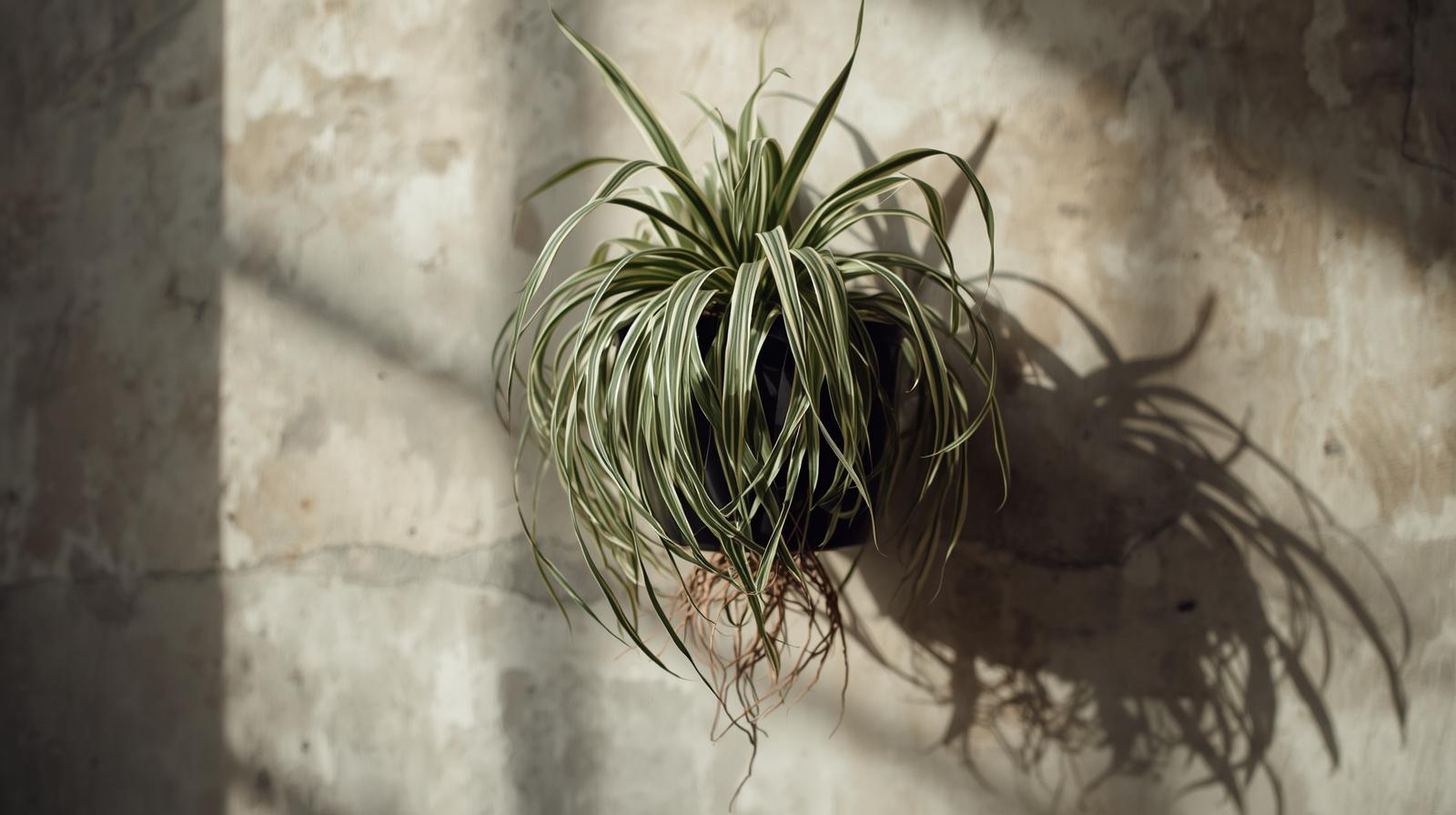
Watch how its arching leaves soften the sharp line of a windowsill or bookshelf. It doesn’t demand center stage—it enhances the negative space around it. Hang it in a woven macramé hanger near a north-facing window, and its runners become living mobiles, swaying with the faintest draft. For more ideas on styling plants that drape and dance, see our thoughts on hanging plants as decor.
And yes—it cleans the air. NASA’s old Clean Air Study confirmed it pulls formaldehyde and xylene from the atmosphere. But that feels almost secondary. What matters more is how it changes the feel of a room: fresher, calmer, more alive. Not sterile—alive.
The Quiet Thirst
Overwatering is the quiet killer of spider plants. They’d rather wait. Stick your finger an inch into the soil—if it’s dry, give it a drink. If it’s cool and damp, wait another day.
Use room-temperature water. Cold tap water shocks the roots. And if you notice brown tips creeping in, try switching to rainwater or filtered water. Tap water often carries fluoride and chlorine that accumulate in the soil, burning the leaf edges like invisible frost.
In winter, you might water once every two or three weeks. In summer, maybe once a week. But don’t follow a calendar. Follow the plant. The leaves will tell you—limp means thirsty; crisp and upright means it’s content.
Light—Not Sun, But Kindness
Bright, indirect light is ideal. Think: morning sun through a sheer curtain, or a few feet back from an east-facing window. Direct afternoon sun? Too harsh. It bleaches the leaves, turns them pale and papery.
It’ll survive in lower light—office corners, hallways—but it won’t send out spiderettes. No babies. No joyful chaos. Just quiet endurance. If you want that cascade of plantlets, give it kindness in the form of gentle light. Not spotlight. Not obscurity. Just enough.
Propagation as an Act of Letting Go
Those little plantlets dangling from wiry stems? They’re not weeds. They’re invitations.
Wait until a spiderette has two or three leaves and faint white roots—just a whisper of them. Snip it free with clean scissors. You can place it in a small jar of water on your windowsill (change the water every few days) or tuck it straight into damp soil. Keep it moist, not soggy, and in a week or two, it’ll root in.
This is where the magic lives—not in perfection, but in sharing. Give one to a friend who just moved. Tuck one into your neighbor’s mailbox with a note that says, “Grow well.” For step-by-step visuals and timing tips, our guide to propagating spiderettes walks you through it gently.
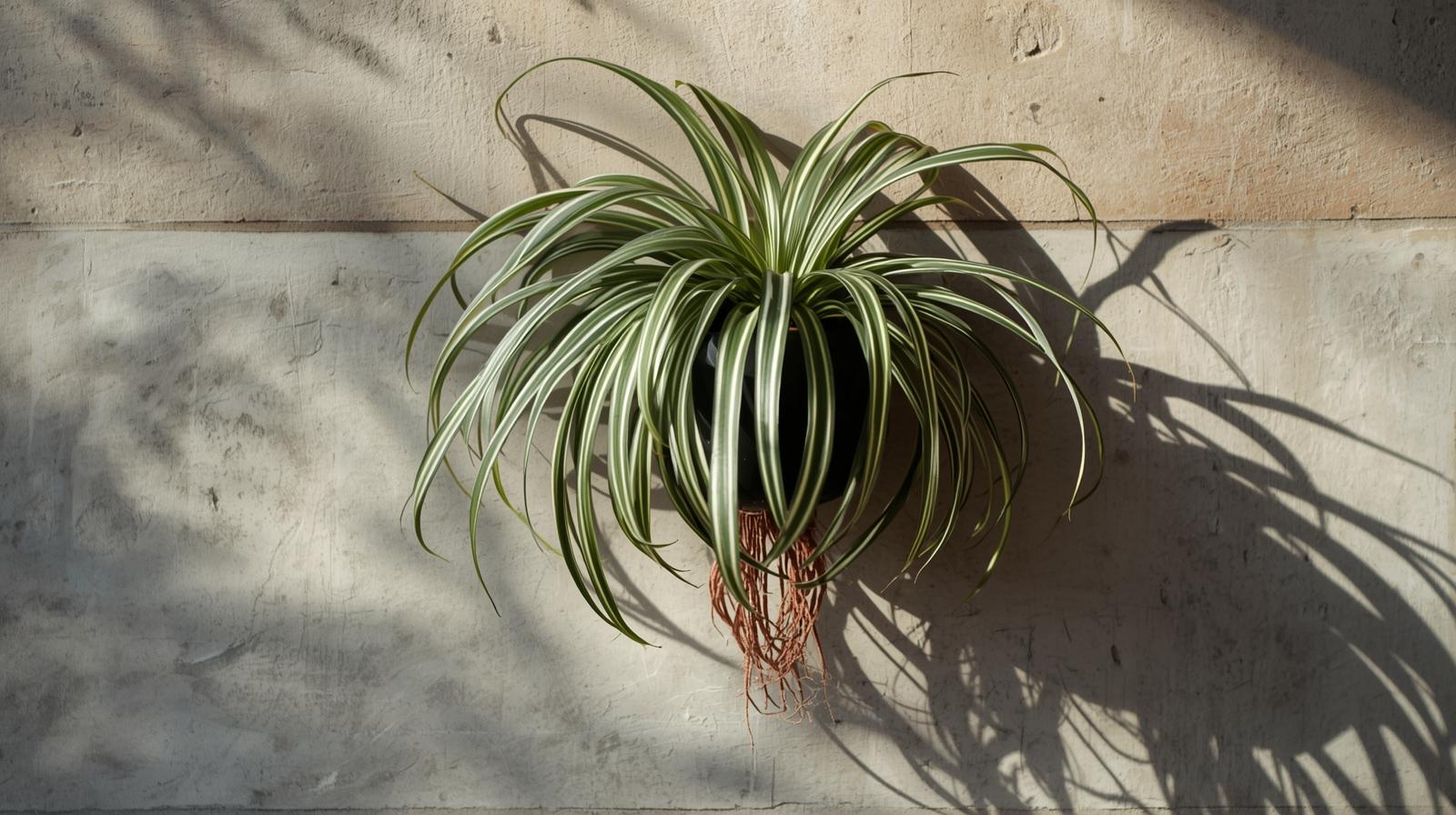
Letting go doesn’t diminish the mother plant. It multiplies your joy.
When Chaos Needs Taming (Gently)
Yes, it can look messy. Runners tangle. Leaves yellow. Tips brown. But pruning isn’t punishment—it’s care.
Trim only what’s truly dead or damaged. Cut close to the base, following the natural line of the leaf. Never shear the whole plant like a hedge. It’s not a topiary. It’s a living thing with its own rhythm.
Repot only when roots start spiraling out the drainage hole or the pot feels stubbornly light after watering. Use a mix with extra perlite—something that drains fast. The weight of a freshly potted spider plant should feel substantial, grounded. Not heavy. Just present.
The Spider Plant as a Teacher of Slow Living
It doesn’t need your constant attention. But it rewards your presence.
Sit with it for five minutes. Watch how the light moves across its leaves. Notice how one spiderette reaches toward the window while another curls inward, as if shy. There’s no rush here. No performance. Just slow, steady being.
In a culture obsessed with optimization, the spider plant whispers a different truth: abundance comes from generosity, not control. Resilience isn’t about rigidity—it’s about bending, releasing, and growing again.
It’s not the most glamorous plant in the room. But it might be the wisest.
Common Questions
Are spider plants safe for cats and dogs?
Yes. Completely non-toxic. Though if your cat eats an entire runner, they might get a mild tummy ache—like eating too much grass. But no lasting harm.
Why are the tips of my spider plant turning brown?
Usually fluoride or chlorine in tap water. Try using rainwater, distilled water, or letting tap water sit out overnight before watering. Low humidity can also contribute—especially in winter with heaters running.
How often should I fertilize?
Once a month during spring and summer, with a balanced liquid fertilizer diluted to half strength. Skip it entirely in fall and winter. Less is more.
Can I keep it outside in summer?
Absolutely—but only in shade or dappled light. Direct sun will scorch it. Bring it back indoors before nighttime temps dip below 50°F (10°C). It’s tender-hearted, not tough.